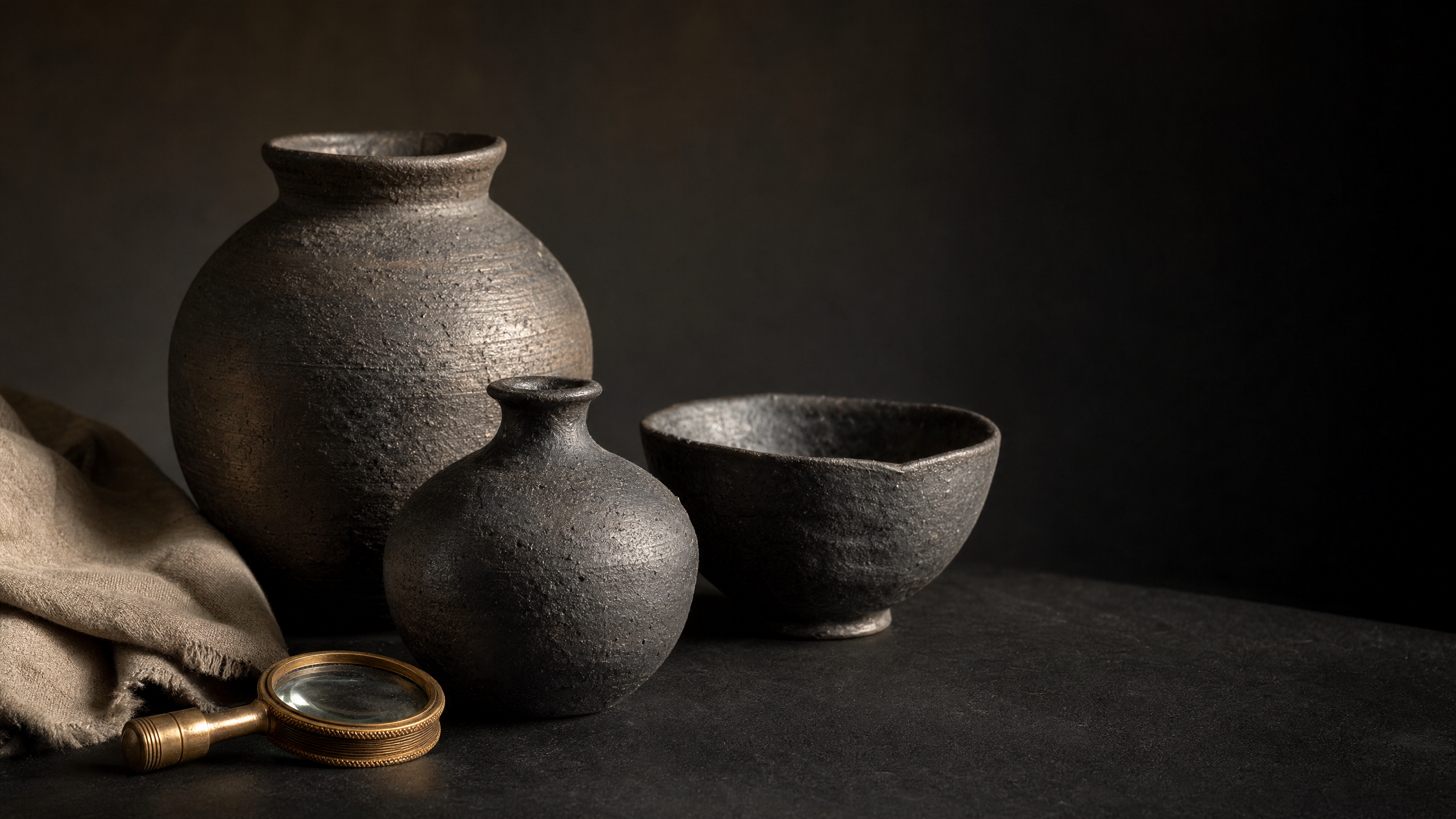
Kintsugi meaning explained: learn how Japanese pottery is repaired with urushi lacquer and gold, what the tradition represents, and how it differs from wabi-sabi.
Kintsugi is not the same thing as wabi-sabi, and it is not a general promise that every broken object should be repaired. It is a skilled ceramic-repair tradition with its own materials, history, and practical limits.

What Does Kintsugi Mean?
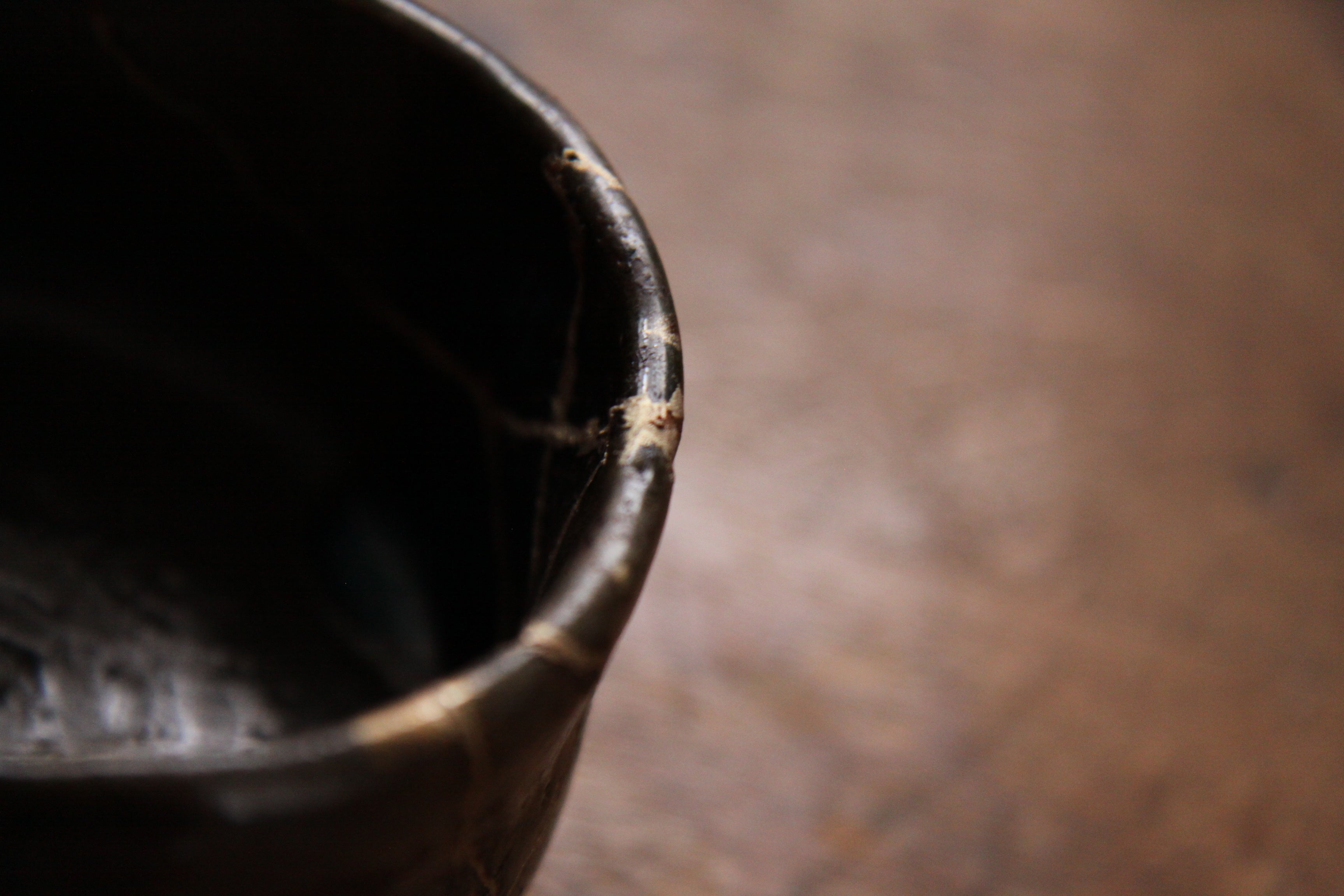
Kintsugi (金継ぎ) is commonly translated as “golden joinery.” In traditional work, broken ceramic pieces are joined with urushi (漆), Japanese lacquer, and the repaired seam may be finished with powdered gold, silver, or another material. The metal highlights the join; it is not usually the adhesive itself.
The result is a repair that remains visible. Rather than returning a bowl to an imagined, untouched state, kintsugi makes the object’s history part of its appearance. That does not mean every break becomes beautiful or that damage should be created for effect. The value lies in the patience and judgement required to preserve an object that is still worth using.
How Kintsugi Repair Works
A considered repair begins with practical questions. Are the fragments complete? Can the form be aligned? What will the vessel be used for after the work is finished? Urushi can join the pieces and fill small losses, but it needs time and controlled conditions to cure. The surface is then prepared before the decorative metal finish is applied.
This is why traditional kintsugi should not be presented as an easy weekend craft or a universal food-safety solution. Valuable, structurally complicated, or food-contact pieces deserve assessment by a qualified practitioner. A repaired object should not automatically be used with food, heat, a dishwasher, or a microwave without guidance from the person who repaired it.
Kintsugi and the History of Japanese Tea Culture
Kintsugi is closely associated with the culture of chanoyu (茶の湯), the Japanese tea ceremony, where a bowl is more than a container. Its shape, texture, season, and history participate in the meeting between host and guest. A repaired bowl can therefore carry a different kind of presence: the signs of use are not automatically treated as reasons to discard it.
The familiar story about Ashikaga Yoshimasa sending a damaged Chinese bowl away for repair is often told as the origin of kintsugi. It is better treated as a famous origin story rather than a fully established account. The broader history is more careful: lacquer repair is older across Asia, while the use of gold decoration on lacquer repairs developed in Japan over time and became associated with tea culture.
Kintsugi Meaning and Wabi-Sabi: Related, but Not the Same
Kintsugi is a material practice. Wabi-sabi is a much broader aesthetic vocabulary associated with simplicity, impermanence, age, and irregularity. The two can be discussed together because a visible repair may draw attention to time and change, but they are not synonyms.
That distinction prevents a common misunderstanding. Kintsugi does not mean that damage automatically increases an object’s value, and wabi-sabi does not mean that poor workmanship should be celebrated. A successful repair still depends on skill, stability, suitable materials, and the future use of the vessel. Read how Kintsugi and wabi-sabi are connected for a closer comparison.
Is Kintsugi Sustainable?
Repair can help an object remain in use rather than being replaced immediately, but kintsugi is not a complete environmental policy. Its impact depends on the condition of the piece, the materials and expertise required, and how long the object is used afterwards. The honest lesson is modest: repairing something meaningful can support a habit of care and longer use.
For the practical limits of that claim, read Kintsugi and Sustainability. If you have a damaged piece to discuss, visit The Zen Artisan Kintsugi Repair Service for an enquiry and quotation process.
What Kintsugi Can Teach a Modern Home
The most useful contemporary lesson is not that every object needs a golden seam. It is that care can begin before a break: choose fewer things, learn how they should be handled, and use them regularly enough to understand their limits.
That is also how we think about Suzu-yaki. Suzu-yaki is not kintsugi and does not imitate a repaired vessel. Its deep, unglazed surface records a different meeting of clay, ash, reduction firing, and time. You can read more about the material in What Is Suzu-yaki?

Keep What Matters in Use
Kintsugi begins with attention to an object’s history. For a different expression of Japanese craft in everyday life, the Zen Complete Set for a quiet daily ritual pairs a hand-formed Suzu-yaki incense plate from the Noto Peninsula with Frankincense, Hinoki, and Peppermint Xiang Do incense. It is not a Kintsugi repair; it is a small, useful object made to be used, cared for, and kept. Ships worldwide.
Sources and further reading: Encyclopaedia Britannica, “Kintsugi”; Smithsonian Magazine, “The Art of Kintsugi”; Japan Travel, “The Art of Imperfection”.