To start a Suzu-yaki collection, begin with one useful piece—not a shelf full of objects. The best first purchase is something that can enter an existing ritual, be handled often, and teach you what you value about Japanese pottery: weight, surface, proportion, and the quiet marks of hand and fire.

Why start small?
Japanese ceramics can feel endless. There are regional kilns, different clays, firing atmospheres, glazes, forms, makers, and traditions to discover. That variety is part of the pleasure, but it can also make a new collector feel that a first choice must be historically important or perfectly informed. It does not.
A small functional object gives you a better education than a grand purchase kept out of reach. You notice how a piece feels in the hand, how its surface changes in different light, and whether its form makes a daily action more deliberate. Read A Beginner’s Roadmap to Japanese Pottery for a wider overview of materials and regional styles.
What makes Suzu-yaki a compelling first choice?
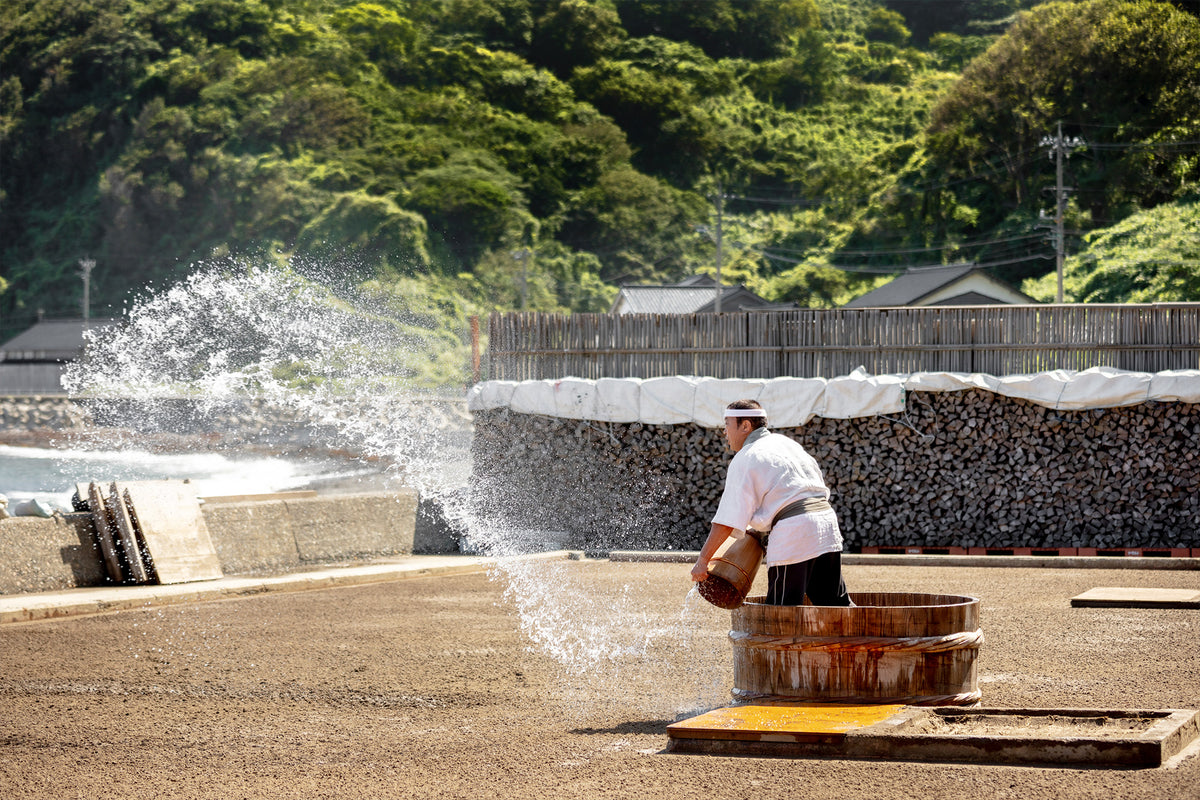
Suzu-yaki (珠洲焼) is an unglazed stoneware tradition from the Noto Peninsula. Rather than covering the clay with a bright industrial glaze, the surface depends on the material, the atmosphere of the firing, wood ash, and the maker’s decisions. The result is often deep charcoal or black, with subtle variation that rewards close looking.
That restrained surface works well in a modern home because it does not demand a particular room or table setting. It can sit beside pale wood, linen, books, or existing ceramics without turning the space into a themed display. For a concise explanation of the material and its history, visit What Is Suzu-yaki?
Choose a function before a form
For a first piece, ask one practical question: what moment in your day could use a little more attention? If you already make tea, a cup may be the natural beginning. If coffee anchors your morning, a small vessel can become part of that routine. If you want a transition between work and evening, an incense plate offers a clear beginning and end.
Function narrows the field in a useful way. You are no longer trying to understand every Japanese kiln at once; you are choosing an object that has a job. The object’s value then grows through use, not through the number of facts you can recite about it.
A practical first set: one plate, one scent
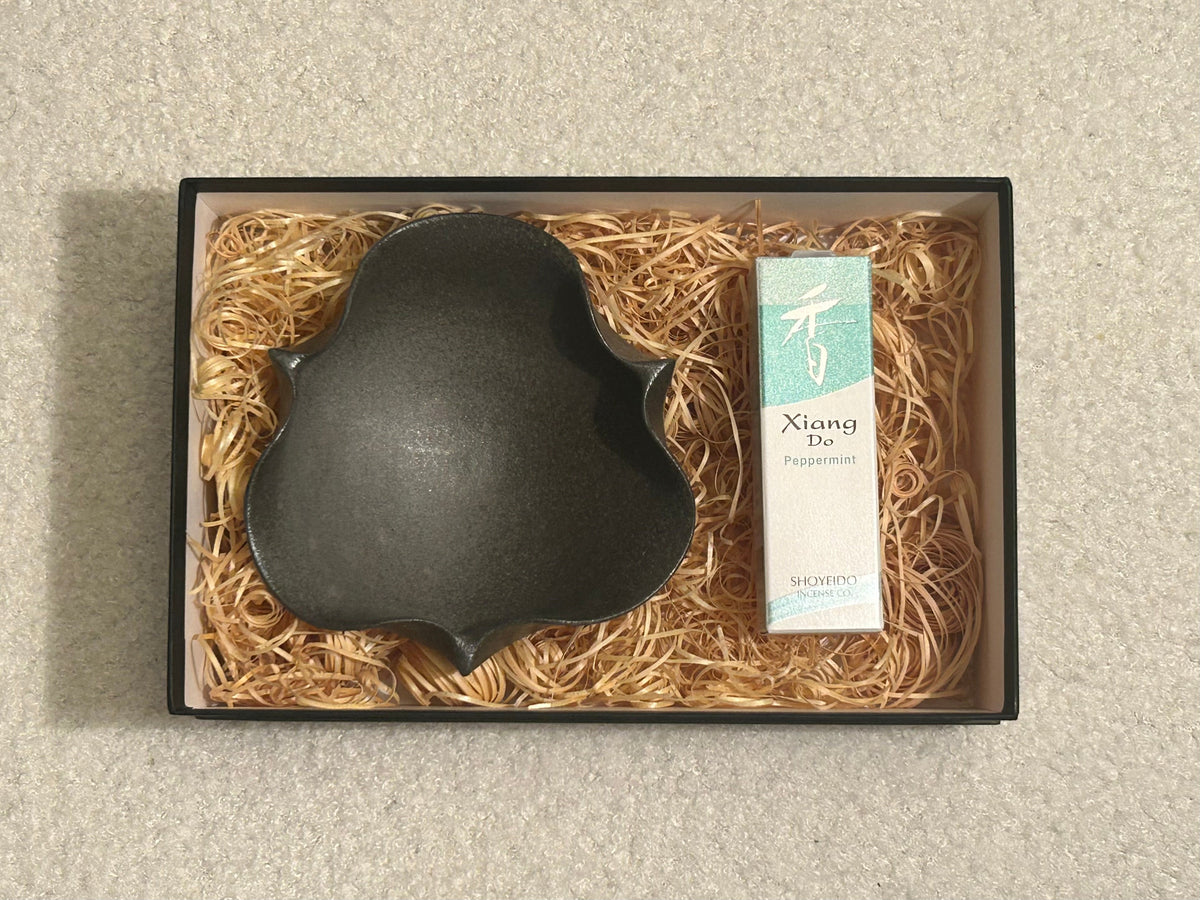
The Suzu-yaki Japanese Incense Starter Set is designed around this small beginning. It includes one hand-formed Suzu-yaki incense plate, approximately 10 cm, and twenty sticks of one Shoyeido Xiang Do scent. You choose Frankincense, Hinoki, or Peppermint rather than receiving a large assortment before you know your preference.
That choice matters. Frankincense is resinous and warm; Hinoki has a forest-fresh cypress character; Peppermint is crisp and cool. None is objectively the “correct” first scent. Pick the one that suits the time of day and the atmosphere you want to create. Use it consistently for a week or two, and let your own response—not a trend—guide the next decision.
Learn to read handmade variation
A handmade Suzu-yaki plate may vary slightly in colour, shape, texture, and size. Those differences are not evidence that one piece is defective and another is perfect. They are the visible record of individual forming and firing. A collector’s first discipline is learning to distinguish variation from carelessness: the piece should be stable, thoughtfully shaped, and fit for its stated use, while still retaining the irregularity of the hand.
This is also why buying one piece first is helpful. You can spend time with the actual object rather than judging handmade pottery only through photographs. For a broader reflection on why this distinction matters, read The Difference Between Mass-Produced and Handmade.
Let the collection earn its next piece
After a month of use, ask three simple questions. Do I reach for it naturally? Has it made an ordinary moment feel more intentional? Do I understand something new about the material or the maker? If the answer is yes, you have not only bought a piece of pottery—you have found the beginning of a collecting language.
The next piece can then respond to the first: a different scale, a new use, or a contrasting surface. There is no need to make the collection look complete. A small group of objects that are used, remembered, and cared for is more convincing than a crowded shelf assembled in a hurry.

Begin with one quiet ritual
Choose the Suzu-yaki Japanese Incense Starter Set and let one useful object introduce you to Noto’s unglazed stoneware. If you are choosing a gift or want all three scents, explore The Zen Artisan Gift Sets. Each set is made for a slower, more tactile everyday ritual. Ships worldwide.