Woody Japanese Incense: Hinoki, Sandalwood & the Six Precious Woods

Woody Japanese incense is not one fixed fragrance. It can be crisp and green, dry and creamy, darkly resinous, or quietly spicy. The useful way to choose it is not by chasing a single “Japanese” smell, but by noticing which wood-like character suits the room and the moment: the clean lift of hinoki (Japanese cypress), the rounded warmth associated with sandalwood, or the more rarefied vocabulary of kōdō (香道), the Japanese Way of Incense.
That distinction matters. Everyday incense sticks are made blends, while formal incense appreciation has its own history and language. Knowing the difference gives a home ritual more clarity—and keeps a beautiful tradition from becoming a vague aesthetic label.

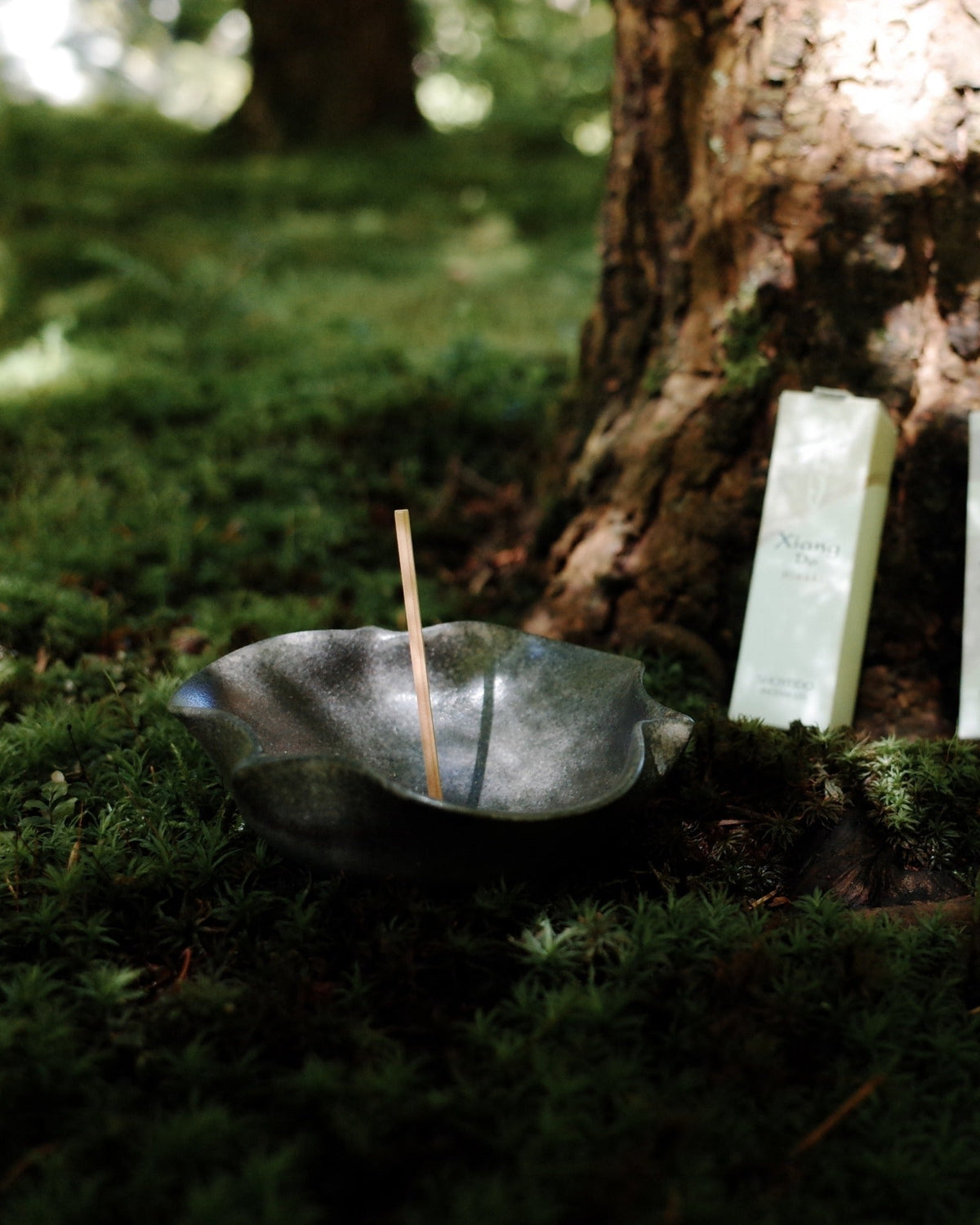
Xiang Do Trio

Hinoki: Fresh, Green, and Clear
Hinoki is Japanese cypress, a tree closely associated with Japanese architecture and bathing culture. In fragrance terms, it usually signals a bright, resin-tinged wood impression rather than a heavy perfume. It can work particularly well in a compact space—a desk, entryway, or the table beside a morning cup—because its character feels light and clean without needing to dominate the room.
The Zen Artisan’s Xiang Do Hinoki for a fresh woody pause is a pressed-incense selection from Shoyeido. The product is described as an evergreen Japanese-cypress scent and comes as 20 short sticks. Light one in a properly ventilated space, place it in a stable holder, and allow the fragrance to remain an accent rather than a performance.
Sandalwood: Soft Wood With Depth
Sandalwood has long been one of the aromatic materials named in Japanese incense culture. The Metropolitan Museum of Art notes that historical Japanese incense sets contained raw materials including sandalwood, aloe or agarwood, clove, herbs, and other fragrant substances.[1] That does not mean every Japanese incense has the same recipe. Modern sticks are distinct compositions, and it is better to read the individual product description than to assume an ingredient from tradition.
As a scent family, sandalwood is often chosen for its softer, warmer, more rounded wood impression. It can feel less forest-like than hinoki and less sharp than a resin-forward fragrance. In the Xiang Do Trio, made for comparing three fragrance choices, Sandalwood (Limited) is one of the available selections alongside Hinoki, Frankincense, and Peppermint. Comparing short sticks on separate days is a more useful approach than trying to judge a fragrance from its name alone.

Xiang Do Peppermint
The Six Fragrant Woods of Kōdō
At the more formal end of Japanese fragrance culture is rikkoku gomi (六国五味), literally “six countries, five tastes.” In kōdō, the six names—kyara, rakoku, manaka, manaban, sumotara, and sasora—are classifications used to discuss fragrant woods. The five “tastes” are sweet, bitter, spicy, sour, and salty.[2] They are a refined vocabulary for attentive appreciation, not a checklist for commercial incense sticks and not a taxonomy of hinoki or sandalwood.
Formal practice is also different from ordinary burning. In a kōdō ceremony, a small piece of fragrant wood is warmed on a mica plate above smouldering charcoal so that it releases fragrance gently.[2] Rare raw woods deserve careful, specialist handling; they are not materials to experiment with casually at home. For more context, read Rikkoku Gomi: The Six Woods and Five Tastes and Jinkō: The Sacred Aloeswood at the Heart of Japanese Incense.
Listen for Material, Not a Mood
It helps to describe incense in relation to material rather than expecting a guaranteed feeling. Does the character seem green, dry, creamy, peppery, or resinous? Does it remain close to the holder or become more apparent as the room changes? These are small observations, but they make repeated use more interesting. They also prevent the familiar mistake of treating scent names as promises. A label is a starting point; the experience is shaped by the stick, ventilation, time of day, and the size of the room.
For a first comparison, keep the setting constant. Use the same holder, open the same window, and try one short stick on different days. Make a simple note of what you notice before you decide which wood note belongs in a regular rotation. The result need not be a verdict. It can simply be a more attentive way to live with an everyday material.
A Simple Way to Choose
Choose Hinoki when you want a clear cypress character; choose Sandalwood when a gentler, warmer wood profile appeals; and choose a rare-wood story as an invitation to learn, rather than something to reproduce. Begin with one stick, one stable holder, and one unhurried moment. A dark, unglazed ceramic surface can make this small ritual feel grounded without adding visual noise. Explore our Japanese incense collection for the current Xiang Do selections, or pair a stick with the Suzu Star holder for a simple everyday setup.

Find the wood note that suits your room.
Choose from Japanese incense scents and pair them with a handmade Suzu-yaki holder. Ships worldwide.
Explore Japanese Incense