Japandi vs Wabi-Sabi: Two Philosophies of Calm
Japandi vs wabi-sabi is a useful comparison because the two are often grouped together—and often mistaken for the same thing. They can share a quiet visual vocabulary, but they answer different questions. Japandi is a contemporary interior style that brings Japanese and Scandinavian design into conversation. Wabi-sabi (侘寂) is a Japanese aesthetic shaped by attention to simplicity, irregularity, time, and use.
Knowing the distinction keeps a home from becoming a collection of borrowed labels. Instead of trying to make a room look “Japanese,” it lets you make choices about function, material, and the objects you want to live with. One principle is about arranging a room; the other is about noticing what a thing becomes over time.
Japandi: A Contemporary Language for the Home
Japandi is best understood as a current design shorthand, not an old Japanese school of interiors. It combines the functional warmth commonly associated with Scandinavian design—pale woods, useful forms, soft textiles—with Japanese references such as restrained composition, natural materials, and careful craft. BBC Future describes the blend through clean lines, neutral tones, natural textures, simplicity, and functionality.[1]
That does not mean Japan and Scandinavia are interchangeable, or that a bare room automatically becomes Japandi. The label is most convincing when it is practical: a chair that is genuinely comfortable, a lamp that earns its place, an open surface that makes daily movement easier. Think of it as a framework for editing. Keep useful pieces, favour materials that feel good to handle, and leave enough visual room for each object to register.

ZEN COMPLETE SET
Wabi-Sabi: Attention to Time, Material, and Use
Wabi-sabi is not a decor trend and not a licence to call every rough surface beautiful. In the context of Japanese tea culture, wabi came to name an aesthetic of austerity, spontaneity, and apparent artlessness. The Metropolitan Museum of Art notes how sixteenth-century tea masters, including Sen no Rikyū, turned toward rustic Japanese and Korean vessels rather than treating polished imported objects as the only standard of value.[2]
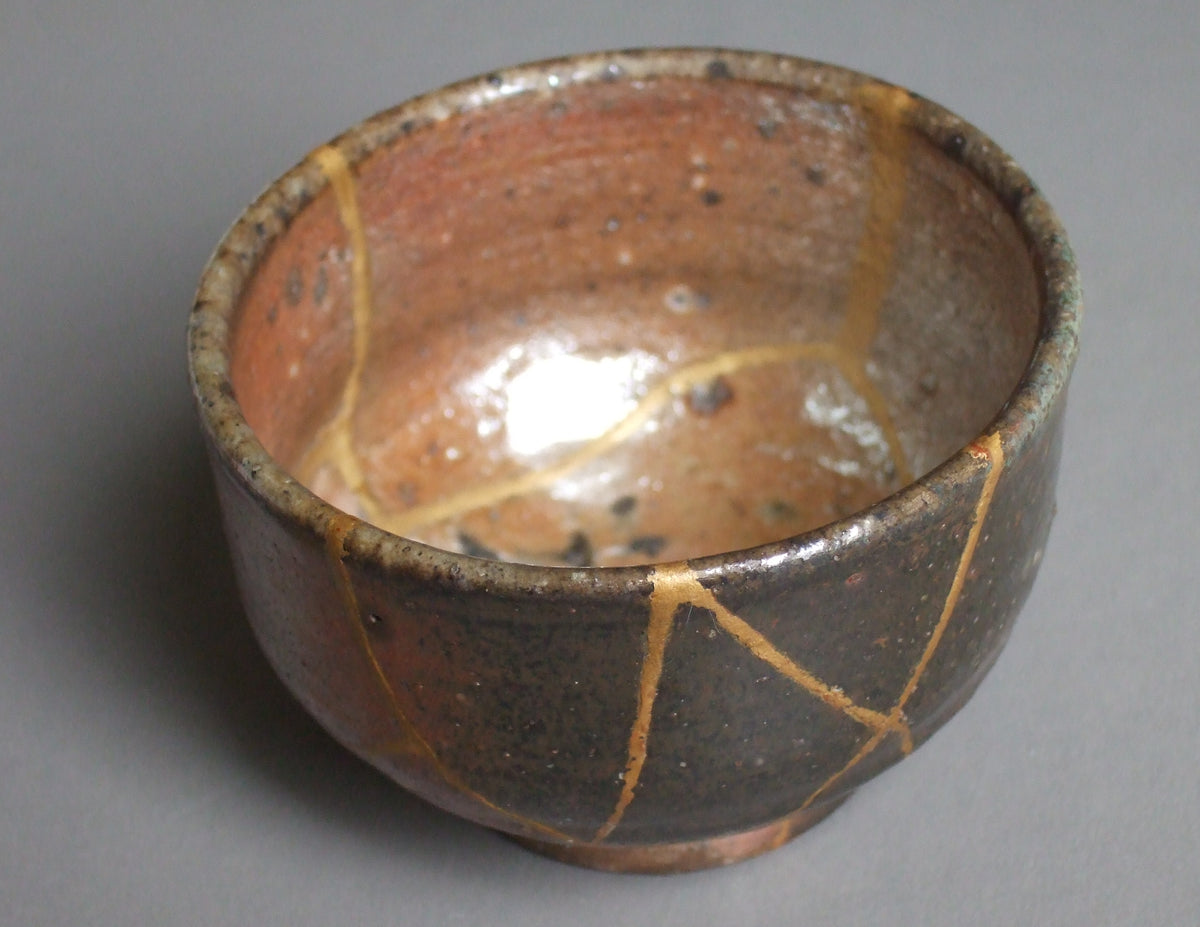
Japan House London gives a helpful, modest distinction: wabi points to beauty in simplicity and imperfection, while sabi describes the quiet dignity associated with time.[3] In practice, that can mean observing an unglazed clay surface, the small variation left by a maker’s hand, or the patina that comes from ordinary care. It does not require manufactured damage, deliberate disorder, or a promise that an object will improve everyone’s life.
For a closer look at the tradition behind the word, read Wabi-Sabi in Clay: The Aesthetic Philosophy Behind Suzu-yaki. The important point is that wabi-sabi is not a style checklist. It is a way of recognising material character and change without needing to erase either.
Where They Meet—and Where They Do Not
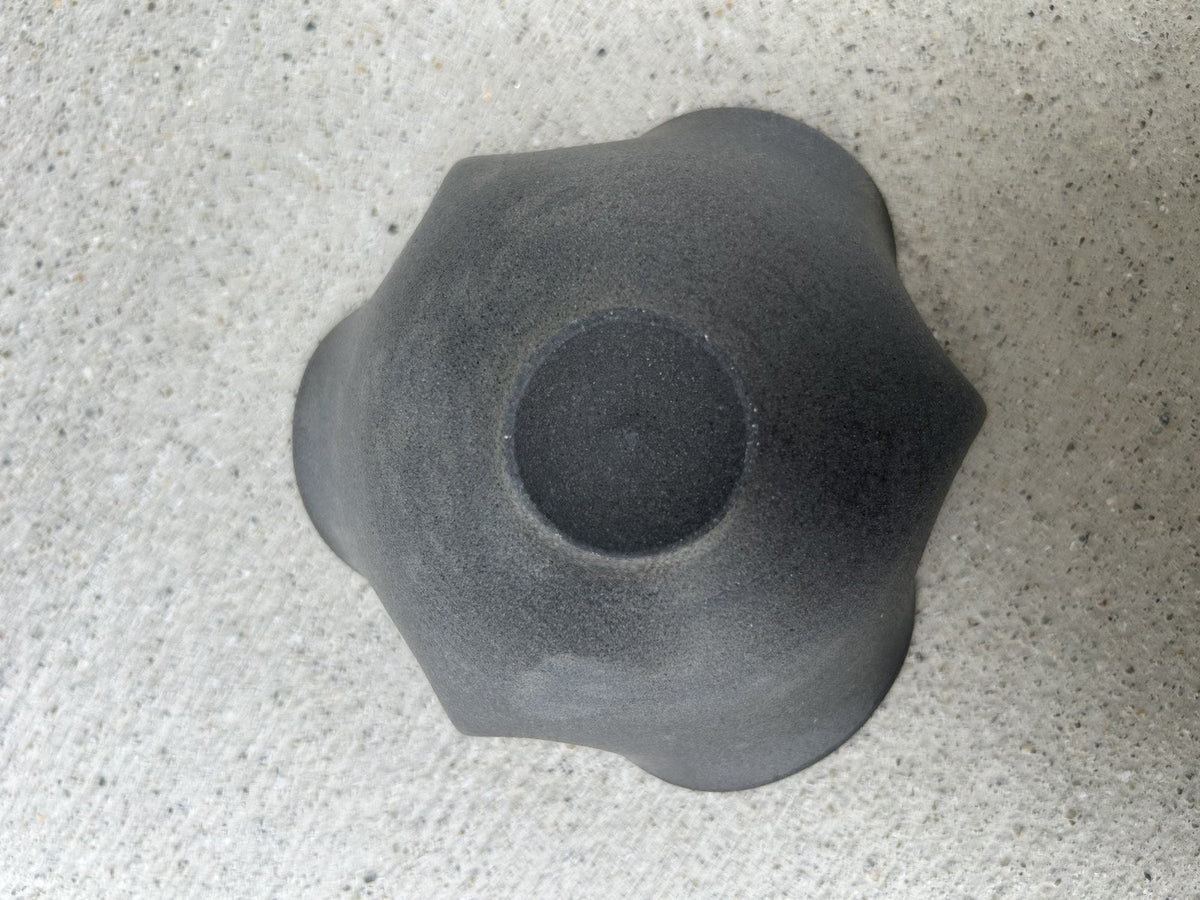
Japandi and wabi-sabi can meet in a room with a clear purpose, natural material, and a preference for fewer, better-used things. A pale oak shelf with one dark ceramic plate can belong comfortably to a Japandi composition. If that plate carries slight variations from hand-forming and becomes familiar through use, it may also invite a wabi-sabi way of looking. But the two ideas remain distinct: Japandi helps coordinate the setting; wabi-sabi changes the attention you bring to the object.
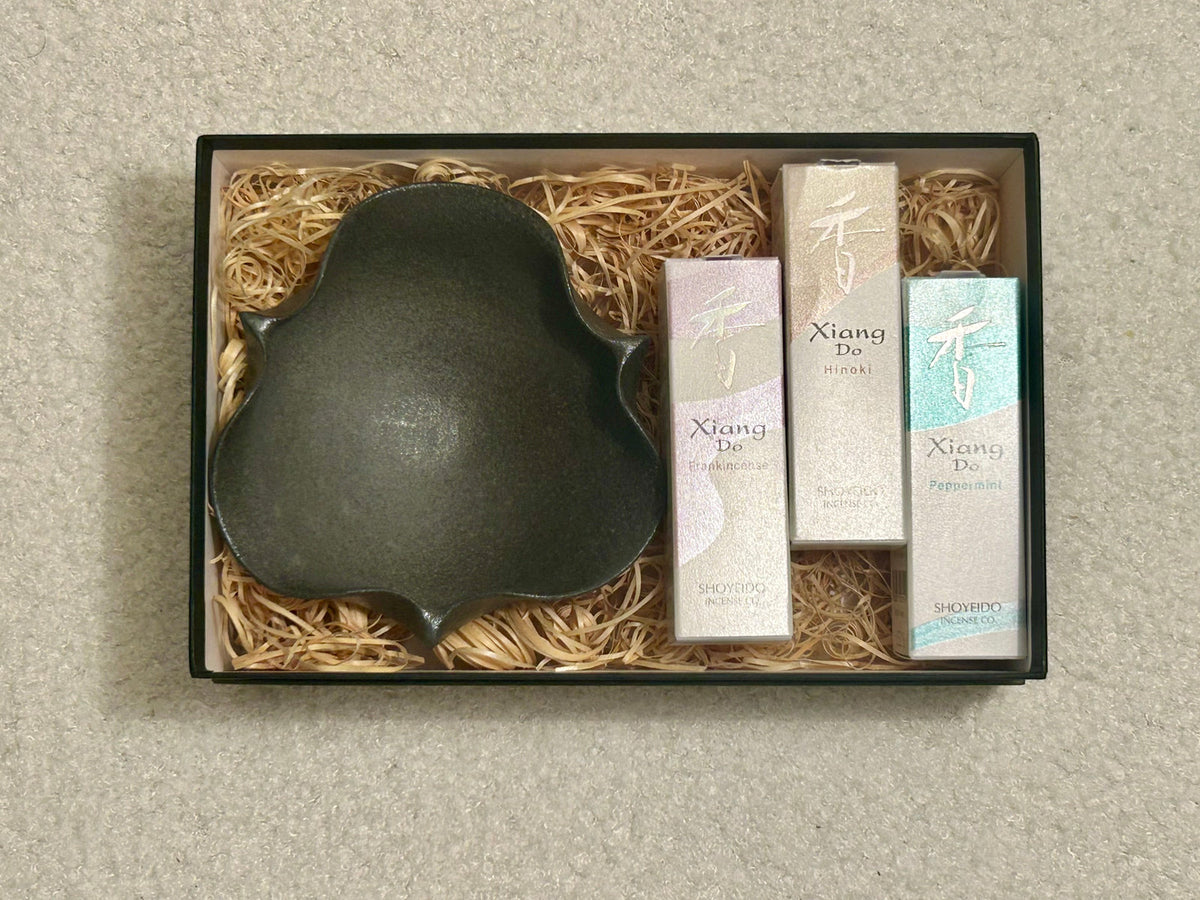
This is why a handmade object works better than an imitation of “imperfection.” The Zen Complete Set for a small daily incense ritual pairs a hand-formed, unglazed Suzu-yaki plate by Takanori Kizawa with Frankincense, Hinoki, and Peppermint Xiang Do incense. It offers a real object with a function: a plate to use, not a symbolic prop. Learn more about the material and maker in What is Suzu-yaki?
A Practical Way to Choose
Use Japandi when you are arranging a room. Start with function: What needs to happen on this surface? Which objects are used daily? Then reduce the visual noise around them. Bring in contrast through texture—linen beside clay, pale wood beside charcoal stoneware—rather than through a rush of decoration. Our guide to the Japanese-Scandinavian aesthetic offers a fuller introduction to that process.
Use wabi-sabi when you are choosing how to live with an object. Do not hide every irregular edge or expect a handmade surface to be identical to a product photograph. Let a vessel be useful; care for it properly; notice how light, touch, and time alter your relationship to it. Calm does not come from purchasing a philosophy. It comes from making fewer, more attentive decisions.

Build a quieter corner, slowly.
Explore giftable handmade Suzu-yaki and Japanese incense for a daily ritual with a clear place in the home. Ships worldwide.
Explore Gift Sets