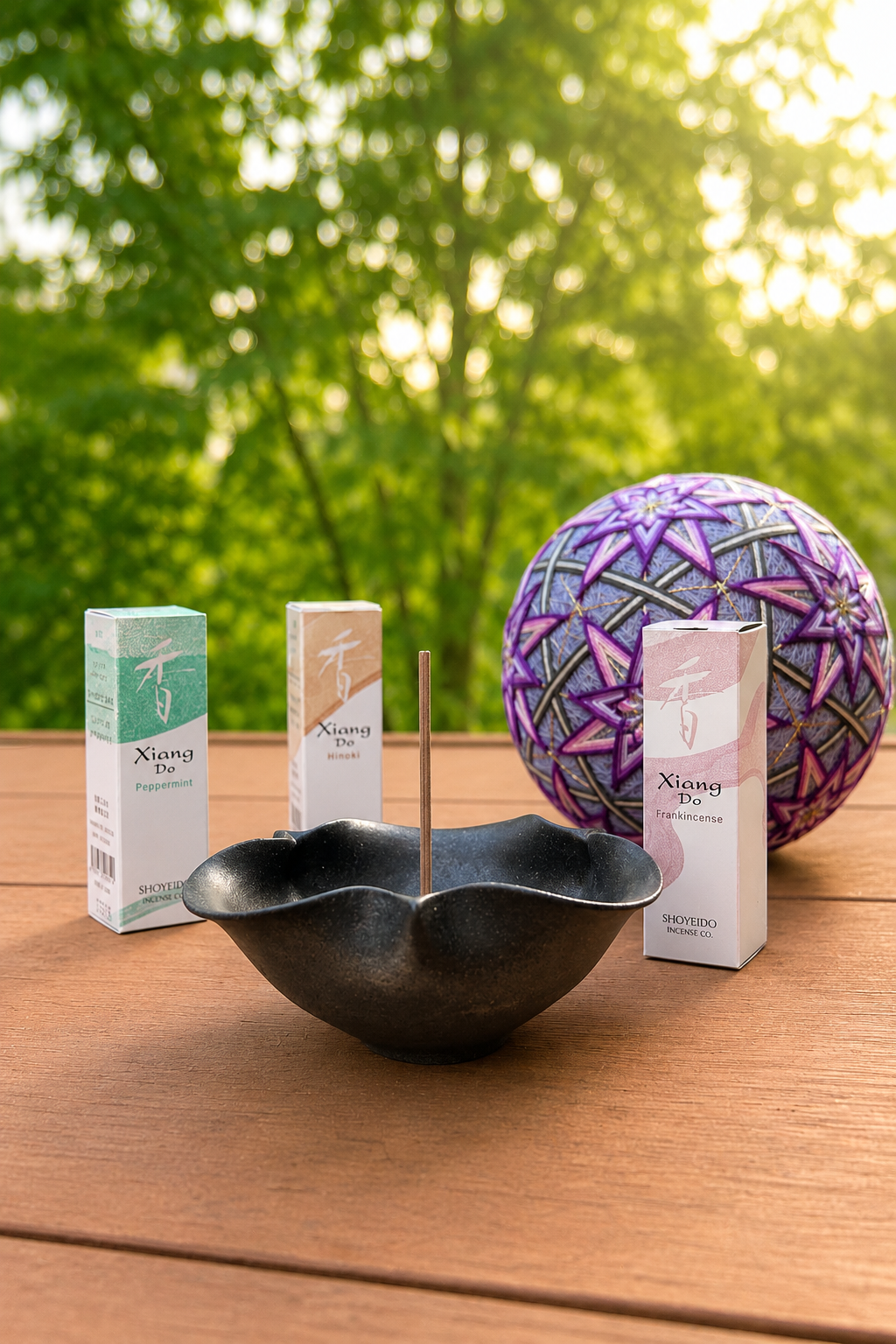
Japandi decor works best when it feels lived in rather than staged. Styling black Suzu-yaki in a Japandi home is a simple way to bring weight, texture, and useful craft into a room without adding visual noise. The deep charcoal surface of this unglazed stoneware gives pale wood, linen, paper, and soft daylight a quiet point of contrast.

Japandi is an editing principle, not a shopping list
The word Japandi is a contemporary design label for a meeting of Japanese restraint and Scandinavian warmth. The shared vocabulary is familiar: clean lines, natural materials, practical forms, muted colour, and respect for craftsmanship. But the style is not a traditional Japanese school, and Japan and Scandinavia should not be treated as interchangeable cultures. The useful idea is more modest: choose fewer objects, give each one a clear role, and let material carry the interest.
That distinction matters when you introduce black pottery decor. A dark vessel should not be added simply because it matches a trend photograph. It should have a job in the room: holding incense, supporting a daily pause, or giving a pale shelf a little visual weight. For the wider design context, read What Is Japandi?.
Start with one dark anchor
Begin with a single black Suzu-yaki object on a surface you already use. A bedside table, entry shelf, desk, or sideboard is enough. Clear the area first, then return only the items that support the activity. The resulting space may contain a lamp, a book, a small branch, and one ceramic piece. The restraint gives each material room to register.
Suzu-yaki (珠洲焼) is unglazed stoneware from the Noto Peninsula. Its deep surface comes from iron-rich clay, a reduction atmosphere, fire, and ash rather than an applied glossy glaze. That matte charcoal texture is especially effective beside pale oak, ash, maple, woven paper, cotton, or linen. The contrast is tactile rather than loud: light against dark, soft against mineral, smooth against hand-formed.
Use contrast through texture, not clutter
Japandi decor can become flat when every surface is the same beige. Black Suzu-yaki solves that problem without requiring a new colour scheme. Place it against a light wall or shelf, then repeat its visual weight only once elsewhere—a dark picture frame, a charcoal textile, or a slender iron detail. Repetition creates connection; too many dark accents create a theme.
Keep the surrounding objects quiet. One linen runner is more convincing than a pile of “natural” accessories. A single branch in a simple vessel can bring an irregular line to a room of straight furniture. Leave a little empty space around the ceramic so its edge, ash variation, and shadow remain visible. This is where styling meets use: the space around an object helps you notice whether the object belongs there.
Give the corner a daily function
The strongest Japandi rooms are not museum displays. They make ordinary actions easier to repeat. Use a black Suzu-yaki plate as the centre of a small incense corner, with the incense stored close by but not scattered across the surface. Light one stick at the end of the day, then return the plate to its place after it has cooled. The ritual gives the styling a reason to exist.
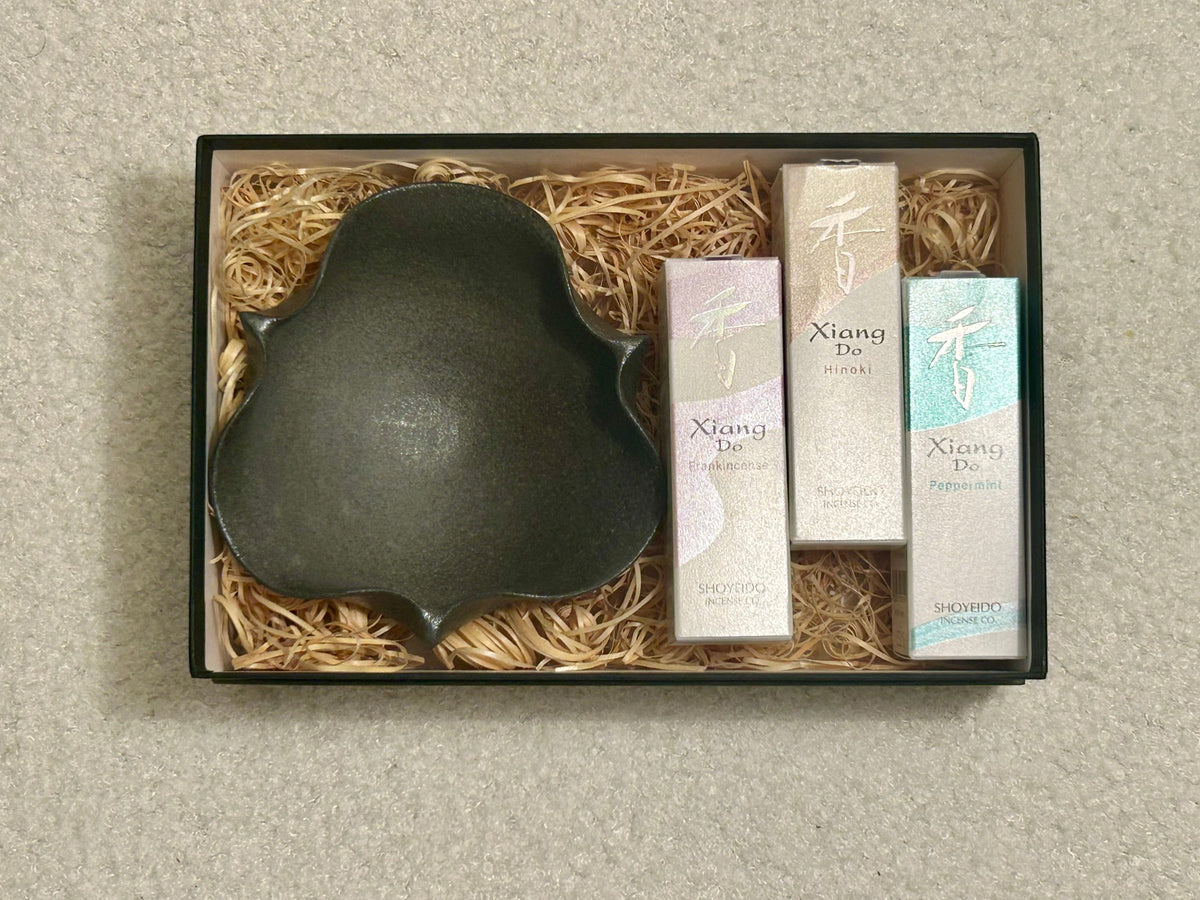
The Zen Complete Set for a Japandi incense corner pairs a hand-formed plate by Takanori Kizawa with twenty sticks each of Frankincense, Hinoki, and Peppermint Xiang Do incense. The three scents offer choice, while the dark plate supplies a stable visual anchor. It is a useful object first, which is exactly why it works as decor.
Style by room, not by formula
In an entryway, keep the plate beside a tray for keys or a small lamp; avoid placing incense where coats, paper, or other flammable materials crowd the flame. On a desk, let the ceramic sit at the edge of the working area rather than in the middle of it. In a bedroom, pair it with warm wood and washable textiles, leaving enough clearance for safe use. On a living-room shelf, lower the visual temperature with a pale book stack or a small ceramic-free space beside it.
These are starting points, not rules. The right position is the one that supports the way you actually move through the room. If an object is constantly being shifted aside, it is not yet styled; it is in the wrong place.
Japandi and wabi-sabi are related, not identical
A Japandi arrangement coordinates a setting. Wabi-sabi asks you to notice simplicity, irregularity, time, and use. A handmade Suzu-yaki surface can sit comfortably within both conversations, but the terms should not be collapsed into one trend. Read Japandi vs Wabi-Sabi for the distinction, then explore What Is Suzu-yaki? for the material and maker behind the object.

Build one quieter corner
A black ceramic accent becomes meaningful when it helps create a pause you will actually use. The Zen Complete Set brings Suzu-yaki and Japanese incense together in one compact ritual, with a hand-formed plate and three distinct scents. Explore Gift Sets for a considered Japandi accent or a handmade present. Ships worldwide.