The Language of Clay: How Potters Name Their Works
A Japanese ceramic work often seems to introduce itself in a few quiet words: a maker’s name, a place, a firing, a form, perhaps a glimpse of a season. Yet a title such as Shino chawan, Bizen mizusashi, or Seiji rinka hachi carries far more than a label. It is a compact record of material, process, function, lineage, and the visual world the potter hopes you will enter.
Learning to read that language changes the experience of collecting and living with pottery. You do not need to memorize every Japanese term. Rather, you can learn to notice the few elements that reveal how a vessel came into being—and why it looks and feels the way it does.
A Title Is a Map, Not a Formula
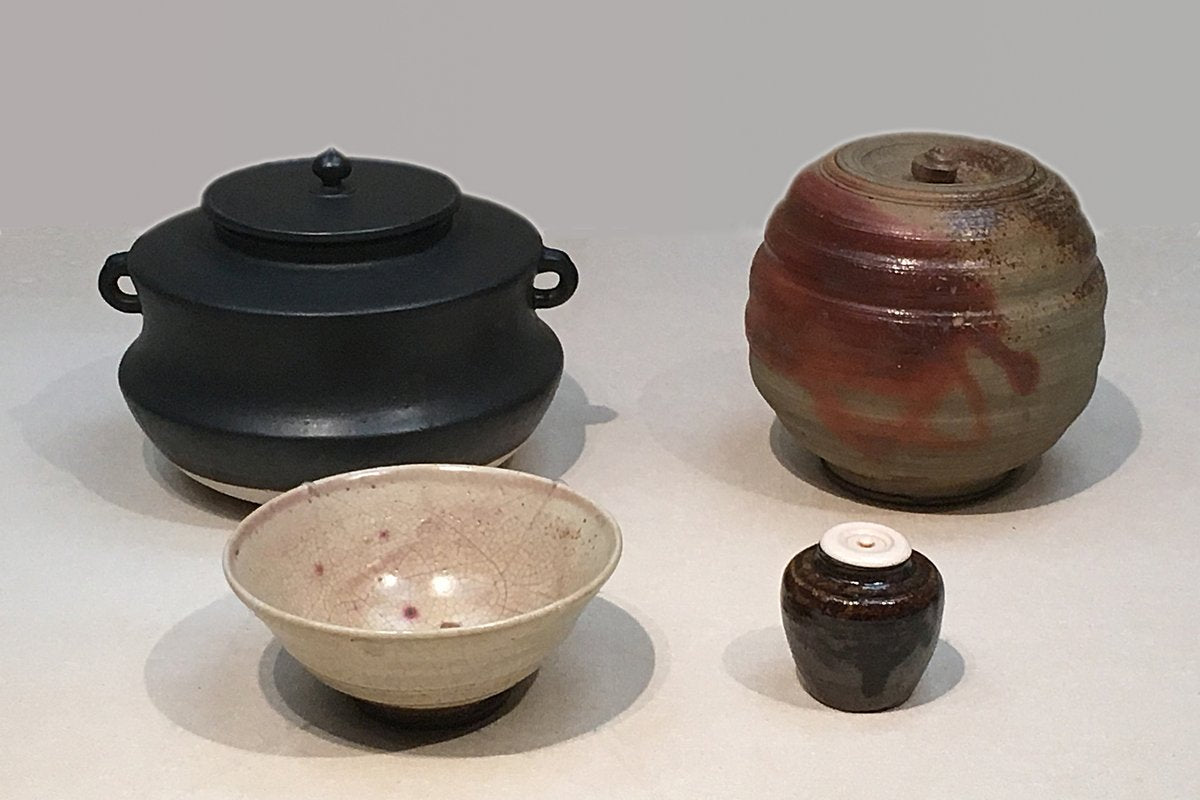
Museum catalogues commonly identify Japanese ceramics through a combination of maker, ware or place, material or surface, and vessel form. The Japan Kogei Association, for example, describes works with terms such as Shino chawan (a Shino tea bowl), kaiyu kaki (an ash-glazed flower vase), and seiji rinka hachi (a celadon bowl with a foliated rim). Those terms allow the reader to move from the object’s broad family to its particular character.[2]
A useful reading order:
maker or tradition → ware/place → surface or firing → form → motif, mood, or season
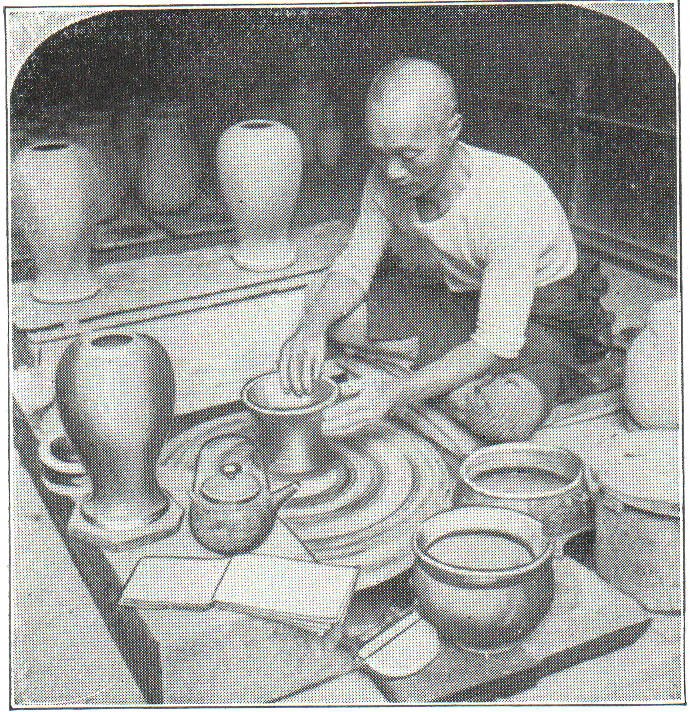
Not every title contains every element, and contemporary potters are free to name work poetically, minimally, or not at all. Still, this sequence is a helpful way to look slowly. It reminds us that a vessel is not just a shape; it is the outcome of decisions made in the studio, the kiln, and the imagination.

1. Ware and Place: Where the Clay Belongs
Many names begin with a ceramic tradition or region: Bizen, Shino, Karatsu, Hagi, Seto, Kutani, and Suzu-yaki, to name only a few. These are not interchangeable style labels. They point to particular histories of local clay, firing practices, and use. For example, the Japan Kogei Association characterizes Bizen as an unglazed ware fired for an extended period to bring out the innate quality of its iron-rich clay; it describes Shigaraki as an unglazed stoneware whose rough orange-firing clay gives it a rustic presence.[2]
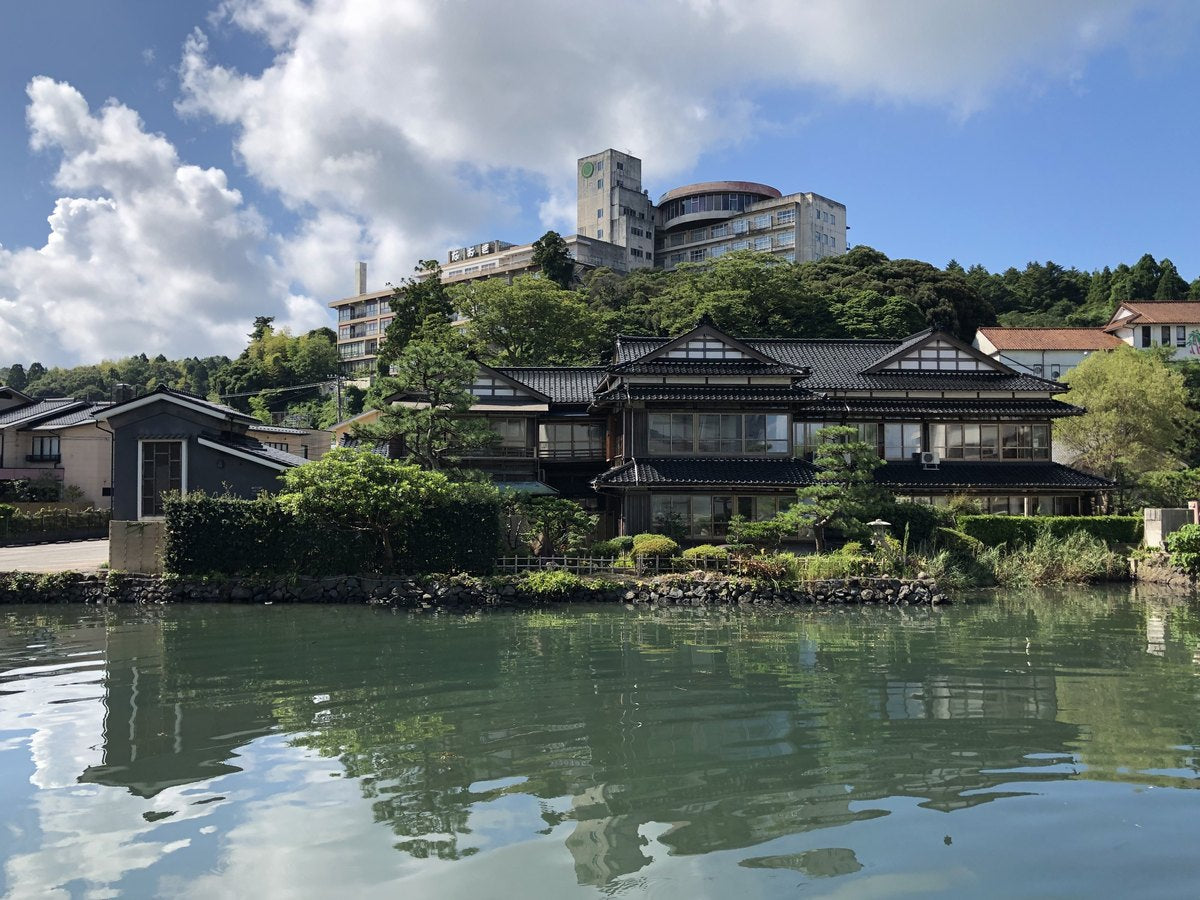
When you see Suzu-yaki, you are being invited to begin with the Noto Peninsula: a revived stoneware tradition known for kiln-fired, unglazed surfaces and an elemental dark character. The name gives the work a geographical and historical home before the eye has even reached the rim.
2. Surface and Firing: What the Kiln Has Written
Potters also name the visible traces of transformation. A word such as shizen-yū, or natural ash glaze, refers to the glassy surface formed when wood ash settles on a vessel during firing and fuses with minerals in the clay. The surface is not simply applied decoration; it is evidence of a specific encounter between flame, ash, atmosphere, and time.[2]
This is one reason Japanese titles can feel so attentive to process. Terms including kaiyū (ash glaze), kokuyū (black glaze), zōgan (inlay), hakeme (brushed slip), and inka (stamped decoration) tell the viewer how to look. They draw attention to the surface not as a finish, but as a record of making.

3. Form: The Vessel’s Everyday Role
The final noun is often the simplest and most practical part of a title. A chawan is a tea bowl, a hachi is a bowl, a hanaire is a flower vase, and a mizusashi is a fresh-water jar used in tea practice. Knowing the form helps us understand scale, balance, and intended use. A shallow dish asks to be read from above; a tea bowl asks to be turned in the hands; a flower vase creates a vertical conversation with a single stem.
These functional names also preserve a central truth about Japanese ceramics: beauty does not sit apart from use. The Metropolitan Museum of Art describes Japanese ceramic history as encompassing everyday tableware, vessels made for tea, elite wares, and modern sculptural works.[3] A name that includes a form tells you where the work enters daily life.
4. Marks and Signatures: Whose Story Does a Seal Tell?
Turn a vessel over and you may find an impressed or incised mark. It is tempting to read every mark as a straightforward signature, but historical ceramics ask for more care. The Smithsonian’s National Museum of Asian Art explains that late-sixteenth-century tea wares could bear patron seals, while by the mid-seventeenth century Kyoto master Ninsei used elegant seals to identify his products. Later, Ogata Kenzan inscribed his studio name in expressive brushwork; marks used at the Seto kilns could emphasize a prestigious ware rather than an individual maker.[1]
In other words, a mark may speak of a potter, a workshop, a patron, a kiln, or a tradition. Its value is not limited to authentication. It is a point of contact between an object and the community that brought it into the world.

How to Read a Suzu-yaki Work
With Suzu-yaki, start with the material reality. Notice the dark, unglazed body; the slight irregularity of the rim; the areas where the kiln has left a soft change in tone. Then ask three quiet questions: What is this vessel made to do? What did the fire contribute? What does its surface make me feel?
Even if the work’s title is brief, these questions allow the vessel to unfold. A name may guide you toward the clay, the kiln, or the form—but it never replaces the slower act of looking. That is the enduring language of clay: not a code to solve, but a conversation to return to, one cup of tea at a time.
Sources
Related reading: For a focused look at Suzu-yaki’s unglazed charcoal surface, read Japanese Black Pottery, Explained.