
Suzu-yaki in the Tea Room: A Guide for Chado Practitioners
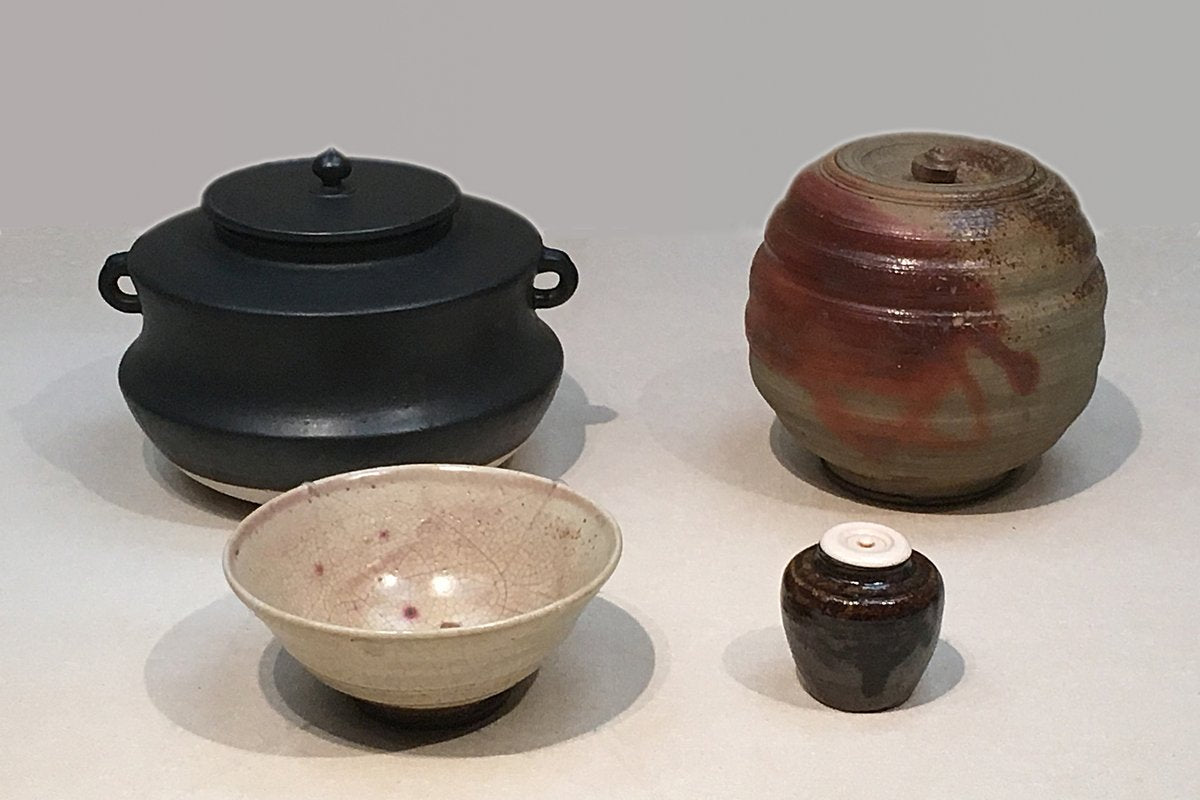
In the quiet, deliberate space of a Japanese tea room (chashitsu), every object is chosen with profound intention. From the scroll hanging in the alcove to the iron kettle singing on the hearth, the Way of Tea (Chadō or Sadō) is an immersive sensory experience. Among these carefully curated items, the tea bowl (chawan) holds a place of unique reverence. It is the vessel that bridges the host and the guest, the earth and the lips.
While glazed ceramics like Raku, Hagi, and Karatsu have long dominated the tea room, the unglazed, carbonized beauty of Suzu-yaki offers a compelling, elemental alternative. This guide explores how Suzu-yaki integrates into the practice of Chadō, and why modern tea practitioners are increasingly drawn to its quiet strength.
The Wabi-Sabi Resonance of Suzu-yaki
At the heart of the Japanese tea ceremony is the aesthetic philosophy of wabi-sabi—finding beauty in imperfection, impermanence, and rustic simplicity. Suzu-yaki, with its dark, unglazed surface and unpredictable ash-fall patterns (shizen-yū), is perhaps the purest physical manifestation of this concept.

Unlike porcelain, which reflects light and demands attention, Suzu-yaki absorbs light. Its matte, charcoal-gray to deep-black finish creates a sense of profound stillness in the tea room. When placed on the tatami mat, a Suzu-yaki chawan does not shout; it waits. This quality aligns perfectly with the teachings of Sen no Rikyū, the 16th-century tea master who championed the use of humble, everyday wares over ostentatious, imported ceramics.
The Visual Contrast: Green on Black
One of the most striking reasons to use a Suzu-yaki tea bowl is the visual contrast it provides. The vibrant, frothy emerald green of matcha (powdered green tea) set against the stark, dark background of a Suzu-yaki bowl is breathtaking.

In traditional tea aesthetics, the host carefully considers the "landscape" (keshiki) of the bowl. With Suzu-yaki, the landscape is not painted on; it is forged in the fire. As the guest drinks the tea and the green foam slowly recedes down the sides of the bowl, the underlying texture of the clay—perhaps marked by a flash of natural ash glaze or the subtle indentations of the potter's fingers—is gradually revealed.
Tactile Experience: The "Thirst" of the Clay
A crucial aspect of Chadō is the tactile experience. A tea bowl must feel right in the hands. Suzu-yaki is fired at extremely high temperatures (around 1,200°C), making it dense and durable, yet its unglazed surface retains a slightly rough, earthy texture.
Because it lacks a glass-like glaze, Suzu-yaki is slightly porous. Tea practitioners often refer to this as the clay being "thirsty." Before a tea gathering, a Suzu-yaki bowl should be soaked in warm water. As it absorbs the moisture, its color deepens, taking on a rich, lustrous tone. Over years of use, the oils from the tea and the hands of the practitioners will slowly polish the surface, giving the bowl a soft, leather-like patina—a process known as "raising the bowl" (chawan wo sodateru).
Beyond the Chawan: Other Suzu-yaki Utensils
While the tea bowl is the centerpiece, Suzu-yaki's understated elegance makes it suitable for other tea room utensils:
- Mizusashi (Fresh Water Jar): The dark, solid presence of a Suzu-yaki mizusashi anchors the tea preparation area, especially during the cooler months when a sense of warmth and weight is desired.
- Kensui (Waste Water Receptacle): A Suzu-yaki kensui sits quietly out of the immediate spotlight, fulfilling its humble role with quiet dignity.
- Hanaire (Flower Vase): In the tokonoma (alcove), a Suzu-yaki vase provides a stark, earthy contrast to the delicate, ephemeral beauty of a single seasonal flower (chabana).

A Vessel for the Modern Practitioner
For the modern Chadō practitioner, choosing a Suzu-yaki bowl is a statement of intent. It is a step away from the highly decorated and a step toward the raw, elemental origins of pottery. It requires care—soaking before use, thorough drying afterward—but this care is entirely in keeping with the mindfulness that the Way of Tea demands.
In a Suzu-yaki chawan, we find a vessel that does not merely hold tea; it holds the silence of the kiln, the memory of the fire, and the quiet spirit of wabi-sabi.
Related reading: For a focused look at Suzu-yaki’s unglazed charcoal surface, read Japanese Black Pottery, Explained.


,%20every%20object%20is%20chosen%20with%20profound%20intention.%20From%20the%20scroll%20hanging%20in%20the%20alcove%20to%20the%20iron%20kettle%20singing%20on%20the%20hearth,...)