Mingei: The Japanese Folk Craft Movement That Changed the World

Japanese Craft Philosophy
Imagine a bowl with no signature, no gold leaf, and no theatrical claim to greatness. Its rim is slightly uneven. Its surface remembers the hand, the tool, the kiln, and the patience of ordinary labor. Before the twentieth century, such an object might have been overlooked as common household ware. The Mingei movement taught Japan—and eventually the world—to look again.
The word mingei is commonly translated as “folk craft” or “crafts of the people.” It was shaped in the 1920s around the philosopher and critic Sōetsu Yanagi, together with the potters Kawai Kanjirō and Hamada Shōji. The term itself is usually understood as a union of minshū, meaning common people, and kōgei, meaning craft.[1] Yet Mingei was never only a label. It was a radical change in seeing: a philosophy that found dignity, grace, and spiritual depth in practical objects made for daily life.
The Beauty of the Unnamed Hand
Yanagi’s awakening began not with celebrated Japanese treasures, but with Korean Yi dynasty ceramics. In the early twentieth century, he became deeply moved by simple Korean pottery—tea bowls, jars, and vessels made in great quantities by unknown craftspeople. The Mingei International Museum notes that Yanagi saw in these wares a beauty equal to famous scroll paintings and sculpture, and that in 1921 he opened a folk museum in Seoul dedicated to Korean pots and crafts.[2]
This discovery carried an important lesson. Beauty did not have to depend on the ego of an artist. It could arise from repetition, use, regional materials, inherited techniques, and a maker’s honest relationship with work. A water jar, a basket, a textile, or a bowl could become beautiful precisely because it was not trying to be extraordinary.

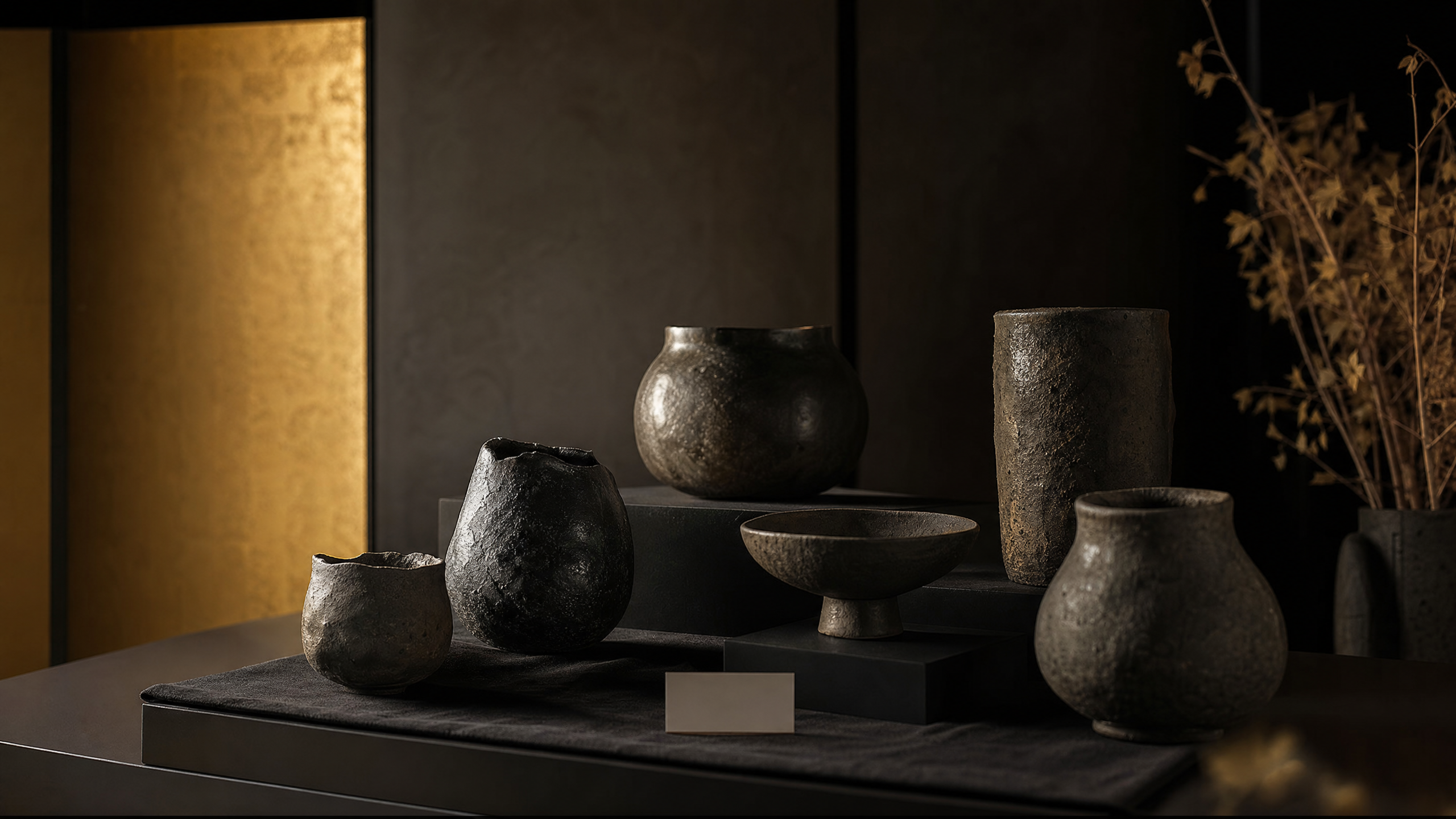
AI-generated editorial image; not a photograph of real Suzu-yaki pottery.
A Response to Modernization
Mingei emerged during a period of profound transformation. In the Meiji era, Japan rapidly industrialized and opened itself to global trade. According to SFO Museum, locally made folk crafts increasingly faced pressure from cheaper imports and machine-made goods; the Mingei movement developed in the 1920s as a response to this change.[3] What seemed old-fashioned to a modernizing society became, in Yanagi’s eyes, a living archive of cultural wisdom.
In 1934, Yanagi and his circle founded the Mingei Association of Japan, and in 1936 they established the Japan Folk Crafts Museum in Tokyo to preserve and present these traditions.[3] The museum was not merely a storehouse of things. It was a manifesto in wood, clay, fiber, and lacquer. It argued that the objects closest to everyday life could reveal the deepest truths of a culture.
“The quality of the life of the people of that country as a whole can best be judged by the folkcrafts.”
—Sōetsu Yanagi, quoted by Mingei International Museum[2]
The Principles of Mingei
Mingei values objects that are useful, honest, and rooted in place. Japan Objects summarizes Yanagi’s ideal as everyday work made from natural and local materials, shaped by hand, guided by traditional methods, simple in form, functional in purpose, produced in multiples, and accessible in cost.[1] These principles do not reduce craft to nostalgia. They remind us that the hand and the region still matter.
Mingei at a Glance
Anonymous: beauty is not dependent on fame. Useful: the object belongs to daily life. Local: material and technique come from place. Simple: form is restrained rather than decorative. Honest: the object reveals its making.

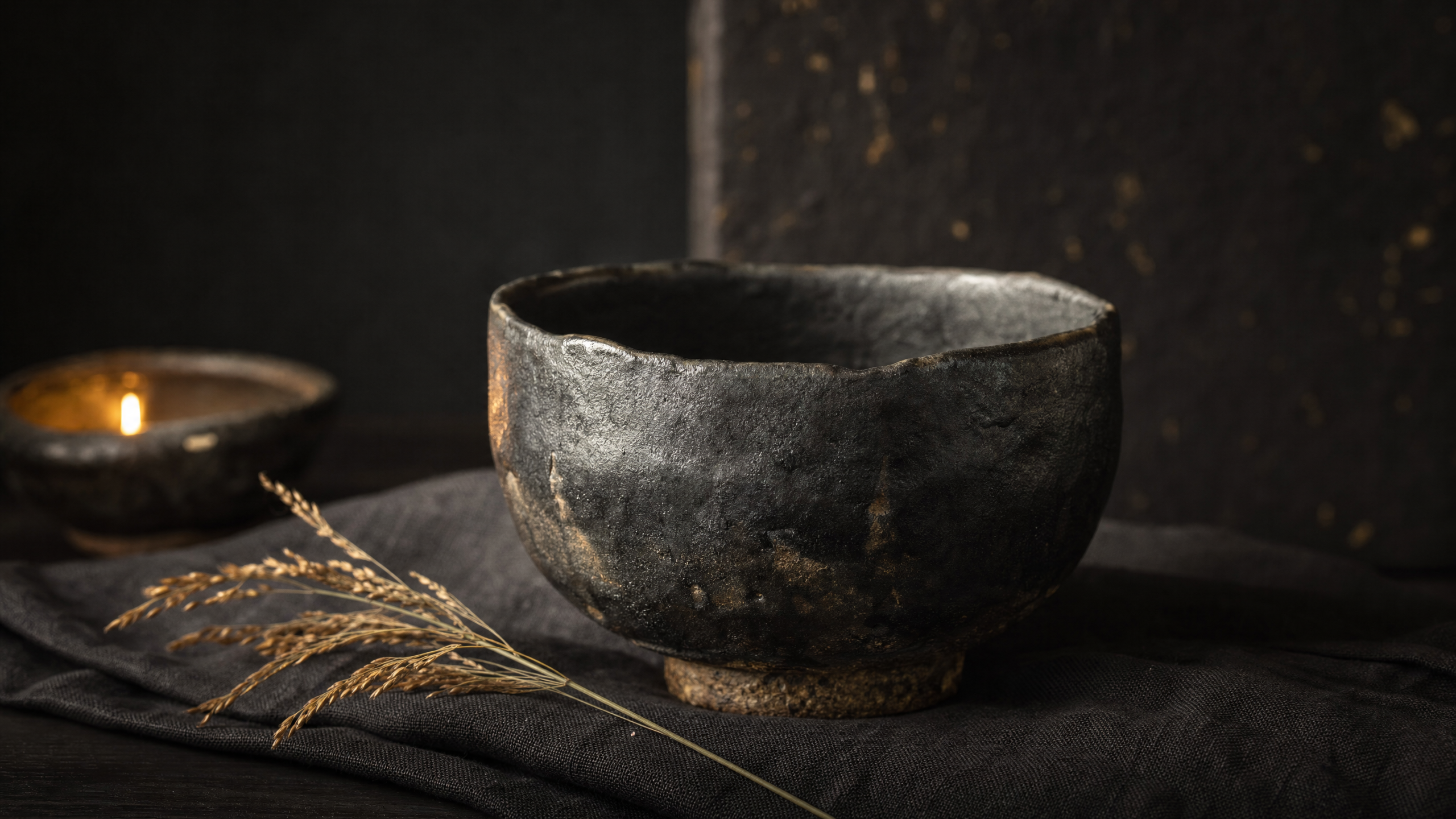
AI-generated conceptual image representing clay, fire, fiber, and functional form.
From Folk Craft to World Design
The influence of Mingei extended far beyond the Japanese countryside. Scholars have linked the movement to modern design, noting its relationship with wider conversations about craft, industrial production, and the search for a modern national style.[4] Kyoto City KYOCERA Museum of Art, marking the centennial of the term in 2025, emphasizes that Mingei began through gatherings in Kyoto between Yanagi, Kawai, and Hamada, then spread from Kyoto to Japan and the world.[5]
Today, Mingei’s legacy can be felt in the global appreciation for handmade ceramics, natural textiles, quiet interiors, and tools that improve with use. It has shaped the way collectors, designers, and everyday households speak about authenticity. It taught modern taste to distrust empty luxury and to value the warmth of human touch.
Why Mingei Matters for Suzu-yaki
Suzu-yaki is not simply an object to display. It is clay, region, flame, restraint, and use. Its unglazed black surface asks to be held. Its beauty is not polished into perfection; it is revealed through silence, shadow, and the memory of fire. In this sense, Suzu-yaki speaks naturally to the Mingei spirit, even when its own history follows a distinct regional path.
For the collector, Mingei offers a way to choose with clarity. Instead of asking only whether an object is rare, expensive, or decorative, it invites better questions: Does it carry the truth of its material? Does it enrich daily ritual? Does it grow more meaningful with touch and time? A Suzu-yaki cup used each morning may answer more eloquently than a museum label.
That is the enduring gift of Mingei. It does not tell us to reject beauty. It teaches us where beauty has been waiting: in the ordinary bowl, the well-used cup, the quiet surface of clay, and the daily gesture made with attention.