Japan's Craft Renaissance: Why Handmade Is Having a Moment
The Zen Artisan Journal
In an age of frictionless screens and disposable convenience, the quiet presence of a handmade object feels almost radical. Japanese craft is returning not as nostalgia, but as a way to live with greater attention.

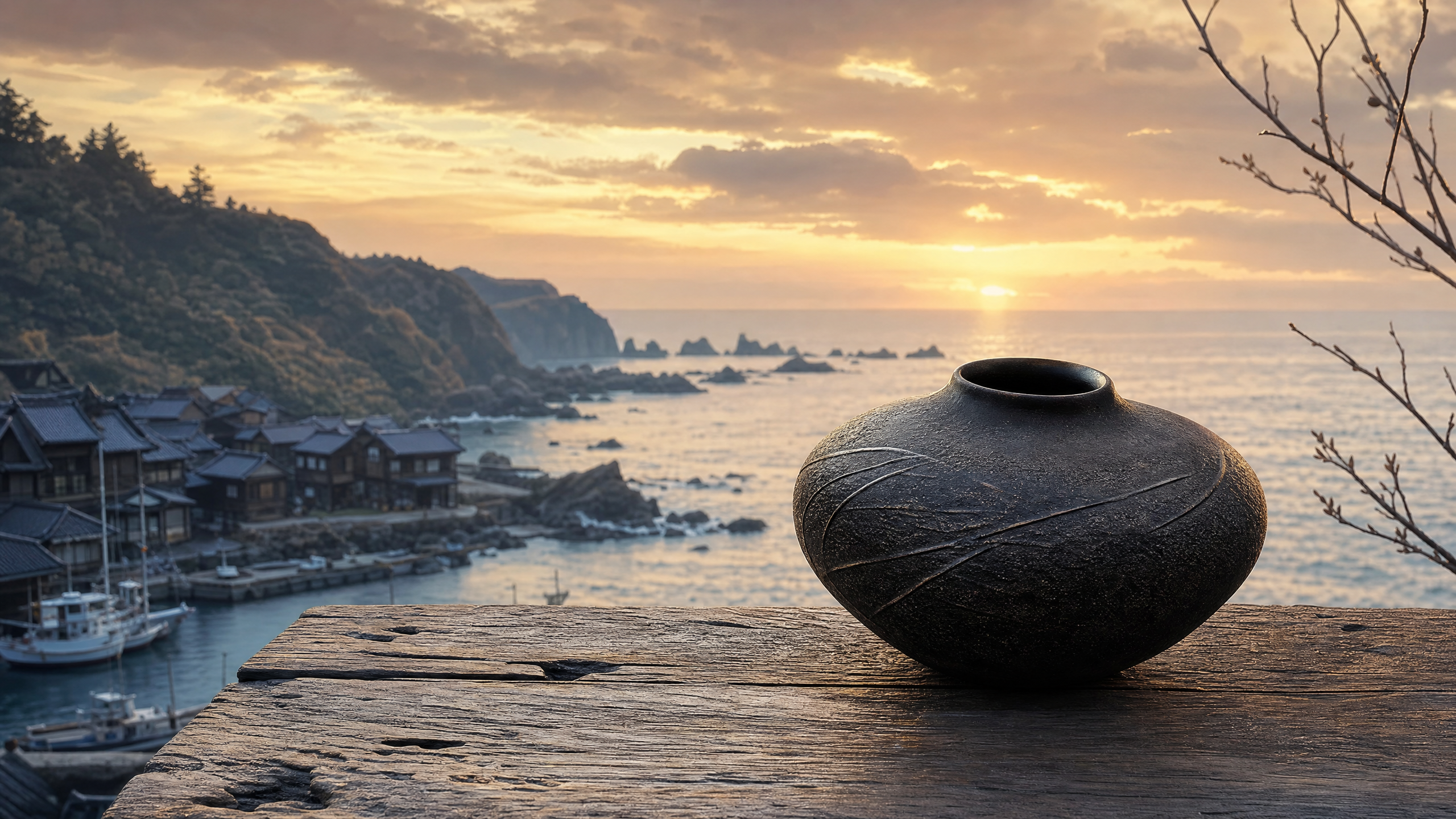
AI-generated editorial image; not a photograph of real Suzu-yaki pottery.
Place a handmade cup beside a smartphone and the contrast is immediate. One object asks to be refreshed, upgraded, replaced. The other asks to be held. Its rim may be slightly uneven. Its surface may catch the light in small, unpredictable ways. It carries the memory of hands, earth, fire, and time. This is why handmade Japanese craft is having a moment: it offers something modern life has made scarce—presence.
Japan has always understood that objects can shape the rhythm of daily life. A tea bowl, a rice bowl, a sake cup, a flower vessel—these are not merely things we own. They are companions in repeated gestures. The renewed global interest in Japanese craft is therefore not only an aesthetic trend. It is a cultural response to speed, sameness, and the fatigue of mass production.
A Return to the Human Trace
The word often used in Japan is kōgei, meaning craft or artisan work. In its highest form, kōgei is neither purely decorative nor merely practical. It lives in the fertile space between beauty and use. Japan's official framework for traditional craft reflects this idea: designated traditional craft products must serve everyday life, rely on handwork in their main production process, preserve techniques generally used for at least a century, and remain rooted in regional materials and communities.1
That definition matters because it separates craft from a simple look or style. A handmade object is not valuable because it appears rustic. It is valuable because it contains knowledge: how clay behaves under pressure, how ash moves through flame, how wood responds to humidity, how lacquer hardens into depth. These are not shortcuts. They are living disciplines.

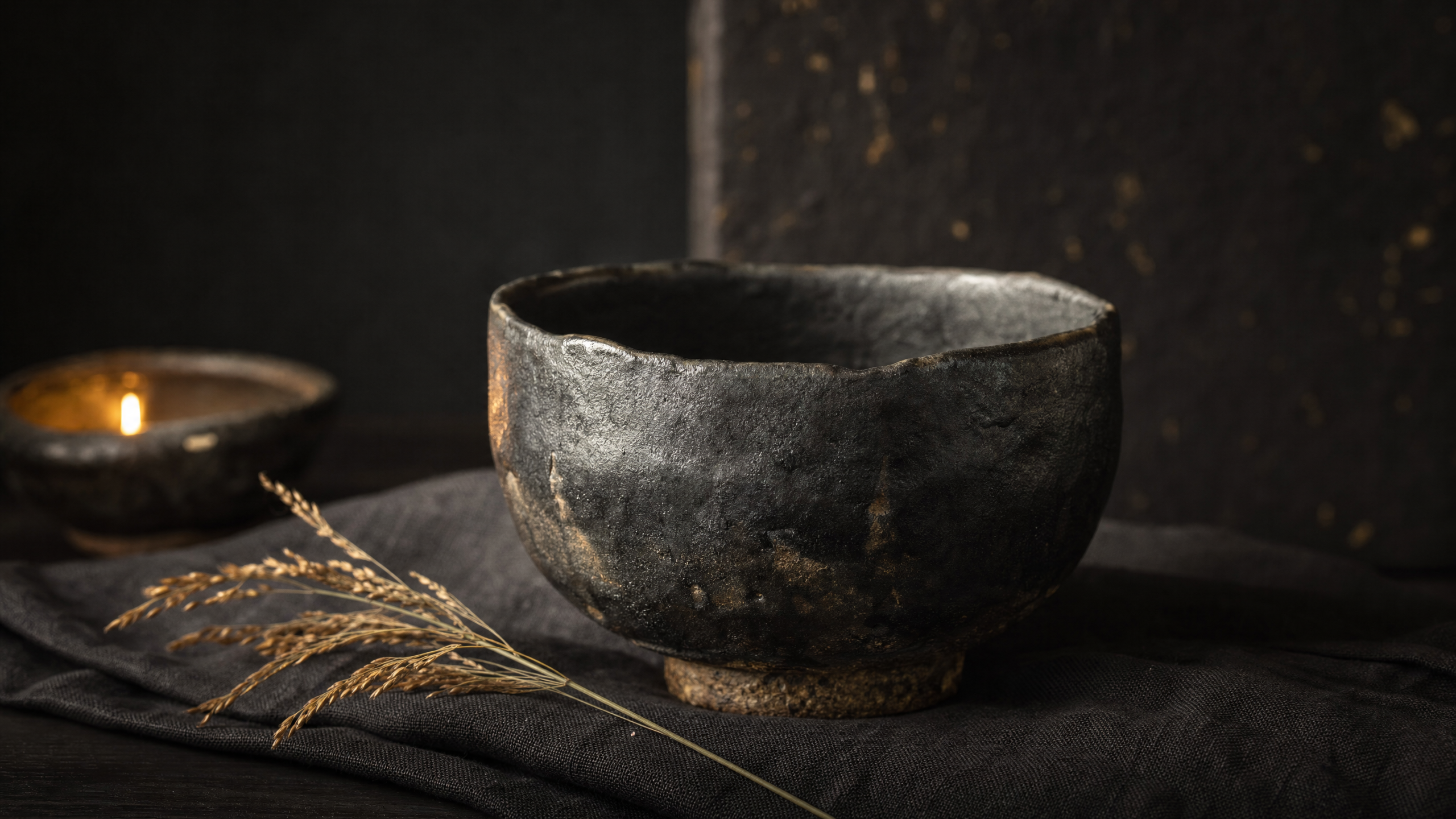
AI-generated editorial image; created to evoke handwork without using real pottery photographs.
The Echo of Mingei
This new craft renaissance also carries the echo of mingei, the Japanese folk craft movement associated with philosopher Sōetsu Yanagi and potters such as Kawai Kanjirō and Hamada Shōji. Mingei means “art of the people.” It elevated ordinary, functional objects—bowls, jars, textiles, tools—and insisted that beauty could belong to daily use rather than only to galleries or palaces.2
The handmade object restores intimacy to daily life. It reminds us that beauty is not always loud, polished, or perfect; sometimes it is simply faithful to use.
Mingei emerged during an earlier age of rapid industrialization. Its relevance today is striking. The factories have become global supply chains. The shop window has become an endless feed. Yet the longing is familiar: people want objects with origin, texture, and soul. They want to know not only what something is, but where it comes from, how it was made, and why it feels different in the hand.
Why Handmade Feels Modern Again
The renewed desire for handmade work is not a rejection of technology. It is a correction. Digital life excels at speed, access, and convenience, but it often leaves little room for tactility. A handmade ceramic cup resists that flattening. It has weight. It has temperature. It changes subtly with use. It invites a pause before the first sip.
Contemporary Japanese artisans are also proving that tradition can innovate without losing its center. Government and regional craft organizations note that traditional makers increasingly collaborate with designers and fashion houses, creating new forms while preserving inherited techniques.1 The result is not museum craft sealed behind glass, but living craft—objects that can sit comfortably in a Tokyo apartment, a London dining room, or a quiet morning ritual anywhere in the world.
What the craft renaissance values
Touch: the sensory pleasure of surfaces shaped by hand.
Time: patience visible in process, firing, finishing, and use.
Place: materials and techniques tied to a particular region.
Imperfection: asymmetry and variation as signs of life rather than flaws.
Where Suzu-yaki Belongs in the Story
Suzu-yaki belongs naturally within this moment. Born from the Noto Peninsula's earth and fired into a deep, unglazed black, it speaks in a language older than trend. Its power is not ornamental excess, but restraint. The surface does not shout for attention; it absorbs it. The cup, plate, or vessel becomes a quiet center around which a meal, tea, or conversation can gather.
For the modern collector, this is precisely the appeal. Suzu-yaki offers a bridge between ancient firing traditions and contemporary minimalism. Its dark surface pairs naturally with wood, linen, stone, candlelight, and seasonal food. It suits the rituals we are trying to recover: drinking slowly, setting a table with intention, offering a gift that will not be discarded after a season.

AI-generated lifestyle image; inspired by the mood of Japanese craft, not by real Suzu-yaki photography.
The Future Is Not Mass, but Meaning
The handmade renaissance is not about owning more. It is about choosing better. A mass-produced object may be flawless, but it is often anonymous. A handmade object may be imperfect, yet it carries relationship: between maker and material, between region and technique, between the person who uses it today and the traditions that shaped it long before.
This is why Japanese craft feels newly urgent. It gives form to values many people are trying to reclaim: slowness, continuity, local identity, and reverence for daily rituals. In the hand, a cup becomes more than a cup. It becomes an argument for attention. It reminds us that the future of luxury may not be louder, faster, or newer. It may be quieter, older, and made by hand.
Sources: Tohoku Bureau of Economy, Trade and Industry, Traditional Crafts of Japan; Mingei International Museum, History of Mingei.