Investment or Art? The Growing Market for Authentic Japanese Ceramics

The Zen Artisan Journal
To hold a handmade Japanese vessel is to feel a question before you answer it. Is this object an investment, a work of art, a tool for daily ritual, or a quiet inheritance from the earth? The most honest answer is that it may become all of these things, but only when collected with patience, knowledge, and reverence.
In recent years, collectors around the world have turned with renewed attention toward Japanese ceramics. The appeal is not difficult to understand. In a marketplace crowded with polished sameness, authentic clay carries the opposite promise: irregularity, touch, locality, and time. Japanese pottery is among the country’s oldest craft traditions, with regional styles that reach back to ancient earthenware and continue through living kiln communities today.1 Each piece is not merely shaped; it is situated within a landscape of soil, fire, technique, and cultural memory.
Why Collectors Are Looking Toward Clay
The growing interest in Japanese ceramics is not simply a trend in décor. It reflects a broader return to objects that reveal the hand of the maker. Museums have long understood this power. The Metropolitan Museum of Art’s Tanakamaru Collection, formed over nearly fifty years, presents Kyushu ceramics spanning at least three centuries, including celebrated Arita, Nabeshima, Kakiemon, and Karatsu wares.2 Such collections show how pottery can move beyond utility into scholarship, connoisseurship, and cultural preservation.
At the same time, contemporary Japanese clay is being reconsidered as sculptural art. Recent museum exhibitions describe a new generation of ceramic artists who build on the legacy of the mingei folk craft movement while pushing the vessel form into experimentation and abstraction.3 For the modern collector, this creates a beautiful tension: a Japanese ceramic object can be an everyday cup, a tea bowl, a sculptural presence, and a record of artistic evolution.

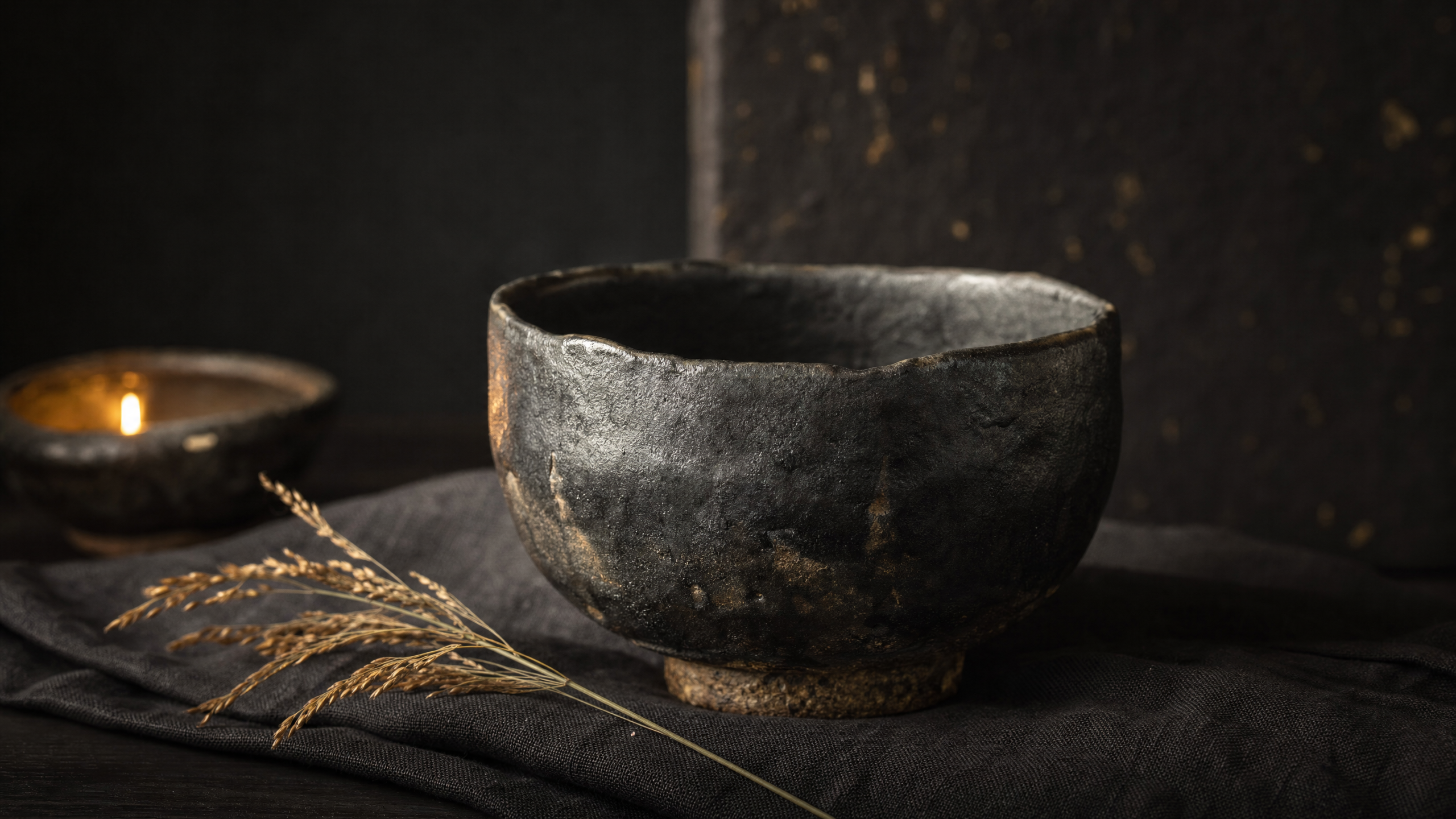
AI-generated image created for The Zen Artisan; no real Suzu-yaki pottery photograph is used.
What Gives a Ceramic Object Lasting Value?
The word “investment” must be approached carefully. Ceramics are not stocks, and no handmade object should be reduced to a promise of resale. Yet authentic Japanese pottery can hold lasting value because it embodies several forms of rarity at once. The first is material rarity: the clay itself, often tied to a particular region. Gallery Japan notes that Japanese ceramic traditions developed in accordance with local clay, which is why many wares carry the names of the regions where they were made.4
The second is process rarity. In high-fired unglazed stoneware, the final surface may depend on how a vessel sits inside the kiln, how flame travels around it, and how ash lands on the body. Bizen ware, for example, is valued for natural ash effects and kiln interactions that make every piece unique.5 This principle matters deeply for collectors: what looks like imperfection may actually be the signature of the firing.
The third is narrative rarity. A piece by a known maker, from a documented kiln, with clear provenance and a coherent regional story will always speak more strongly than an anonymous object without context. In the auction world, connoisseurship relies on sourcing, research, cataloguing, and exhibition history; major Japanese art departments work with private collectors, museums, and galleries precisely because knowledge supports trust.6
A Collector’s Quiet Checklist
Before buying, ask whether the piece offers more than surface beauty. Can you identify the maker or kiln? Is the regional tradition clear? Does the form feel resolved from every angle? Are the textures natural to the firing rather than decorative imitation? Is the seller willing to explain the origin, care, and intended use?
Most importantly, would you still value the object if no one else saw it? The finest collections often begin with that private answer.
Where Suzu-yaki Belongs in This Conversation
Suzu-yaki holds a distinctive place within this larger story. It is not loud porcelain, nor is it decorative in the Western sense. Its beauty is quieter: the depth of blackened clay, the gravity of an unglazed surface, the sense that the vessel has passed through darkness and returned with memory. For collectors who seek authenticity, this restraint is precisely the point.
The revival of Suzu-yaki after centuries of disappearance also gives it a narrative force that many contemporary objects lack. It connects the collector not only with a maker, but with a restoration of regional identity. To acquire such a piece is to participate, however modestly, in the survival of a tradition. This is where art and investment begin to overlap: not in speculation, but in stewardship.

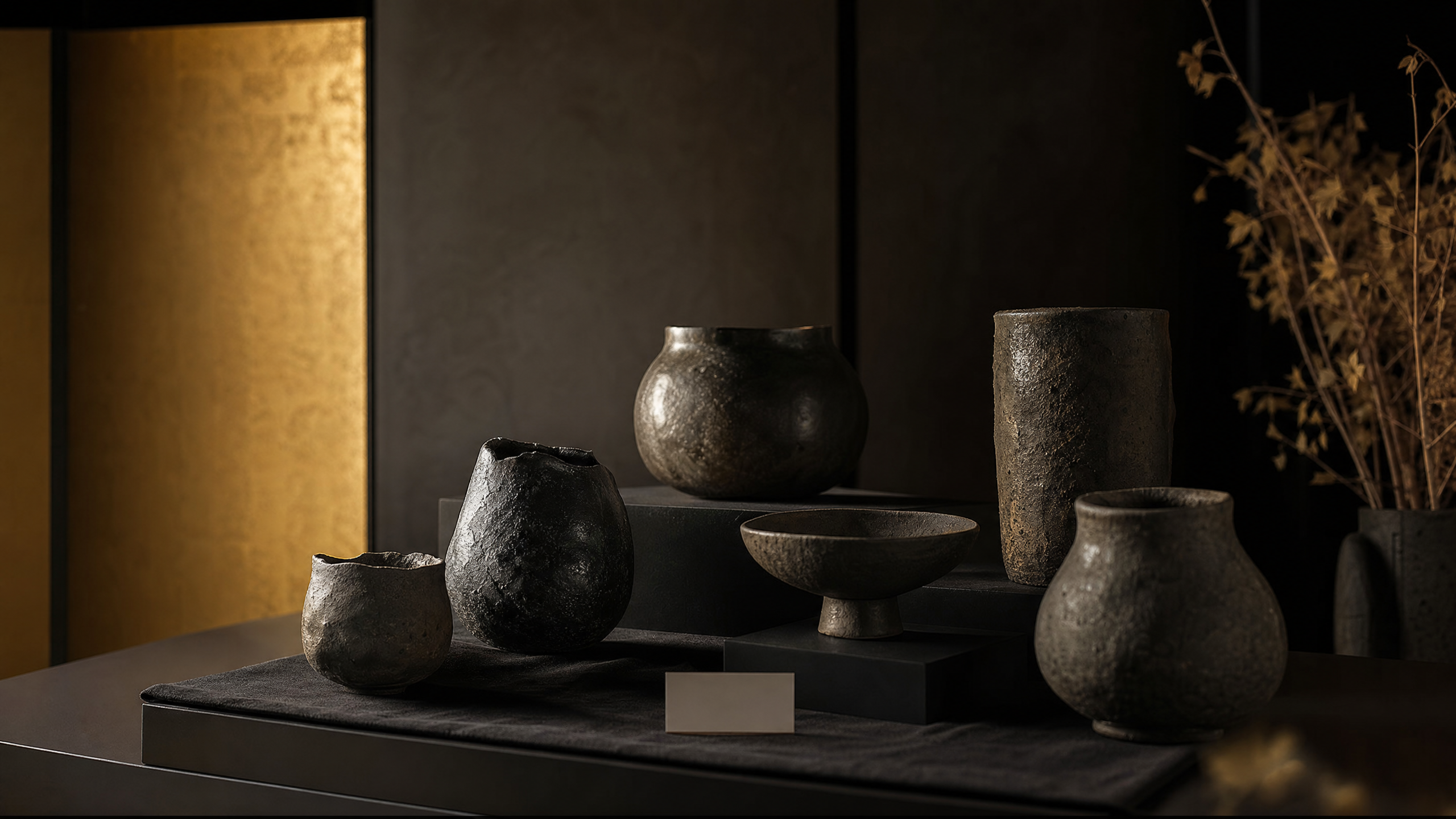
AI-generated image created for atmosphere and storytelling; no real Suzu-yaki pottery photograph is used.
How to Collect With Confidence
A meaningful collection grows slowly. Begin by learning the vocabulary of Japanese ceramics: stoneware and porcelain, glaze and unglazed firing, kiln effects, reduction atmosphere, ash markings, regional clay. Ceramics, or yakimono, are broadly divided between earthenware or stoneware made from soil-based clay and porcelain made from mineral-based clay.4 This basic distinction helps the eye understand why a black, unglazed vessel should not be judged by the same standards as a luminous painted porcelain plate.
Then, buy fewer pieces and choose better ones. A single vessel that you use, study, and return to over years may teach more than a shelf of impulsive purchases. Keep records: the maker’s name, kiln, region, year if known, receipt, care instructions, and any notes about the firing. Documentation may not transform a humble cup into a masterpiece, but it preserves the object’s story for the next owner, whether that person is a family member, a collector, or your future self.
Care is part of value as well. Handmade pottery should be treated as a living companion. Avoid sudden temperature shocks. Wash gently. Allow porous unglazed surfaces to dry fully. Let patina arrive naturally through use. In Japanese craft, age is not always a flaw; when earned honestly, it can become a second layer of beauty.
The Better Question
So, are authentic Japanese ceramics an investment or art? The better question may be: what kind of value do you wish to live with? Financial value may rise or fall according to taste, rarity, condition, and market attention. Artistic value deepens when knowledge deepens. Personal value grows each time the cup is lifted, the bowl is filled, or the surface catches morning light.
At The Zen Artisan, we believe the strongest collections begin not with calculation, but with devotion. Choose the vessel that slows your hand. Choose the clay that makes silence visible. If it becomes an heirloom, let that be because it first became part of a life well observed.
Sources consulted: 1 Japan National Tourism Organization, “Japanese Ceramics”; 2 The Metropolitan Museum of Art, “Japanese Ceramics from the Tanakamaru Collection”; 3 Asian Art Museum, “New Japanese Clay”; 4 Gallery Japan, “About Ceramics”; 5 Gallery Japan, “Bizen ware”; 6 Christie’s, “Japanese Art Department.”