The Zen Artisan Journal
A handmade vessel does not merely hold tea, coffee, or sake. It holds time. It holds the quiet pressure of a thumb against clay, the memory of fire, and the decision of an artisan who chose presence over speed.
In an age when almost anything can be made quickly, shipped globally, and replaced without ceremony, the distinction between mass-produced and handmade objects has become more than a matter of technique. It is a question of relationship. What do we ask of the objects we live with every day? Do we want them to disappear into the background, or do we want them to deepen the ritual of ordinary moments?
Ceramics offer one of the clearest answers. Japan has shaped clay for thousands of years, beginning with Jōmon pottery, whose cord-marked surfaces are among the earliest expressions of ceramic culture in the archipelago. Over time, regional kilns developed their own clays, firing methods, glazes, and philosophies, creating a landscape where a bowl is never just a bowl; it is also a place, a process, and a lineage. Japan Guide notes that Japanese pottery towns are distinguished by differences in clay, glaze, and firing, and that handmade tea bowls are appreciated because no two should be exactly the same.
The Virtue of Mass Production
Mass production is not the enemy of beauty. It has given households durable plates, affordable cups, and consistent tableware that can be purchased, replaced, and matched with ease. Industrial ceramics rely on molds, automation, standardized materials, and quality control. Their strength is repetition. If a restaurant needs two hundred identical bowls, or a family wants a stack of everyday dishes at a modest price, mass production performs this task with remarkable efficiency.
Japan itself offers a sophisticated example. Mino, often called a ceramic heartland, produces a large share of Japan’s porcelain tableware, including the majority of ramen bowls used throughout the country. JAPAN HOUSE Los Angeles describes Mino as a region where mechanized production expanded dramatically in the twentieth century while studio artists continued to preserve craft heritage. This is the important nuance: mass production can serve daily life, and in skilled hands it can still carry design intelligence.

Where Handmade Begins
Handmade pottery begins in a different tempo. The maker prepares the clay, centers or builds the form, refines the rim, considers the weight in the hand, dries the work slowly, fires it, and accepts the transformations that occur in the kiln. Even when an artisan repeats a form, the result is never a perfect duplicate. The curve may rise a little differently. The rim may invite the lip in a new way. The surface may reveal a subtle trace of pressure, ash, flame, or mineral change.
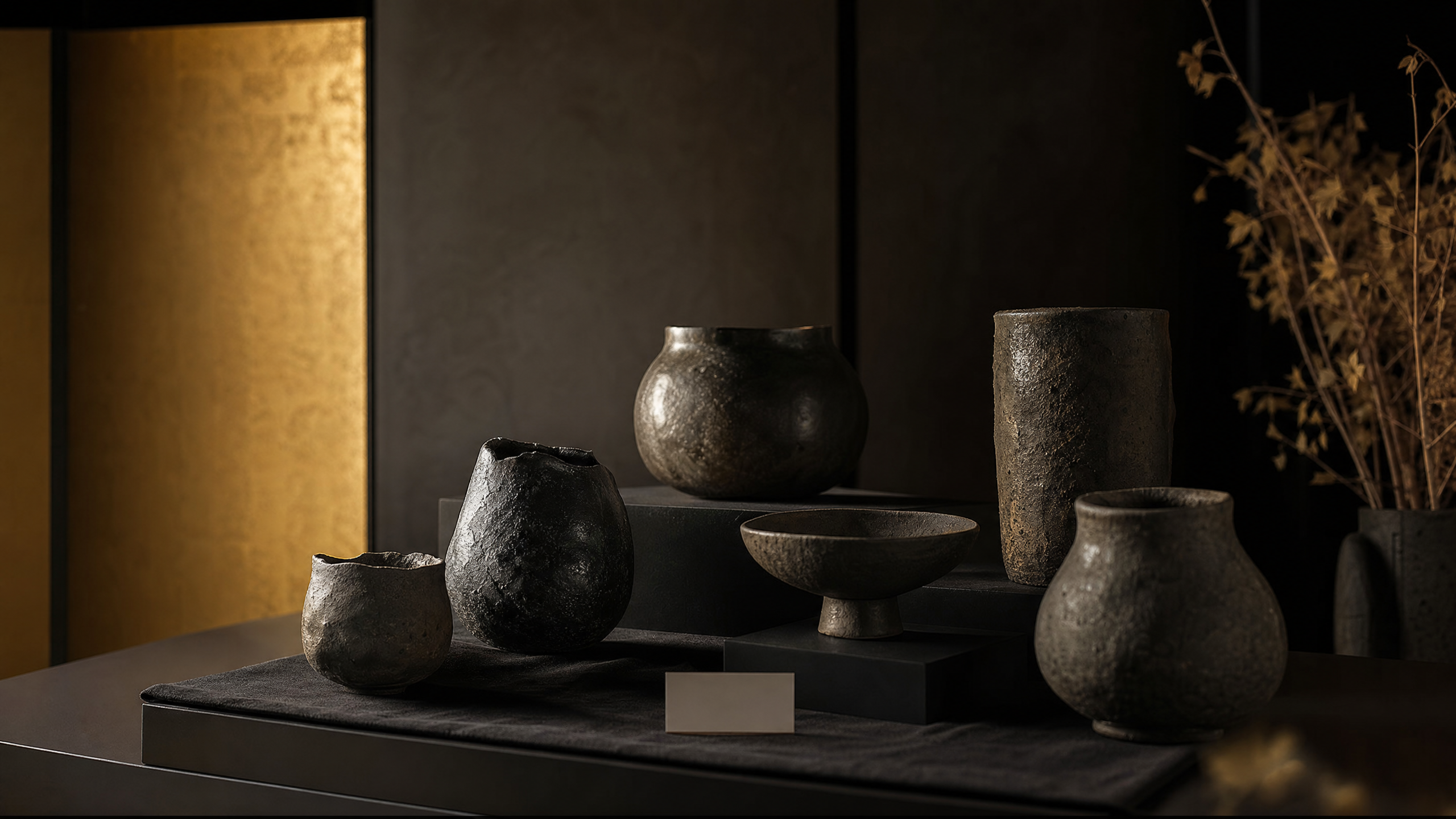
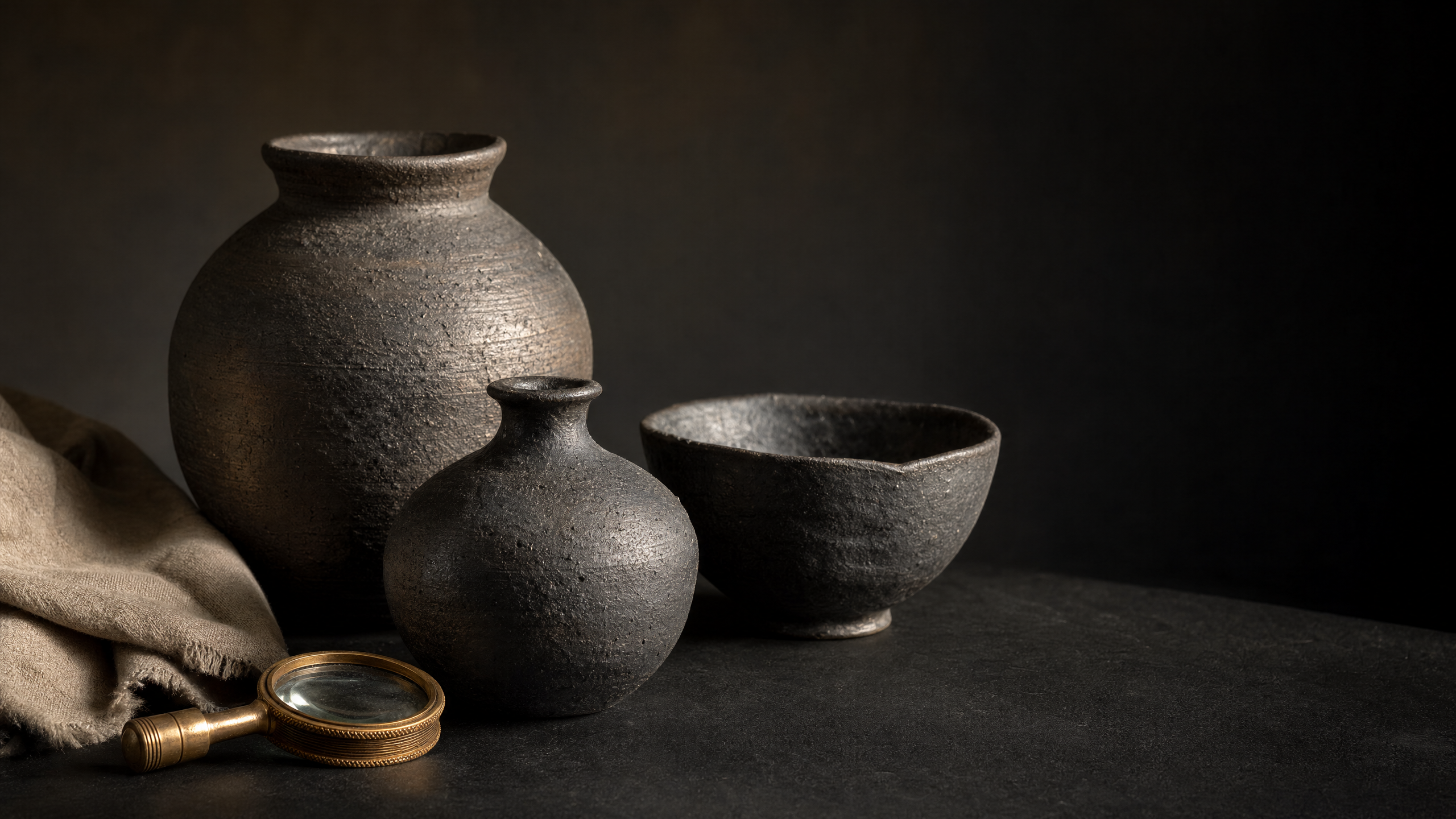
This is especially meaningful in unglazed traditions such as Suzu-yaki, where the drama of reduction firing and natural clay surfaces gives the vessel its quiet depth. Handmade ceramics do not hide process; they reveal it. They allow the user to read the object with the fingertips before the mind has formed an opinion. A slight asymmetry is not a defect. It is evidence that the object was negotiated between earth, hand, and fire.
| Quality | Mass-Produced | Handmade |
|---|---|---|
| Primary strength | Consistency, speed, affordability | Individuality, touch, presence |
| Surface character | Uniform and predictable | Varied, tactile, often expressive |
| Relationship to use | Convenient and replaceable | Personal and enduring |
The Beauty of the Useful
The best handmade pottery is not precious because it must be kept behind glass. It is precious because it asks to be used well. The Mingei idea, often translated as the art of the people, honors humble objects made for daily life. The Mingei International Museum traces this vision to Sōetsu Yanagi, whose influence helped modern audiences see dignity in ordinary craft. In that spirit, a handmade cup is not simply a luxury item. It is a daily object elevated by human attention.
The Arts and Crafts movement in the West expressed a related conviction. The Smithsonian’s overview of American art pottery notes that art pottery emphasized aesthetic beauty and unique glazes over mass production, echoing William Morris’s famous counsel to keep only what is useful or beautiful in the home. That statement still feels modern because it resists excess. A meaningful home is not built by owning more things, but by choosing better companions for the rituals that repeat each day.

How to Choose With Discernment
A thoughtful collector does not need to reject all mass-produced objects. The wiser question is where handmade matters most. Choose mass-produced ceramics when uniformity, replacement, and price are the priority. Choose handmade ceramics when the object will be touched often, seen daily, offered as a gift, or used in a personal ritual. A handmade sake cup, tea bowl, or coffee mug has the power to slow the hand before it reaches the mouth. It turns use into attention.
When evaluating handmade pottery, look for balance rather than perfection. The foot should feel stable. The rim should be comfortable. The weight should suit the function. The surface should invite touch without feeling careless. Most of all, the piece should have presence. It should feel as though it could become more beloved with time, not less.
The Quiet Luxury of the Human Hand
Mass production gives us access. Handmade craft gives us intimacy. One fills shelves; the other enters memory. In the dark surface of a Suzu-yaki-inspired vessel, we are reminded that luxury does not always announce itself with polish. Sometimes it is quiet, matte, elemental, and deeply human.
To choose handmade is to choose an object that resists anonymity. It is to bring into the home a trace of earth, a record of fire, and the unmistakable dignity of the human hand.
Sources Consulted
JAPAN HOUSE Los Angeles: Craftsmanship of the Ceramic Valley