Wajima Lacquerware: The Other Masterpiece of the Noto Peninsula
Part of The Zen Artisan’s Noto Peninsula spinoff series.

When people speak about the craft culture of the Noto Peninsula, Suzu-yaki often comes first for us. Its dark, unglazed clay carries the memory of fire, sea wind, and earth. But Noto has another masterpiece: Wajima lacquerware, or Wajima-nuri. Where Suzu-yaki is austere and mineral, Wajima-nuri is luminous, layered, and quietly formal. Together, they show two sides of the same peninsula: clay hardened by flame, and wood protected by lacquer.
Wajima-nuri is made in Wajima City, Ishikawa Prefecture, at the northern edge of the Noto Peninsula. It is known not only for its glossy surface and refined decoration, but for the strength hidden beneath that surface. KOGEI JAPAN describes Wajima lacquerware as a craft requiring more than 100 production steps, with durability supported by jinoko, a powdered diatomaceous soil found in Wajima and used in the undercoat.1 Taya Shikkiten’s process guide gives the more precise number often associated with the craft: 124 stages.3
Why Wajima-nuri belongs beside Suzu-yaki
The connection between Wajima lacquerware and Suzu-yaki is not visual; it is philosophical. Both crafts ask the maker to accept time as part of the material. Suzu-yaki depends on clay preparation, kiln atmosphere, and the long uncertainty of firing. Wajima-nuri depends on wood seasoning, repeated layers of undercoat and lacquer, careful humidity control, and the patience to polish what most people will never see.
Japan Travel notes that Wajima is a small town on the Sea of Japan side of Ishikawa, set in the natural environment of the Noto Peninsula, and that Wajima lacquerware has been made there as a traditional craft for around 500 years.2 This regional setting matters. Wajima-nuri is not simply an object category; it is a system of local materials, specialized workshops, climate awareness, and inherited hand skills.
| Craft | Primary material | What time does | Quiet lesson |
|---|---|---|---|
| Suzu-yaki | Local clay | Transforms clay through reduction firing | Beauty can emerge from restraint |
| Wajima-nuri | Wood, lacquer, jinoko | Builds strength through layers | Durability begins beneath the surface |
The invisible strength: jinoko and the undercoat
The most important part of Wajima-nuri is not always the part you notice first. The shine, color, and gold decoration catch the eye, but the craft’s reputation rests on its foundation. In Wajima-nuri, a mixture of lacquer and jinoko is applied as part of the base-building process. KOGEI JAPAN explains that this undercoat is central to Wajima lacquerware’s durability and that jinoko is associated specifically with Wajima.1
This is why Wajima lacquerware feels aligned with the values of The Zen Artisan. A fine object does not need to shout. Its value can be structural, tactile, and long-lasting. The visible surface is elegant because the invisible work is honest.
From wood to lacquer: a craft of repeated attention
The process begins with the wooden base. Taya Shikkiten explains that once a rough shape is created, the wood is smoked, dried, and allowed to rest for around a year at normal temperature to remove moisture and reduce the risk of deformation or cracking.3 This is a remarkable beginning: before the lacquer even appears, time has already entered the object.
The base is then strengthened through layers of lacquer-based foundation work, polished, coated again, and prepared for the top coat. The final coating requires careful control because dust, thickness, humidity, and temperature all influence the result. Japan Travel’s interview with an apprentice in Wajima emphasizes how lacquer responds to daily changes in temperature and humidity, and how even tiny dust particles can ruin the final coat.2
This makes Wajima-nuri a craft of humility. The artisan does not dominate the material. The artisan listens to it, adjusts to it, and repeats the process until the object becomes calm.
Maki-e and chinkin: gold used with discipline
Many people associate Japanese lacquerware with gold decoration, but in the best Wajima-nuri, gold is not excess. It is emphasis. KOGEI JAPAN identifies two major decorative techniques: maki-e, where gold or silver powder is used to create designs, and chinkin, where carved lines are filled with lacquer and then gold or silver.1 Taya Shikkiten similarly describes maki-e and chinkin as distinct decorative approaches, with differences in how gold powder or gold leaf is applied.3
For collectors of Suzu-yaki, this contrast is useful. Suzu-yaki often invites attention through texture, silhouette, and darkness. Wajima-nuri invites attention through reflection, depth, and line. Both are sophisticated, but they speak in different registers.
How to live with Wajima lacquerware
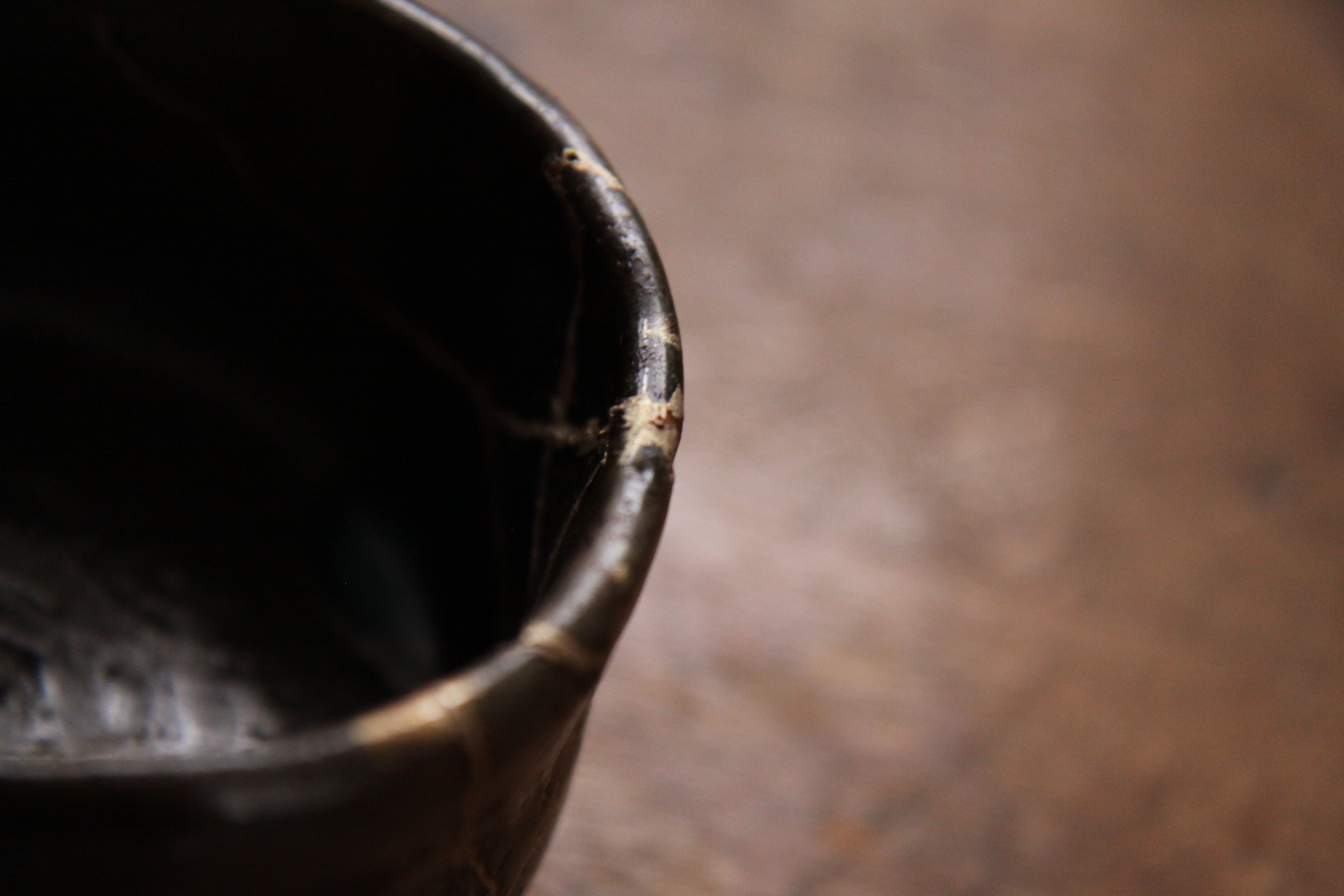
Wajima-nuri is sometimes perceived as too formal for everyday use, yet its history is closely tied to durability and repairability. KOGEI JAPAN notes that Wajima lacquerware has long been valued not only for beauty but for strength, and that damaged pieces can be restored.1 Japan Travel also explains that lacquerware can last a lifetime, while advising users to avoid direct sunlight, microwaves, and dishwashers.2
That care is not a burden; it is part of the relationship. A handmade object asks for awareness. In return, it offers a slower way of using things. A lacquer bowl can change a meal not because it is rare, but because it makes the act of holding, serving, and cleaning feel intentional.
A Noto pairing: black clay and red lacquer
For The Zen Artisan, Wajima lacquerware matters because it expands the story of Noto beyond pottery. The peninsula is not a single craft tradition. It is a landscape of related disciplines: clay, lacquer, wood, seafood culture, temple memory, rural workshops, and the endurance of makers after hardship. To understand Suzu-yaki more deeply, it helps to understand its neighbors.
Imagine a table with a black Suzu-yaki vessel and a red Wajima-nuri bowl. One absorbs light; the other reflects it. One records the fire directly; the other conceals dozens of layers beneath a calm surface. Together, they create a conversation about Japanese craft at its most refined: not decoration for its own sake, but material transformed by patience.
Final thought
Wajima lacquerware is the other masterpiece of the Noto Peninsula because it shares Suzu-yaki’s deepest virtue: integrity beneath the surface. Its beauty is not quick. It is built, dried, polished, decorated, repaired, and lived with. In a world of disposable surfaces, Wajima-nuri reminds us that true luxury is not merely what shines. It is what endures.
Explore The Zen Artisan’s collection for objects that carry the same Noto spirit: quiet materials, careful hands, and beauty made to last.