Frankincense incense begins with a resin, not a wood: an aromatic material collected from trees of the Boswellia genus. For thousands of years, frankincense—also called olibanum—has been valued for its warm, distinctive fragrance. In Shoyeido’s Xiang Do line, that ancient material story becomes a short, modern pressed-incense stick for a quieter room.
The useful distinction is simple. Frankincense is the raw aromatic tradition; Xiang Do Frankincense is a contemporary incense product designed for everyday use. Its character is warm, resinous, and meditative in the language of the maker—not a promise of a particular mood, but an invitation to notice how fragrance changes a familiar space.

What Is Frankincense?
Frankincense is the hardened, aromatic resin of Boswellia trees. The Smithsonian’s collection record for olibanum describes it as a yellow-brown resin known in the Middle East for millennia, where it has been used as incense and in perfumery. The name “olibanum” is often used interchangeably with frankincense, especially when discussing the resin itself.
That origin makes frankincense different from sandalwood or hinoki. Those are wood materials; frankincense is a resin. It may share the depth people seek in woody incense, but its fragrance tends to have a more rounded, balsamic, and resinous impression. The exact experience depends on the composition, the amount burned, the room, and the ventilation.
From Ancient Resin to Modern Japanese Incense
Frankincense has travelled through religious, commercial, and perfumery traditions across centuries. But it is important not to collapse those histories into one universal ritual. The ways frankincense has been valued in the Middle East, Europe, and Asia are not identical, and a modern Japanese incense stick is not the same object as loose resin warmed over charcoal.
Shoyeido’s Xiang Do series takes a focused, contemporary approach. Shoyeido, a Kyoto incense house established in 1705, presents Xiang Do as short pressed-incense sticks with clear scent profiles. The Frankincense version is described as warm, resinous, and meditative. It is made for a single, manageable pause rather than for recreating a formal religious ceremony or a kōdō gathering.
What Does Xiang Do Frankincense Smell Like?
Think of the fragrance as depth without heaviness. Frankincense can feel rounded and gently balsamic, with a dry, resinous character that sits differently from the green clarity of hinoki or the cool brightness of peppermint. It suits a room that already feels familiar: a reading chair, a desk after work, or a small table where the day is beginning to slow down.
There is no single “correct” response to scent. One person may notice warmth first; another may find the resinous quality subtle. Start with one stick and allow the fragrance to settle before deciding what you think. For a practical comparison of Frankincense, Hinoki, and Peppermint, read how to choose your Xiang Do scent.
How to Use Frankincense Incense at Home
A small ritual needs very little. Place one stick in a stable, heat-safe holder on a clear surface. Light the tip, let it catch briefly, then extinguish the flame so the stick smoulders. Keep it away from curtains, paper, pets, children, and other flammable materials. Never leave burning incense unattended, and ventilate the room appropriately.
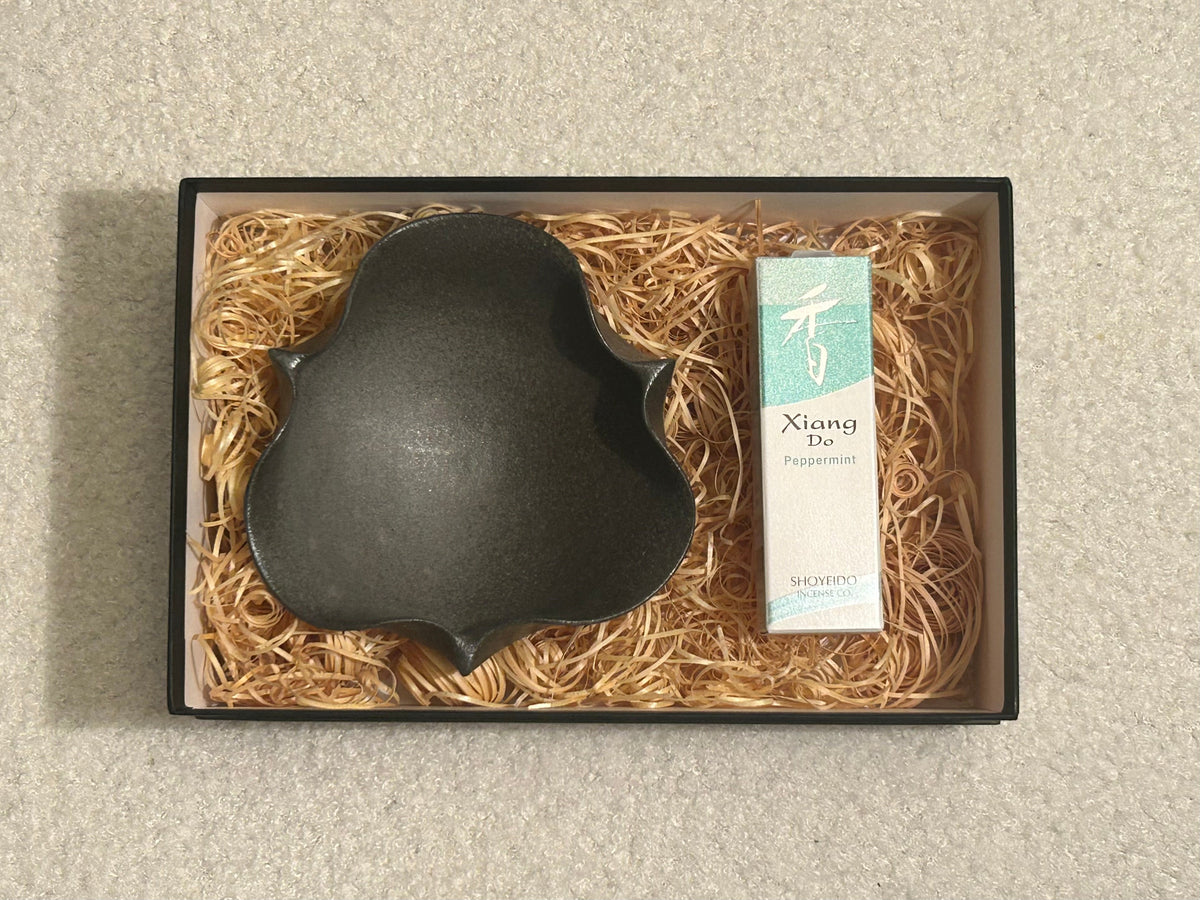
The Xiang Do Frankincense box for a warm, resinous pause contains 20 sticks, each approximately 2.75 inches long. Its compact format makes it easy to keep one box near a desk or bedside table, paired with a ceramic holder that gives the act of lighting incense a defined place.
Frankincense, Kōdō, and the Importance of Context
Frankincense belongs to the wider history of fragrant materials, but it should not be presented as one of the six precious woods of rikkoku gomi. That vocabulary belongs to formal Japanese incense appreciation and describes categories of fragrant woods, while Xiang Do is an everyday pressed-incense line. For more on the difference between wood-based fragrance, commercial sticks, and formal incense culture, read Woody Japanese Incense: Hinoki, Sandalwood & the Six Precious Woods.
Keeping those contexts separate makes the experience more respectful and more enjoyable. You do not need to perform a ceremony to appreciate a scent, and a daily stick does not need to claim the authority of one.
A Warm Beginning for a Quiet Corner
Frankincense is a good starting point when you want incense with presence but not visual noise. The resinous profile gives a small room a sense of depth, while the short stick keeps the ritual approachable. If you are still choosing between scents, the Xiang Do Trio for comparing three daily incense moods lets you build a small rotation with Frankincense, Hinoki, Peppermint, or the current available selections.
Pair the fragrance with a handmade Suzu-yaki holder or plate from the Noto Peninsula. The dark, unglazed ceramic does not compete with the scent; it simply gives the flame, smoke, and pause a grounded place to begin.
Begin With Warmth
Explore Xiang Do Frankincense for a warm, resinous incense ritual, or compare it with other focused scents in The Zen Artisan’s Japanese incense collection. Each box contains 20 short sticks made for a small, repeatable pause. Ships worldwide.
Sources and further reading: Smithsonian National Museum of American History, “Oliban”; Shoyeido and The Zen Artisan product and collection descriptions; The Zen Artisan, Choosing Your Xiang Do and Woody Japanese Incense.