Visiting Suzu City: A Pilgrimage for Pottery Lovers

The Zen Artisan Travel Notes
At the far northern edge of Ishikawa Prefecture, where the Noto Peninsula reaches into the Sea of Japan, Suzu City feels less like a destination than an arrival. The road narrows, the coast becomes more elemental, and the landscape begins to explain the pottery before a museum label ever can. Here, stone, salt, wind, clay, and fire are not separate materials. They are one grammar of place.
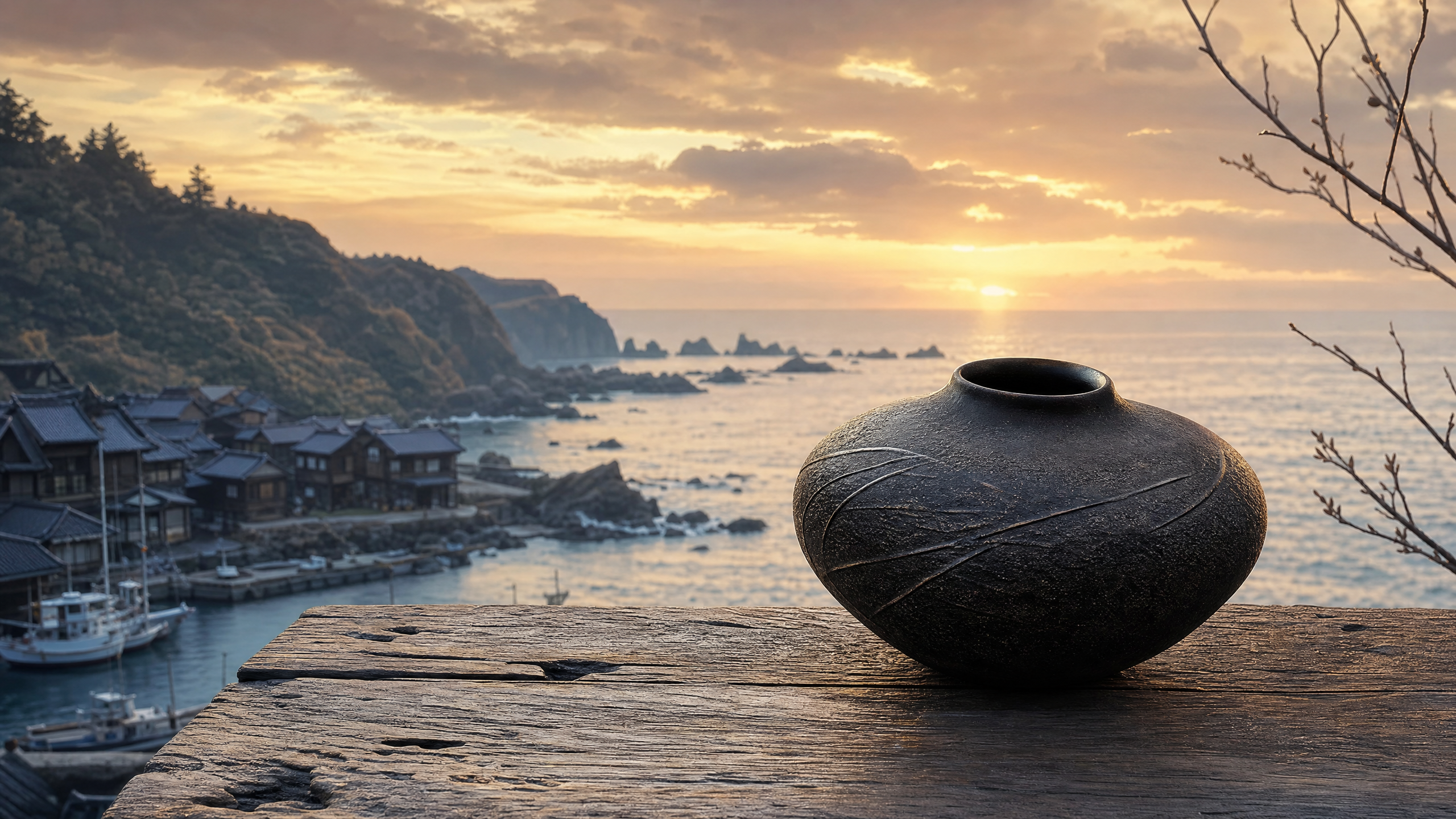
Suzu is known for traditional craftsmanship, especially Suzu-yaki, the austere black-gray pottery whose quiet power comes from iron-rich clay, wood ash, and high-temperature firing. The city’s official Suzu Ware Museum describes Suzu ware as an unglazed ceramic produced from the mid-twelfth to the late fifteenth centuries, then largely lost until an urn was excavated in 1951. Later discoveries revealed around forty kiln sites in the area, returning a forgotten medieval tradition to public memory.
For the pottery lover, to visit Suzu is to move from object to origin. A cup or jar may be encountered first as a beautiful thing on a table, but in Suzu it becomes a map: to hillsides where anagama kilns were built, to coastal routes that once carried heavy storage jars by sea, to workshops where contemporary makers continue the dialogue between ancient technique and modern life.
Begin at the Suzu Ware Museum
The most natural beginning is the Suzu Ware Museum. Its collection brings together medieval pieces from the twelfth to fifteenth centuries and contemporary works that show how revival can become a living practice rather than a nostalgic exercise. The museum’s interpretation explains the essential process: vessels formed from coils of local iron-rich clay, beaten and smoothed, then fired above 1,200°C until ash, soot, and minerals created a dark surface with a subtle natural sheen.
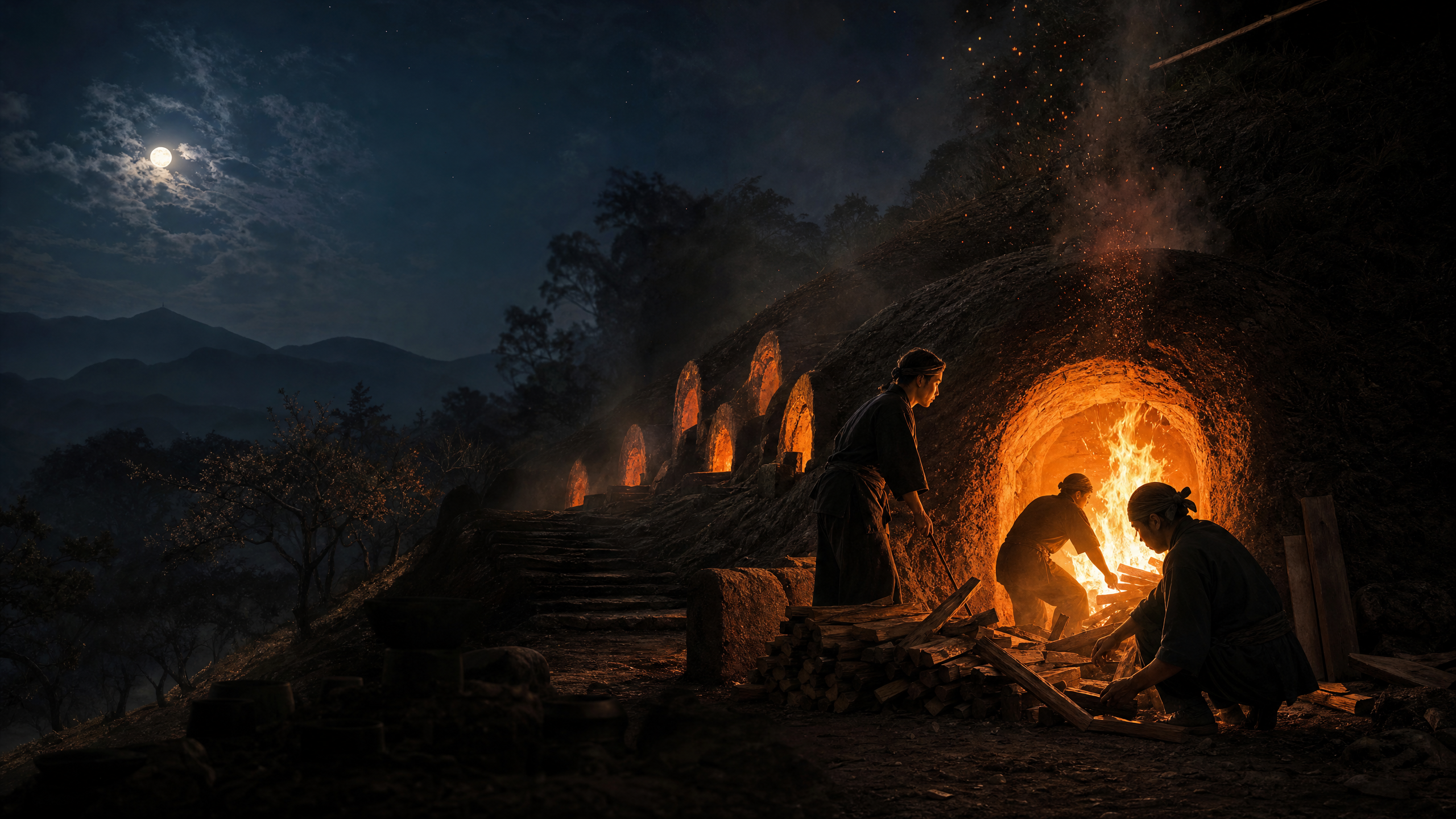
On the museum grounds, a full-sized reconstruction of a thirteenth-century anagama kiln gives scale to what words often soften. These tunnel-shaped kilns were built into hill slopes, fed continuously with firewood, and fired for periods that could range from forty-eight hours to a week. At the end, the openings were sealed, starving the chamber of oxygen. This reduction atmosphere helped produce the gray-black tones that define Suzu-yaki’s character.

Read the Coast as a Kiln Map
Suzu’s location is not incidental to its pottery history. Ceramics are heavy and fragile, and the Noto Peninsula’s position along the Sea of Japan made maritime transport practical. According to the Suzu City museum overview, by the fourteenth century Suzu ware was distributed across roughly a quarter of the Japanese archipelago. The coastline that today offers quiet beauty was once an artery of commerce, carrying storage jars, mortars, urns, and ritual vessels into daily and spiritual life far beyond Noto.
This is why a pottery pilgrimage in Suzu should not be confined indoors. Walk slowly along the shore if conditions allow. Notice the black volcanic rocks, the muted light on water, the salt carried in the air. Suzu-yaki’s beauty is often described as austere, but in its birthplace that austerity becomes generous. It is the generosity of a landscape that does not decorate itself, yet gives everything texture.
Meet Craft Beyond Clay
JNTO describes Suzu as surrounded by sea on three sides and rich in traditions including cuisine, pottery, roof tiles, festivals, and salt-making. This matters because craft cultures rarely exist alone. They grow in communities where handwork is ordinary, where materials are respected, and where seasons still shape labor.
One meaningful stop is Oku-Noto Salt Farm Village, where visitors can learn about Agehama-style salt making, a tradition described by NAVITIME as maintained for more than four hundred years. Salt and clay seem different at first: one dissolves, the other hardens. Yet both are transformed by elemental patience. Sea water becomes crystals; earth becomes vessel. Together, they express Suzu’s deeper lesson: refinement is not speed, but attention.

A City of Revival and Resilience
Suzu-yaki’s modern story is a story of return. After centuries of disappearance, potter Onodera Gen began experimenting with Suzu clay in 1972, helping revive the old methods. Today, the Suzu City museum page notes that around forty potters make Suzu ware on the Noto Peninsula. Their work belongs not only to the past, but to the future of Japanese craft.
That future must also be approached with sensitivity. The Noto Peninsula has faced profound disruption since the 2024 earthquake, and travelers should check official local updates before planning a visit. A pilgrimage is not consumption. It is a form of respect. To travel thoughtfully, purchase directly where possible, follow local guidance, and allow the region’s recovery to set the pace.
How to Imagine the Journey
JNTO notes that the center of Suzu, near Roadside Station Suzunari, is about forty minutes by rental car or pre-booked sharing taxi from Noto Satoyama Airport. Time Out Tokyo also identifies Suzu as reachable by highway bus from Kanazawa Station. However one arrives, the best itinerary is unhurried: begin with the museum, trace the coast, pause for local food, visit craft and salt-related sites as conditions permit, and leave space for silence.
If you are already drawn to Suzu-yaki, the visit will change the way you hold it. The black surface will no longer be merely a color. It will contain weather, distance, labor, disappearance, rediscovery, and flame. It will feel less like an object acquired and more like a landscape entrusted to the hand.
Pilgrim’s Notes
| Best first stop | Suzu Ware Museum, for history, process, and kiln context. |
| Essential perspective | See the coast as part of the pottery story, not merely scenery. |
| Travel ethic | Check current conditions, support local makers, and move respectfully. |
Suzu City rewards those who understand that craft is never only made in a studio. It is made by geology, history, trade, disaster, devotion, and time. For the pottery lover, that is the true pilgrimage: to stand where the clay remembers fire, and to return home with a deeper sense of what handmade permanence can mean.
Sources and further reading: Suzu Ware Museum Overview, Japan National Tourism Organization, NAVITIME Japan Travel, and Time Out Tokyo.
All article images are AI-generated editorial illustrations and do not depict real Suzu-yaki pottery photographs.