Profiles of Contemporary Suzu-yaki Masters
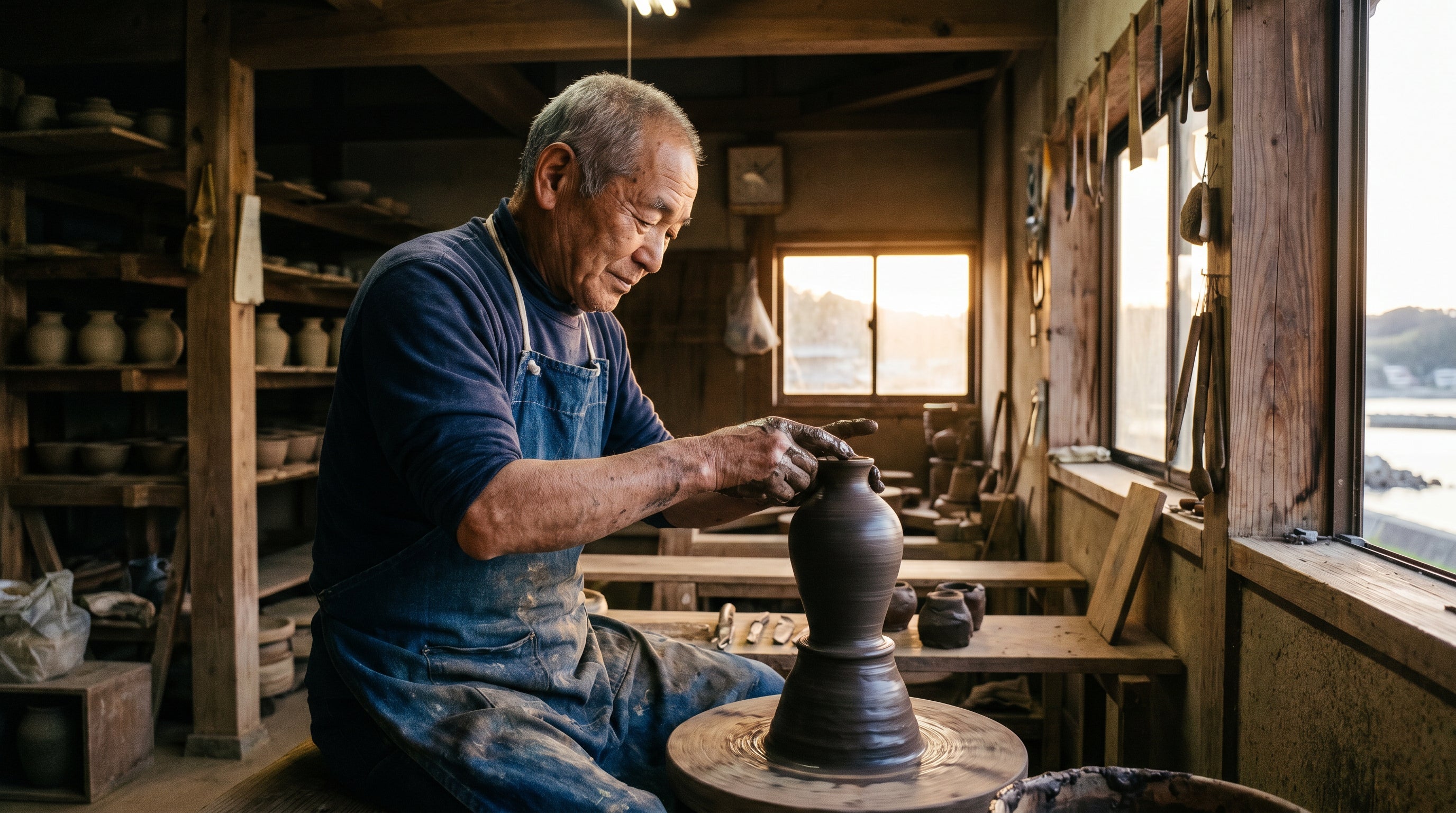
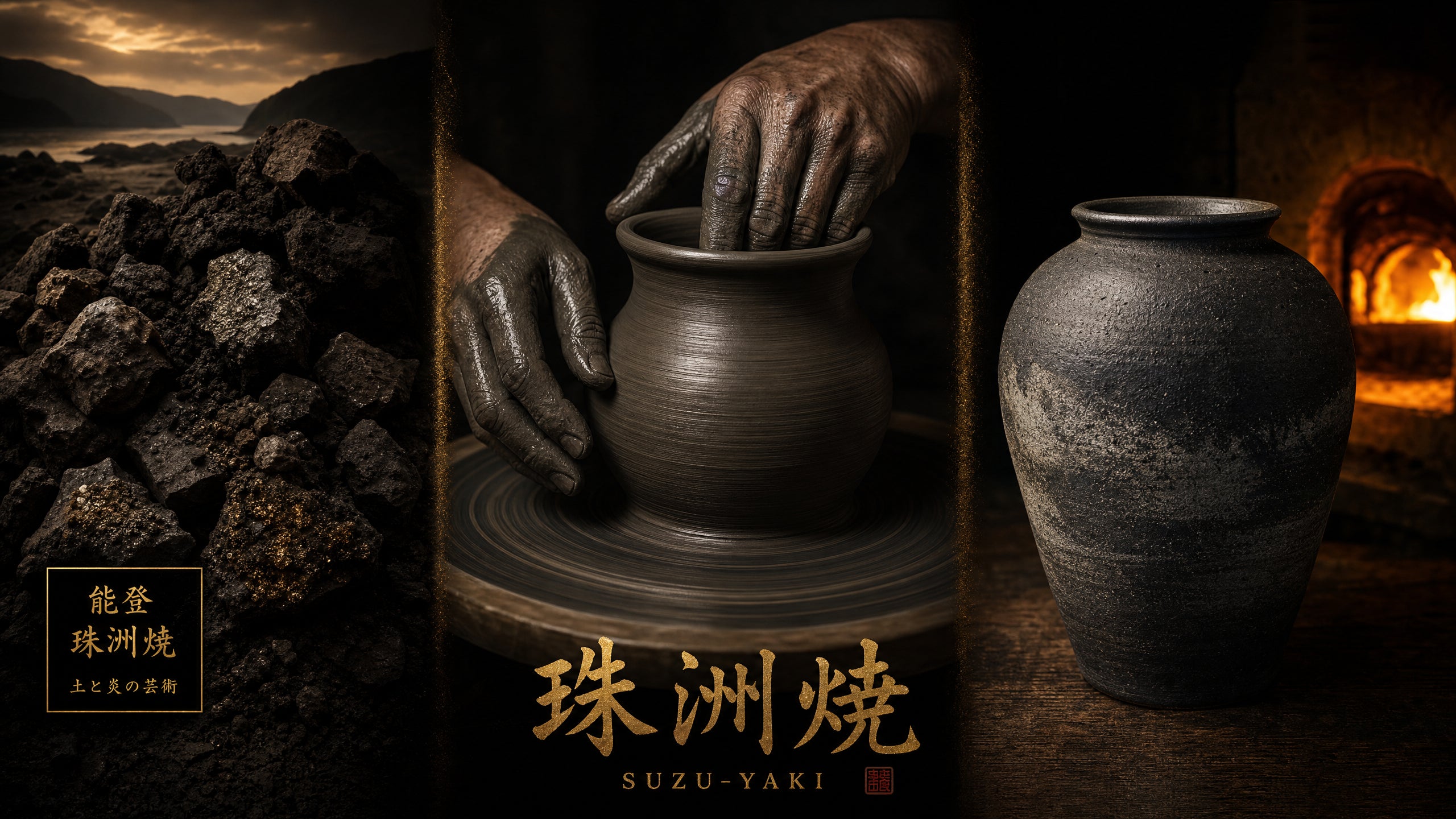
The story of Suzu-yaki (珠洲焼) is not just a tale of ancient clay and fire; it is a story of human resilience, dedication, and the relentless pursuit of beauty. After vanishing for nearly four centuries, this enigmatic black stoneware from the Noto Peninsula was brought back to life in the 1970s. Today, a new generation of master potters continues to shape its legacy, blending medieval traditions with contemporary artistry.

The Pioneer: Onodera Gen and the 1976 Revival
To understand contemporary Suzu-yaki, one must first look back to its modern rebirth. The revival efforts began in 1972 when potter Onodera Gen (1934–2016) discovered excavated Suzu shards at an exhibition. Captivated by the unglazed, charcoal-black fragments, he began experimenting with local iron-rich clays to recreate the lost methods of the 12th century.
By 1976, with the support of Suzu City, organized production officially restarted. A reconstructed 13th-century kiln was built in 1979, and the Suzu City Pottery Center was established. Onodera's pioneering spirit laid the foundation for the thriving community of artisans that exists today.
Shinohara Takashi: The Guardian of the Flame
Among the most prominent figures in modern Suzu-yaki is Shinohara Takashi of the Yugegama (游戯窯) kiln. Shinohara encountered Suzu ware in the late 1980s at the newly opened Suzu Pottery Museum. Struck by the dignified, unadorned beauty of the ancient vessels, he dedicated his life to the craft, beginning his journey in 1992.
Shinohara is known for his uncompromising pursuit of the authentic "black" of Suzu ware. He fires his pieces in a traditional wood-fired anagama kiln, relying entirely on his senses rather than modern thermometers. "I fire the pottery by looking at the color inside the kiln and sensing the heat with my hands," he explains. "Working that way makes me feel as if I am one with nature."

Shimizu Takenori: Bridging Traditions
While some masters focus purely on ancient techniques, others bring diverse ceramic backgrounds to Suzu-yaki. Shimizu Takenori of the Takenori Studio (たけのり陶房) is a prime example. A graduate of the Kutani Ware Technical Training Institute, Shimizu studied porcelain making before turning to Suzu-yaki in 2001.
His rigorous technical background allows him to create pieces that possess both the rugged, earthy charm of traditional Suzu ware and a refined, elegant precision. In 2013, his exceptional skills were recognized when he was selected as an Ishikawa Prefecture Traditional Industry Excellent Technician.
A Community of Artisans: The Suzu-yaki Sōenkai
The strength of contemporary Suzu-yaki lies not just in individual masters, but in its community. The Suzu-yaki Sōenkai (珠洲焼創炎会), founded in 1988, unites the region's potters. The association includes diverse talents, from the collaborative husband-and-wife team of Konishi Eiichi and Kazuko at the Nihonmatsu Kiln, to international artists like Caroline Watanabe, who brings a global perspective to this deeply local craft.
This sense of community was profoundly tested on January 1, 2024, when a devastating magnitude-7.6 earthquake struck the Noto Peninsula. All 22 kilns in Suzu were destroyed. Yet, the spirit of the artisans remained unbroken. Potters began sharing facilities and collaborating on joint firings. As Shinohara, who currently chairs the association, noted, the younger generation of potters who had moved to Suzu chose to stay and rebuild. "The future of Suzu pottery is not that bleak," he remarked, finding hope in their resilience.

The Philosophy of "Atawari"
For the masters of Suzu-yaki, pottery is more than a profession; it is a philosophy. In the Hokuriku region, there is a concept known as atawari—a given fate or chance. It represents an acceptance of nature's overwhelming power, both in the destructive force of earthquakes and in the unpredictable flames of the wood-fired kiln.
When you hold a piece of contemporary Suzu-yaki, you are not just holding a vessel. You are holding the culmination of centuries of history, the intense heat of a 72-hour firing, and the unyielding spirit of the artisans who refuse to let the flame die. As Shinohara beautifully stated after the earthquake, "Crafts may not be a necessity in daily life, but they can be a force that helps people live enriched lives."


%20is%20not%20just%20a%20tale%20of%20ancient%20clay%20and%20fire;%20it%20is%20a%20story%20of%20human%20resilience,%20dedication,%20and%20the%20relentless%20pursuit%20of%20beauty.%20After%20vanishing%20for%20nearly%20fou...)