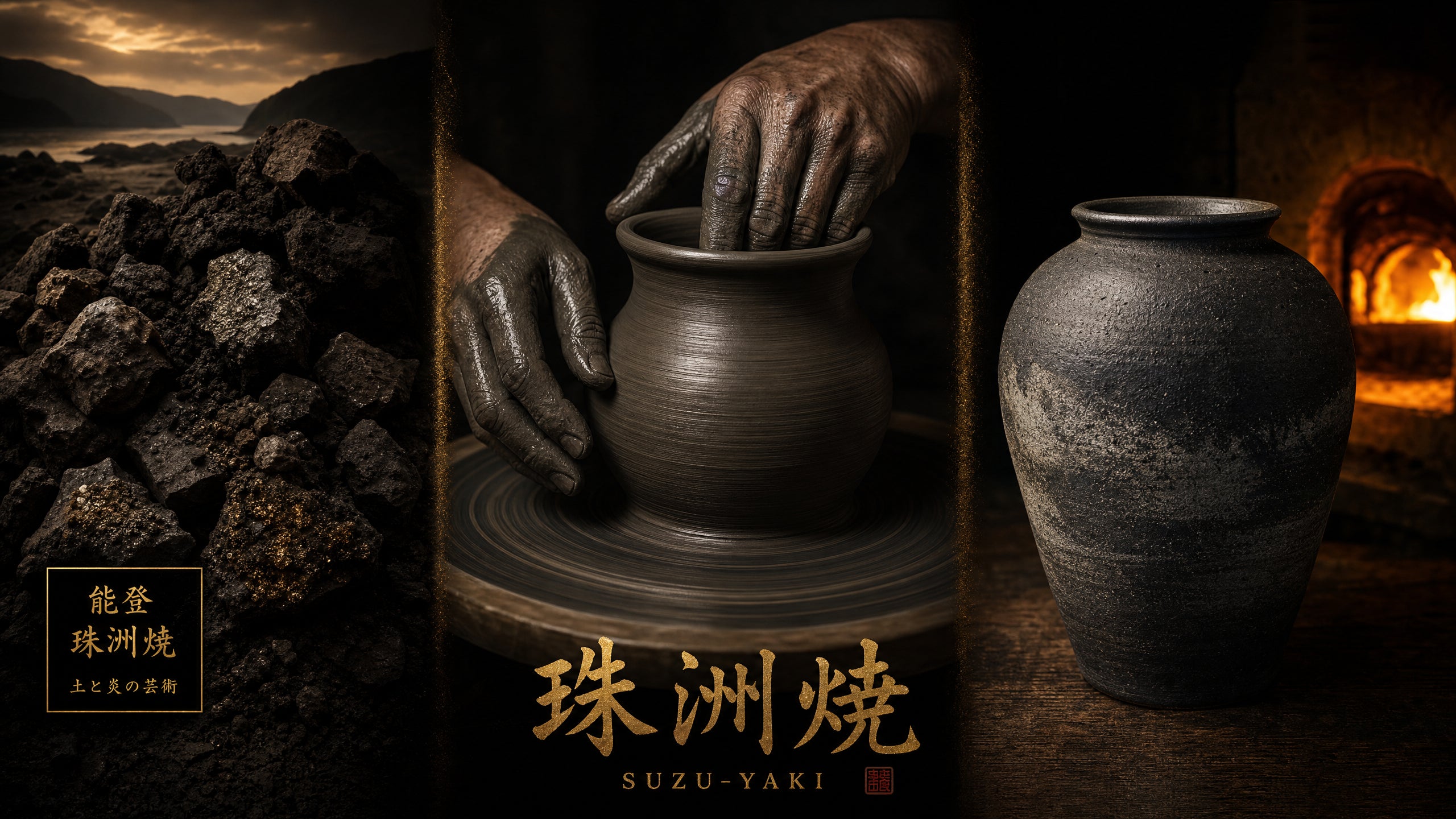
From Earth to Art: How Suzu-yaki Clay Is Sourced and Prepared
The earth beneath Suzu City holds a secret. Located at the northeastern tip of the Noto Peninsula, this rugged landscape is the birthplace of Suzu-yaki (珠洲焼), a centuries-old unglazed stoneware tradition. But unlike modern ceramics produced in large factories with commercially prepared materials, the creation of authentic Suzu-yaki begins long before the potter's wheel. It begins in the mountains, with the search for the perfect clay.

The Land and Its Clay
The Noto Peninsula, extending into the Sea of Japan, is a region defined by its dramatic coastal scenery and deep-rooted craft cultures. The geology of this area provides a unique resource: iron-rich clay deposits. This specific composition is not merely a coincidence; it is the very foundation of Suzu-yaki's identity.
Historically, the iron-rich clay found in Suzu was ideal for making Sue ware, the unglazed ceramics that first arrived in Japan from the Korean Peninsula in the fifth century. When Suzu-yaki emerged in the 12th century at the end of the Heian period, it built upon this legacy, utilizing the local earth to create vessels that were both functional and beautiful.
The Potter's Search
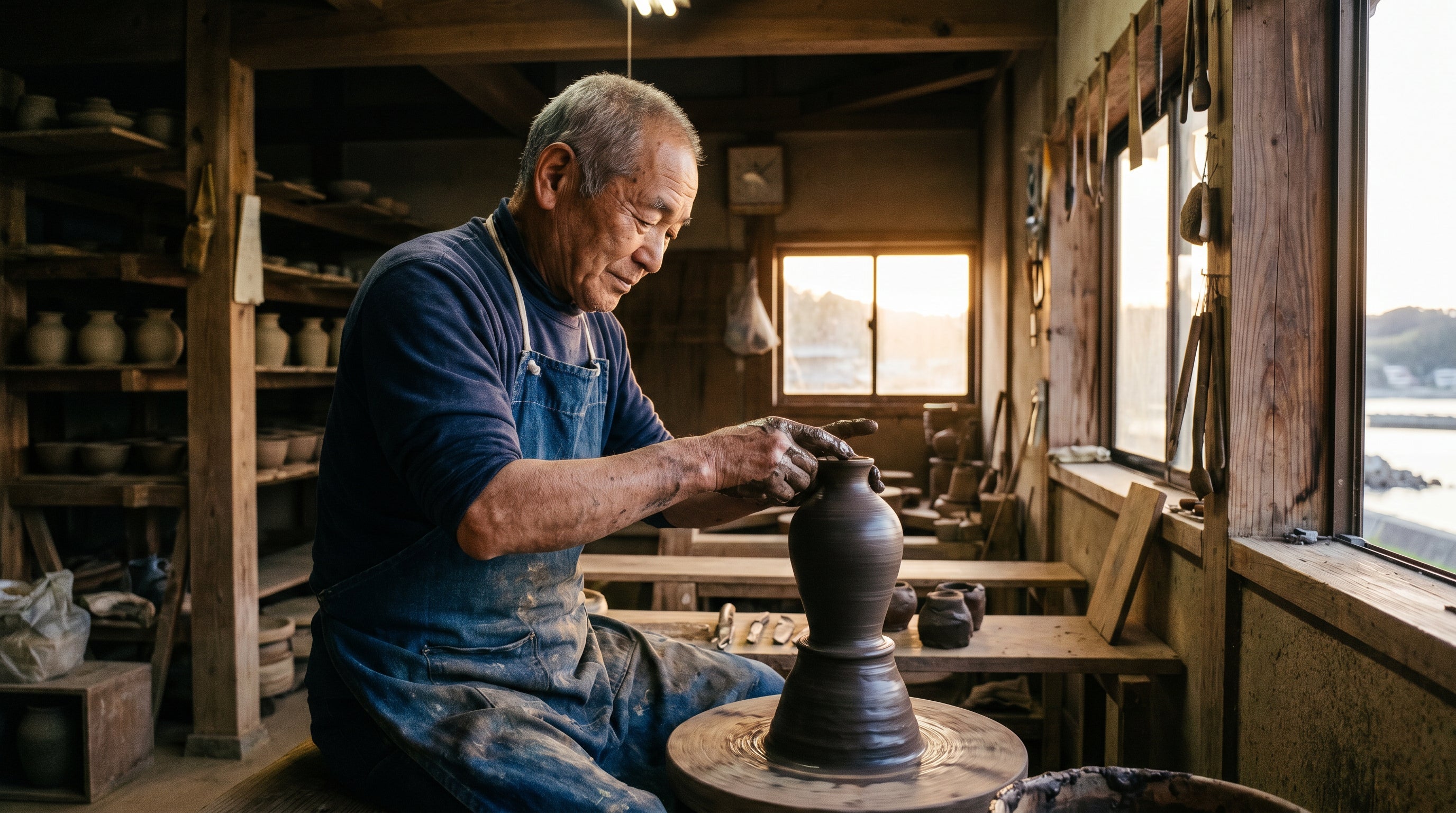
In Suzu, there are no convenient clay shops where artisans can purchase pre-mixed materials. Instead, the potters must become prospectors. They walk through the mountainous terrain, relying on their knowledge of the land and generations of inherited wisdom to locate the right veins of earth.
Finding the clay is only the first step. The raw earth must meet two critical requirements. First, it must possess excellent plasticity—it needs to be sticky and moldable enough to be shaped by hand or thrown on a wheel. Second, it must have high fire resistance. Because Suzu-yaki is fired at extreme temperatures exceeding 1200°C, the clay must be able to withstand the intense heat without collapsing or melting.

Preparing the Earth
Once the raw clay is harvested from the hillsides, the arduous process of preparation begins. The earth is often left to weather and age, a traditional practice that significantly improves its plasticity and workability.
Before it can be shaped, the clay must be thoroughly kneaded and wedged. Artisans use the traditional Japanese spiral wedging technique (菊練り, kikuneri), a rhythmic, demanding process that removes air bubbles and aligns the clay particles. This step is crucial; even a tiny pocket of air can cause a piece to explode during the intense firing process. The dark gray-brown color of the raw clay, with its slight metallic sheen, hints at the high iron content within.
The Alchemy of Iron and Fire
The true magic of Suzu-yaki clay is revealed not on the potter's wheel, but inside the kiln. Suzu-yaki is traditionally fired in an anagama (tunnel kiln) built into the slope of a hill. The firing process is a grueling marathon, lasting four to five days and nights, fueled entirely by wood.
If this iron-rich clay were fired in a standard oxidizing atmosphere, it would turn a reddish color, similar to Bizen ware. However, Suzu-yaki employs a different technique. When the kiln reaches its peak temperature of over 1200°C, a large amount of wood is added, and the kiln is completely sealed. This cuts off the oxygen supply from the outside.
Starved of oxygen, the fire seeks it from the clay itself. This causes a reduction reaction in the iron contained within the earth, transforming the clay into the characteristic somber, dark grayish-black color that defines Suzu-yaki. Simultaneously, the wood ash flying through the kiln lands on the pieces, melting at high temperatures to create a natural, subtle glaze-like sheen.

A Connection to Nature
For the masters of Suzu-yaki, the process of sourcing and preparing clay is more than just a technical requirement; it is a profound connection to the natural world. Contemporary masters like Takashi Shinohara often fire their kilns without thermometers, relying instead on the color of the flames and the heat felt on their skin.
"Working that way makes me feel as if I am one with nature," Shinohara has noted. It is a philosophy that embraces the unpredictable elements of earth, fire, and ash. The resulting pottery is not just a vessel; it is a piece of the Noto Peninsula itself, transformed through human skill and the raw power of nature.
From the rugged mountainsides to the intense heat of the sealed kiln, the journey of Suzu-yaki clay is a testament to the enduring spirit of Japanese craftsmanship. It is a reminder that true beauty often requires patience, respect for the materials, and a deep understanding of the earth.



,%20a%20centuries-old%20unglaze...)