Setting a Mindful Table: Incorporating Japanese Pottery into Everyday Dining

In the modern world, dining has often been reduced to a mere necessity—a rushed moment between tasks, accompanied by the glow of a screen. Yet, in Japanese culture, the act of eating is elevated to a mindful ritual. It is a moment to pause, to appreciate the season, and to connect with the earth. At the heart of this philosophy is the tableware itself. By incorporating authentic Japanese pottery, such as the profound and earthy Suzu-yaki, into your everyday dining, you can transform a simple meal into a sanctuary of calm and beauty.
Yohaku no Bi: The Beauty of Empty Space
To understand the Japanese approach to the table, one must first understand the concept of Yohaku no Bi (余白の美), or the beauty of empty space. In Western dining, a full plate often signifies abundance and generosity. In contrast, Japanese aesthetics celebrate Ma (間)—the intentional use of negative space to create harmony and balance.
When setting a mindful table, the space between the dishes is just as important as the dishes themselves. Leaving room around each bowl and plate allows the individual elements to breathe. It draws the eye to the texture of the clay, the color of the glaze, and the vibrant hues of the food. This deliberate spacing fosters a sense of tranquility, inviting you to slow down and savor each bite.

Ichiju-Sansai: The Foundation of Balance
The traditional Japanese meal is structured around the principle of Ichiju-sansai (一汁三菜), which translates to "one soup, three dishes." This 500-year-old eating style consists of a bowl of rice, a bowl of soup (typically miso), a main protein dish, and two vegetable side dishes. Beyond its nutritional benefits, this structure dictates the physical arrangement of the table.
In this setting, each component is given its own dedicated vessel. The rice bowl (ochawan) is placed on the front left, the soup bowl (shiruwan) on the front right, and the main and side dishes are arranged behind them. This separation prevents flavors from mixing and honors the distinct character of each ingredient. It also provides an opportunity to mix and match different types of pottery, creating a visually engaging tablescape.
The Tactile Experience of Suzu-yaki
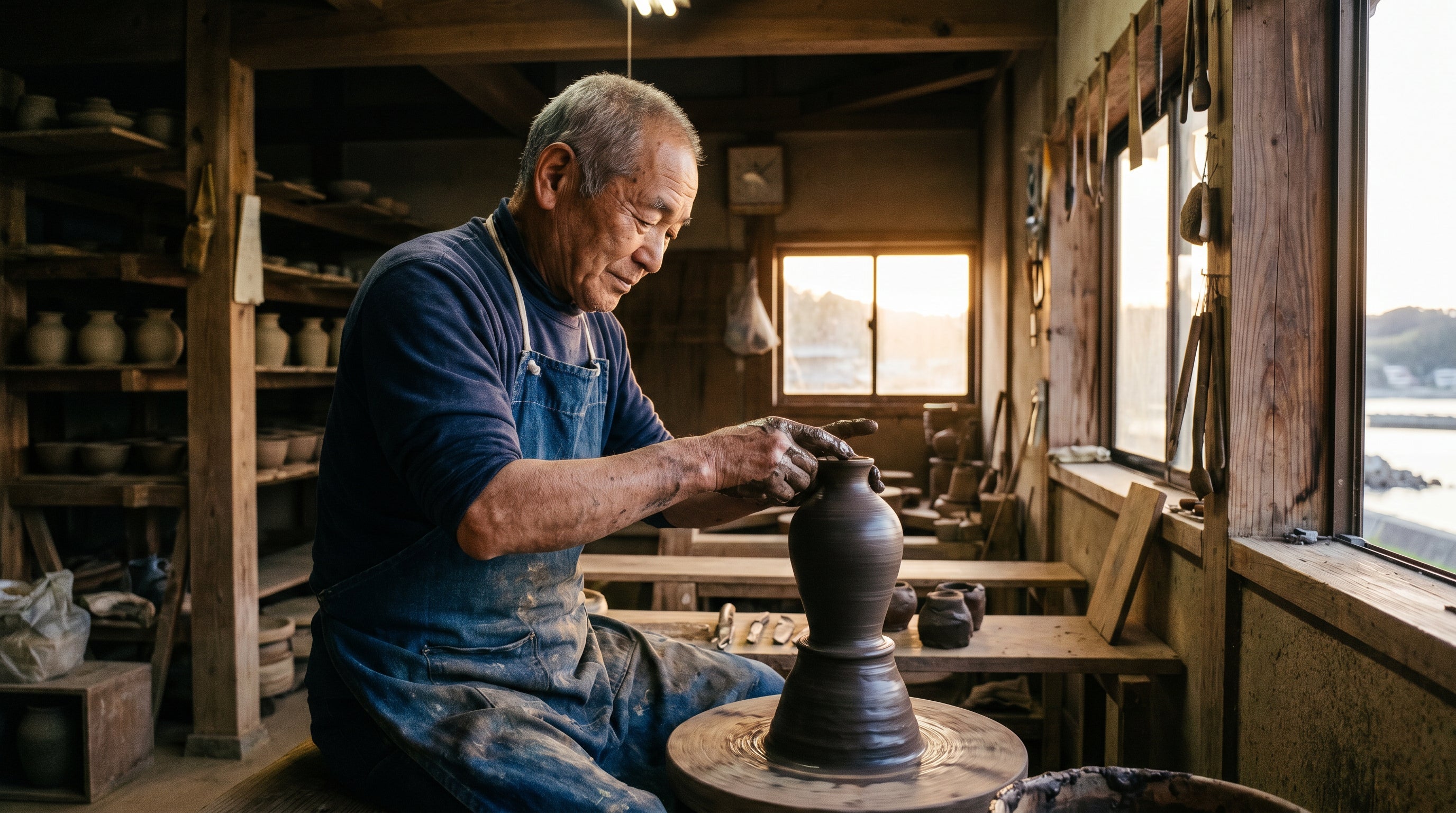
While glazed porcelain offers a refined elegance, unglazed stoneware like Suzu-yaki brings a profound, grounding energy to the table. Originating from the Noto Peninsula, Suzu-yaki is fired at extreme temperatures in traditional anagama kilns. The reduction firing process deprives the kiln of oxygen, resulting in the pottery's signature charcoal-black and deep grey tones.
What makes Suzu-yaki truly exceptional for everyday dining is its tactile quality. When you hold a Suzu-yaki rice bowl in your hands, you feel the raw texture of the earth. The natural wood ash that falls on the pieces during the firing process melts to create subtle, unpredictable glaze patterns. No two pieces are exactly alike. This embodies the philosophy of wabi-sabi—finding beauty in imperfection and the natural cycle of life.

How to Build Your Mindful Table
Incorporating Japanese pottery into your daily life does not require a complete overhaul of your tableware. You can begin simply and intentionally:
- Start with a Statement Piece: Begin with a single, high-quality vessel that you use daily, such as a Suzu-yaki rice bowl or a favorite tea cup. Let this piece anchor your dining experience.
- Embrace Contrast: The dark, matte surface of Suzu-yaki creates a stunning visual contrast when paired with vibrant foods—the bright green of steamed vegetables, the stark white of rice, or the rich red of sashimi.
- Mix Textures: Do not be afraid to mix unglazed stoneware with smooth porcelain or wooden lacquerware. This interplay of textures adds depth and interest to the table.
- Honor the Season: In Japan, tableware changes with the seasons. While you may use heavier, darker ceramics in the winter to evoke warmth, you might introduce lighter, cooler pieces in the summer.
A Return to Presence
Ultimately, setting a mindful table is about returning to presence. When you choose a specific bowl for your meal, when you arrange your food with care, and when you feel the rough texture of the clay against your palms, you are anchoring yourself in the present moment. The pottery becomes a bridge between the earth from which it was formed and the nourishment it holds.
By bringing the quiet elegance of Suzu-yaki into your home, you are not just acquiring tableware; you are adopting a philosophy. You are choosing to make every meal a mindful ritual, a celebration of nature, and a moment of profound peace.