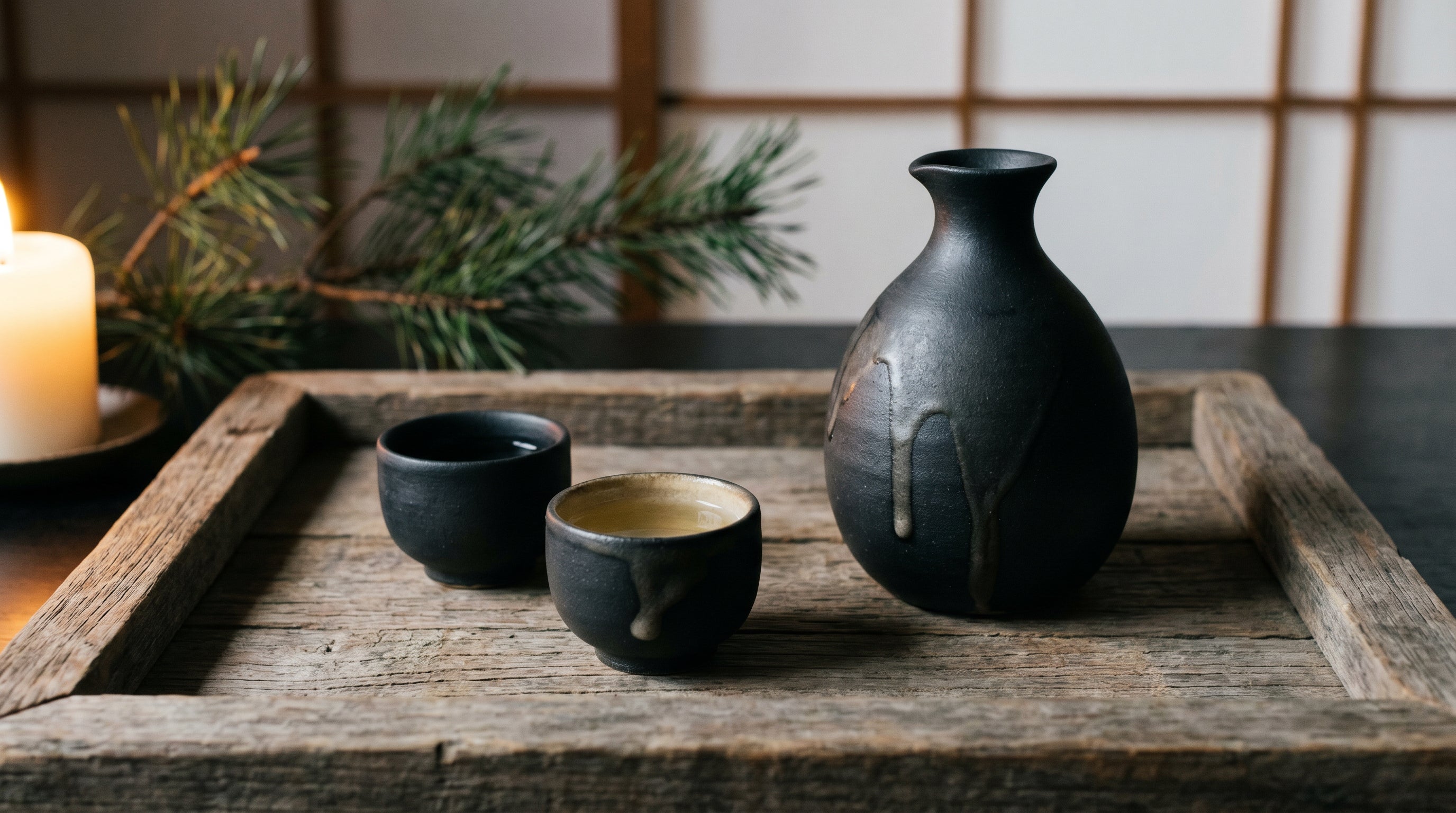
Sake and Suzu-yaki: An Ancient Pairing Reborn
In the quiet corners of Japan's Noto Peninsula, a centuries-old tradition is experiencing a quiet renaissance. The pairing of Japanese sake with Suzu-yaki (珠洲焼) pottery is not merely a matter of aesthetics; it is a profound dialogue between earth, fire, water, and time. For the modern connoisseur, understanding this ancient relationship unlocks a deeper, more resonant drinking experience.

The Historical Roots of Sake and Ceramics
The history of sake in Japan stretches back over two millennia, evolving from a simple fermented rice beverage to a sophisticated cultural touchstone. As the brewing techniques advanced, so too did the vessels used to serve and consume it. During the Heian (794–1185) and Kamakura (1185–1333) periods, the consumption of sake became intertwined with ceremonial rituals and the emerging samurai class.
It was during this era, in the mid-12th century, that Suzu-yaki emerged on the Noto Peninsula. Rooted in the techniques of Korean Sue ware, Suzu potters utilized the iron-rich local clay to create unglazed stoneware. Fired in massive tunnel kilns (anagama) at temperatures exceeding 1,200°C, the pottery developed its signature dark gray-to-black hue. The kilns were sealed at peak temperature, starving the fire of oxygen in a process known as reduction firing. The resulting ash deposits created a natural, subtle glaze that made these vessels ideal for storing and serving liquids, including sake.

How Unglazed Pottery Transforms Flavor
While delicate, highly polished Daiginjo sakes are often served in glass to highlight their fruity, floral aromas, robust and earthy sakes—such as Junmai, Honjozo, or Yamahai—find their true home in unglazed stoneware like Suzu-yaki.
The magic lies in the material. Unglazed ceramics possess a microscopic porosity. When sake is poured into a Suzu-yaki tokkuri (flask) or ochoko (small cup), the rough, mineral-rich surface interacts with the liquid. This interaction subtly absorbs impurities and softens the sharper edges of the alcohol, resulting in a rounder, mellower flavor profile. The iron content in the Suzu clay, combined with the natural ash glaze, acts almost as a gentle filter, enhancing the umami and savory notes of traditional rice wines.
Furthermore, the thick walls of a stoneware tokkuri provide excellent insulation. When serving warm sake (atsukan), the ceramic retains the heat beautifully, allowing the drinker to savor the evolving flavors as the temperature slowly drops.

The Ritual of Pouring: Wabi-Sabi in Practice
In Japanese culture, drinking sake is rarely a solitary act. It is a ritual of connection. The traditional etiquette dictates that one should never pour their own cup; instead, companions pour for one another. The small size of the ochoko or guinomi ensures that the cups are emptied quickly, necessitating frequent refills. This continuous exchange fosters conversation, conviviality, and mutual respect.
Using Suzu-yaki elevates this ritual into the realm of wabi-sabi—the aesthetic appreciation of the imperfect, the impermanent, and the rustic. The dark, charcoal-like surface of a Suzu-yaki vessel, marked by unpredictable ash falls and the scars of the fire, reminds us of the raw forces of nature. Holding a slightly textured, handmade cup grounds the drinker in the present moment, turning a simple sip of rice wine into a tactile, meditative experience.
A Legacy Revived
Suzu-yaki mysteriously vanished in the late 15th century, its kilns abandoned and its techniques lost to time. It wasn't until the 1970s that dedicated artisans in Suzu City painstakingly resurrected the craft. Today, amidst the challenges of modern times—including the devastating 2024 Noto earthquake—the potters of the peninsula continue to shape the earth, keeping the flame of this medieval tradition alive.
When you pour sake from a Suzu-yaki tokkuri, you are not just serving a drink; you are participating in a story of resilience, artistry, and the enduring bond between human hands and the natural world. It is an ancient pairing, reborn for the modern table.




%20pottery%20is%20not%20merely%20a%20matter...)