
The Perfect Tea Ceremony Cup: Why Suzu-yaki Elevates Every Sip
In the quiet, deliberate movements of the Japanese tea ceremony (chanoyu), every element is chosen with profound intention. From the gentle rustle of the bamboo whisk to the soft light filtering through a shoji screen, the experience is designed to anchor us in the present moment. Yet, at the very heart of this centuries-old ritual lies a single, humble object: the chawan, or tea bowl. While many materials have been favored throughout history, there is something uniquely captivating about unglazed stoneware. Among these, Suzu-yaki (珠洲焼) stands out as a vessel that not only holds tea but actively elevates the entire sensory experience.

The Higashi Chaya District (ひがし茶屋街) in Kanazawa — where the tea ceremony tradition has been preserved for centuries. Photo: © ほっと石川旅ねっと
The Philosophy of Ichi-go Ichi-e
To understand the significance of the tea bowl, one must first understand the philosophy that guides the ceremony: ichi-go ichi-e (一期一会). Translated as "one time, one meeting," this concept reminds us that every encounter is entirely unique and can never be exactly replicated. The tea you drink today, the light in the room, the state of your mind—all are fleeting.
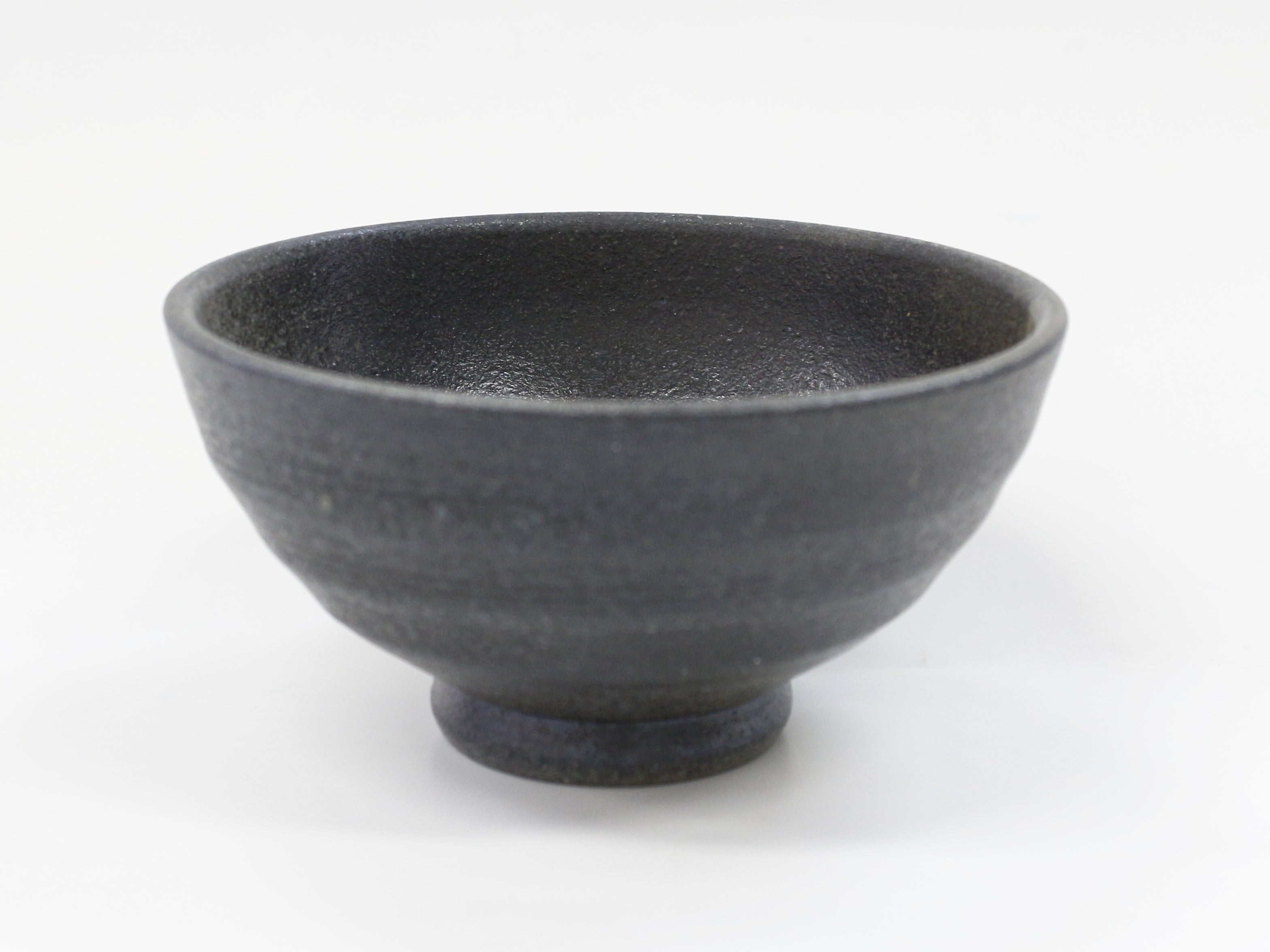
A Suzu-yaki tea bowl is the physical embodiment of this philosophy. Born from the unpredictable flames of an anagama wood-fired kiln, no two pieces of Suzu-yaki are ever identical. The natural ash glazes, the subtle gradients of somber grey, and the deep, reduction-fired black surfaces are the result of a singular moment in the kiln. When you hold a Suzu-yaki cup, you are holding a frozen moment in time, a perfect companion to the fleeting nature of the tea ceremony.
The Tactile Connection: Earth Meets Hand
Unlike porcelain or heavily glazed ceramics, which place a glassy barrier between the drinker and the clay, Suzu-yaki is unglazed. This raw, porous nature creates an immediate, tactile connection to the earth of the Noto Peninsula. When you cradle a Suzu-yaki chawan or yunomi (teacup) in your hands, you feel the subtle texture of the iron-rich clay. It is grounding, robust, and intimately human.

Kenrokuen Garden (兼六園) in spring — one of Japan's three most celebrated gardens, a place of seasonal beauty and quiet reflection. Photo: © ほっと石川旅ねっと
This texture serves a practical purpose as well. The slight roughness of the unglazed interior provides the perfect friction for whisking matcha. As the bamboo chasen moves against the clay, it aerates the tea more efficiently, producing a finer, creamier foam that enhances the sweetness and umami of the matcha. The bowl itself becomes an active participant in the preparation of the tea.
Temperature and Taste: The Science of Unglazed Clay
Beyond aesthetics and texture, Suzu-yaki profoundly influences the physical experience of drinking tea. The thick, dense walls of this high-fired stoneware possess excellent thermal properties. When filled with hot tea, the clay absorbs the heat slowly, ensuring that the outside of the cup is warm and comforting to hold, rather than scalding. Simultaneously, it retains the heat of the liquid inside for much longer than thinner, glazed vessels, allowing you to savor your tea at the perfect temperature.
Furthermore, the microscopic porosity of unglazed Suzu-yaki interacts with the tea itself. Over time, the clay absorbs the subtle oils and aromatic compounds of the teas brewed within it. This process, known as "seasoning" the pot or cup, means that a well-loved Suzu-yaki vessel will actually begin to round out the astringency of green teas, yielding a smoother, more mellow flavor profile with every use. The cup grows with you, its surface developing a soft, lustrous patina, and its character deepening alongside your tea practice.

A harmony of elements: the dark clay provides a striking visual contrast to the vibrant green of matcha and the delicate beauty of nature.
Wabi-Sabi: Finding Beauty in the Shadows
In the 16th century, the great tea master Sen no Rikyū revolutionized the tea ceremony by turning away from ornate, flawless Chinese porcelain in favor of rustic, imperfect, and locally made pottery. He championed the aesthetic of wabi-sabi—the appreciation of beauty that is imperfect, impermanent, and incomplete.
Suzu-yaki is perhaps one of the purest expressions of wabi-sabi available today. Its dark, unpretentious color does not demand attention; rather, it absorbs the light, creating a quiet space for contemplation. When vibrant, jade-green matcha is poured into a charcoal-black Suzu-yaki bowl, the visual contrast is breathtaking. The darkness of the clay frames the tea, making its color more vivid and its presence more profound. It is a reminder that true elegance often lies in restraint and simplicity.
Elevating the Everyday
You do not need to be a master of the formal tea ceremony to appreciate the profound qualities of a Suzu-yaki cup. Whether you are whisking ceremonial grade matcha in the quiet of the morning, or simply enjoying a warm cup of sencha or hojicha in the afternoon, the vessel matters.
Choosing a Suzu-yaki cup is a choice to slow down. It is an invitation to feel the earth in your hands, to appreciate the unique marks of the fire, and to honor the fleeting beauty of the present moment. It transforms the simple act of drinking tea from a mundane habit into a mindful ritual—a perfect sip, every single time.


,%20every%20element%20is%20chosen%20with%20profound%20intention.%20From%20the%20gentle%20rustle%20of%20the%20bamboo%20whisk%20to%20the%20soft%20light%20filter...)