The Anagama Kiln: Japan's Most Ancient Firing Method
In the quiet, mist-shrouded mountains of the Noto Peninsula, a primal force awakens. It is a force that has shaped Japanese pottery for over a millennium—a roaring, breathing entity known as the anagama. To understand the profound beauty of Suzu-yaki (Suzu ware), one must first understand the crucible in which it is born. The anagama kiln is not merely a tool; it is a collaborator, an unpredictable artist that paints with fire and ash.

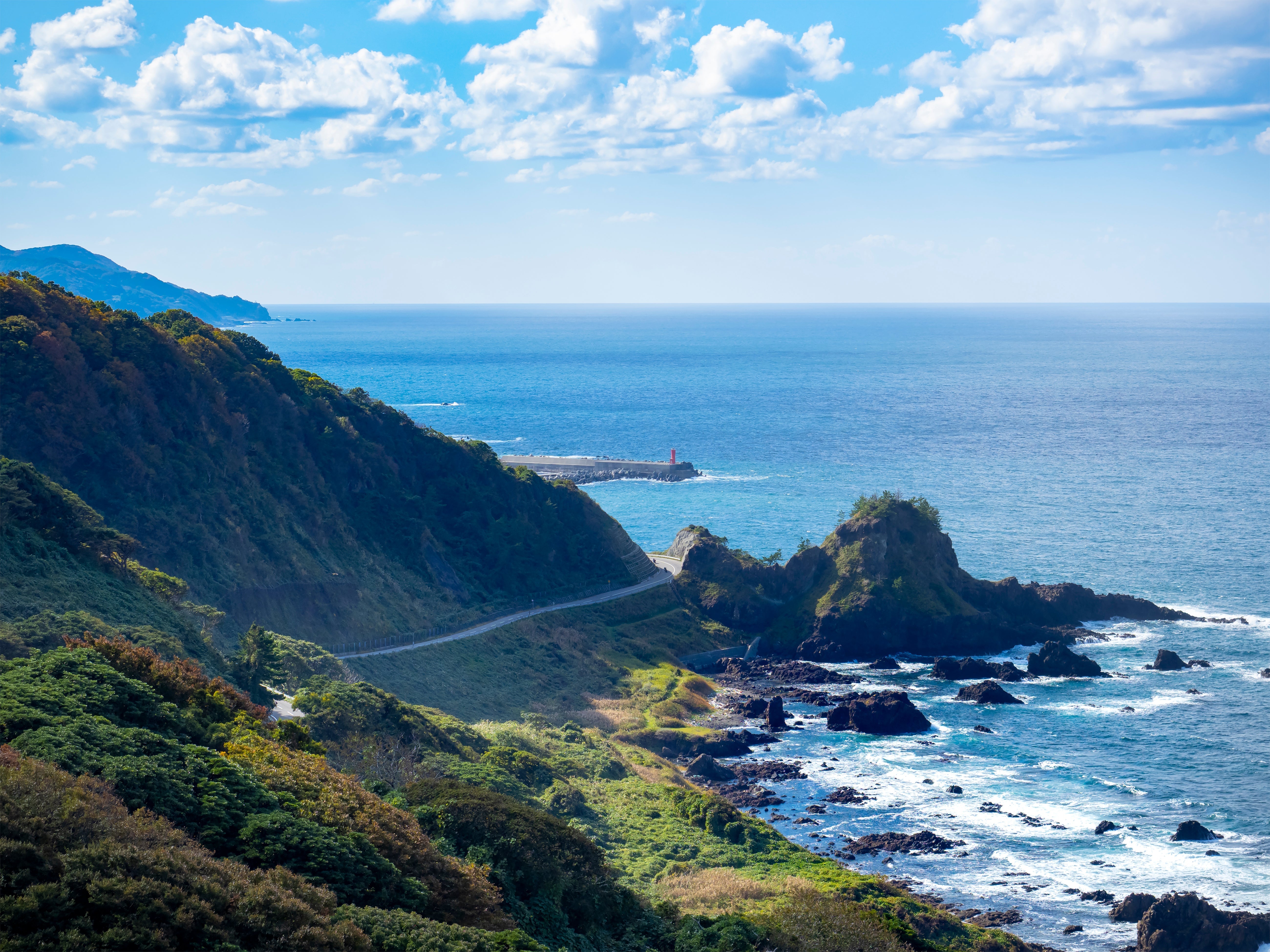
The Noto Peninsula's ancient landscape — a region where traditional crafts and ancient techniques like the anagama kiln have been preserved for over a thousand years. Photo: © ほっと石川旅ねっと
The Origins of the Cave Kiln
The word anagama (穴窯) translates literally to "cave kiln." Brought to Japan by Korean potters around the 5th century CE, this ancient technology revolutionized Japanese ceramics. Before the anagama, pottery was fired in open pits at relatively low temperatures. The anagama, derived from the climbing dragon kilns of southern China, introduced a radical new design: a single-chamber tunnel built directly into the slope of a hill.
This sloping design was ingenious. It allowed the kiln to act as its own chimney, drawing the intense heat of the fire upward through the chamber where the pottery was stacked. For the first time, Japanese potters could achieve temperatures exceeding 1,200°C (2,200°F), giving birth to the hard, non-porous stoneware known as Sue ware—the direct ancestor of our beloved Suzu-yaki.
A 72-Hour Dance with Fire
Firing an anagama is not a passive process; it is an exhausting, exhilarating marathon. Unlike modern electric or gas kilns, which can be programmed and left alone, an anagama is fueled exclusively by firewood. It requires constant, round-the-clock attention.
For Suzu-yaki, a typical firing lasts for 72 hours or more. Potters work in shifts, continuously stoking the firebox with pine and red pine logs. The kiln consumes wood voraciously, roaring like a jet engine as the temperature climbs. The potter must "read" the fire, adjusting the airflow and the rhythm of the stoking based on the color of the flames and the sound of the draft.
"Loading an anagama kiln is considered the most difficult part of the process. The potter must imagine the flame path as it rushes through the kiln, using this sense to 'paint the pieces with fire.'"

Inside the inferno: wood ash melts to form a natural glaze on the unglazed clay.
The Magic of Natural Ash Glaze
What makes anagama-fired pottery so extraordinary is the phenomenon of natural ash glaze (shizen-yuyaku). Suzu-yaki is traditionally unglazed when it enters the kiln. However, as the wood burns over several days, vast amounts of fly ash are carried through the chamber by the draft.
When the temperature surpasses 1,200°C, this ash settles on the shoulders and rims of the pots and melts, fusing with the silica in the clay to form a natural glass. The result is breathtaking: unpredictable drips, flashes of golden-green, and rough, crusty textures that resemble the earth itself. The placement of each piece within the kiln dictates its final appearance. Pots near the firebox may be buried in embers, emerging with heavy, dramatic crusts, while those further back receive a softer, more subtle dusting of ash.
The Secret of Suzu-yaki's Black Hue
While many regions in Japan use the anagama, Suzu-yaki employs a specific technique that gives it its signature charcoal-black color. At the very climax of the firing, when the kiln is at its hottest, the potters perform a dramatic maneuver: they completely seal the kiln.
They block the firebox, the flue, and every tiny crack with clay, cutting off all oxygen to the interior. This creates a heavily "reduced" atmosphere. Starved of oxygen, the fire pulls oxygen molecules directly from the iron oxide present in the Noto Peninsula clay. This chemical reaction transforms the red iron oxide into black iron oxide, turning the clay body a deep, somber grey-black.

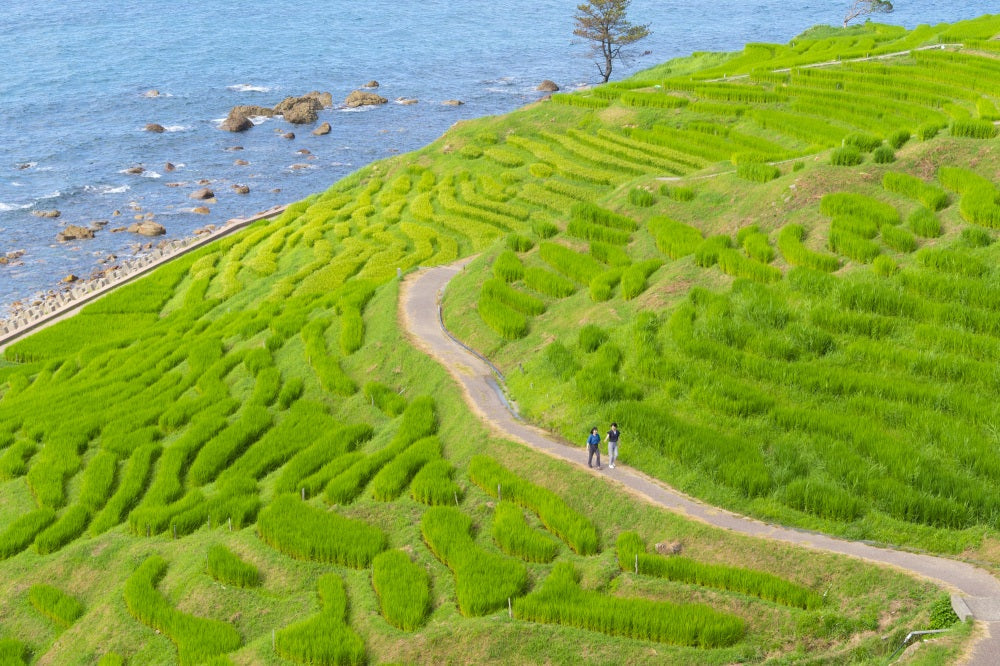
Hakusan Mountain (白山) viewed from Kiba Lagoon — the elemental beauty of earth, water, and sky that has inspired Japanese ceramic arts for millennia. Photo: © ほっと石川旅ねっと
Embracing Wabi-Sabi
The anagama kiln is the ultimate expression of wabi-sabi—the Japanese aesthetic philosophy that finds beauty in imperfection, impermanence, and the forces of nature. A potter can control the shape of the clay, but once the kiln door is sealed, they must surrender control to the fire.
No two pieces fired in an anagama will ever be identical. Each scorch mark, each drip of melted ash, and each subtle variation in the black clay is a permanent record of a specific moment in time—a testament to a 72-hour dance between human hands, earth, and fire.
When you hold a piece of Suzu-yaki, you are not just holding a cup or a vase; you are holding a frozen flame, a fragment of an ancient tradition that continues to burn brightly on the shores of the Noto Peninsula.