Shiroyone Senmaida: The Thousand Rice Paddies of Noto
Nestled on the steep northern coast of the Noto Peninsula, overlooking the vast expanse of the Sea of Japan, lies one of the country's most breathtaking agricultural landscapes: Shiroyone Senmaida. Literally translating to "a thousand rice paddies in Shiroyone," this stunning cascade of terraced fields is not merely a scenic wonder; it is a living testament to centuries of human harmony with nature and a profound reflection of the wabi-sabi aesthetic that defines The Zen Artisan's philosophy.
A Masterpiece of Traditional Agriculture
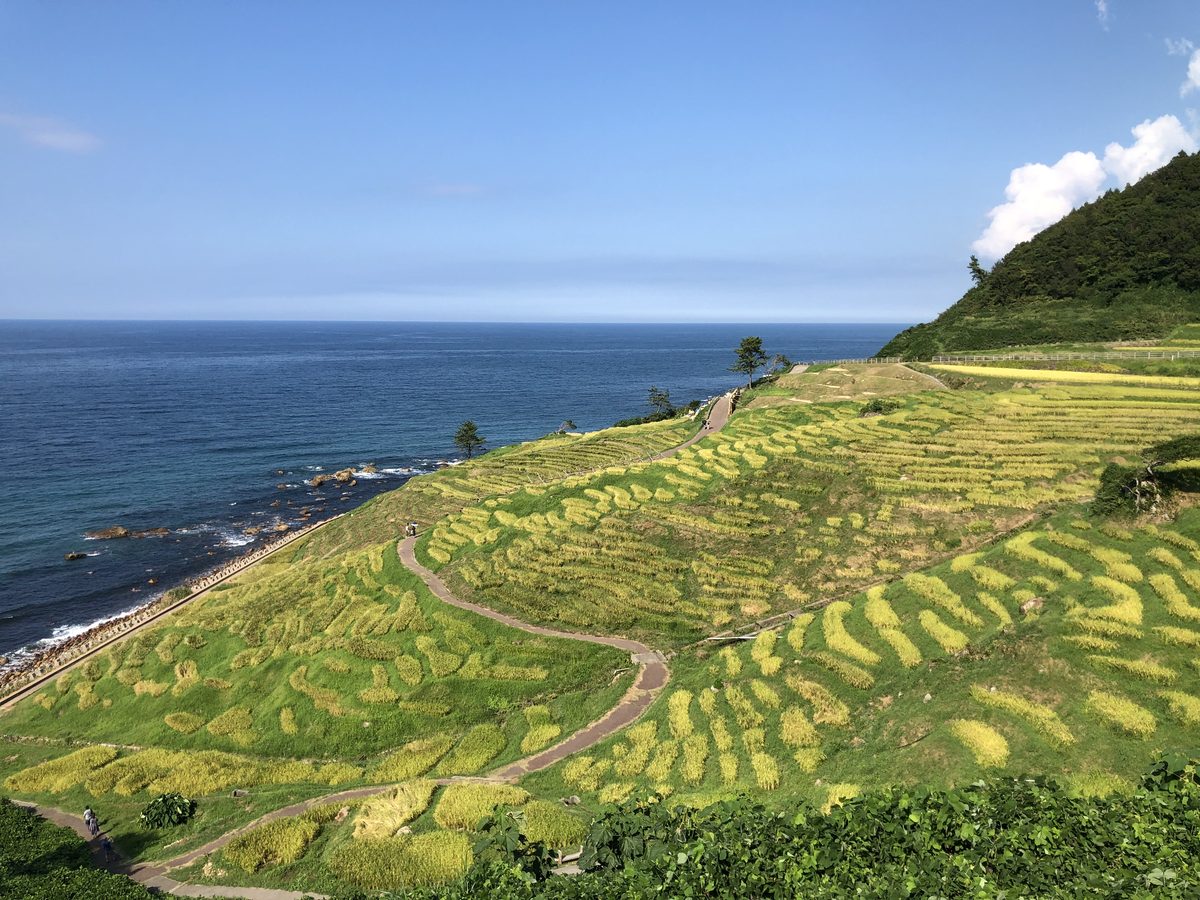
Shiroyone Senmaida actually consists of 1,004 individual rice paddies intricately carved into a steep slope that drops 50 meters down to the sea. The history of these terraces dates back over 400 years to the Edo period. Because the paddies are incredibly small—some measuring just 50 centimeters square, enough to hold only a few stalks of rice—modern agricultural machinery cannot be used. Instead, the planting, weeding, and harvesting are all done painstakingly by hand, just as they have been for generations.

The 1,004 small rice paddies of Shiroyone Senmaida cascade down to the Sea of Japan. (Image via Wikimedia Commons, CC BY-SA 4.0)
This dedication to traditional farming methods was globally recognized in 2011 when the "Noto's Satoyama and Satoumi" region, which includes Shiroyone Senmaida, was designated as a Globally Important Agricultural Heritage System (GIAHS) by the United Nations. The continuous sea breeze acts as a natural pest deterrent, allowing farmers to cultivate the rice with minimal to no pesticides, resulting in a harvest that is as pure as the landscape itself.
The Seasons of Senmaida
The beauty of Shiroyone Senmaida is ever-changing, offering a distinct visual poetry with each passing season. In the spring, before planting, the water-filled paddies act as a thousand fragmented mirrors, reflecting the azure sky and the setting sun. Summer brings a vibrant, lush green as the rice stalks grow strong against the ocean winds. By autumn, the terraces transform into a cascading waterfall of golden ears of rice, ready for the harvest.

The water-filled terraces reflect the dramatic colors of the Noto sunset. (Image via Wikimedia Commons, CC BY-SA 4.0)
Perhaps the most magical transformation occurs during the colder months. From mid-October to mid-March, the terraces host the "Aze no Kirameki" (Twinkle of the Rice Paddies) illumination event. Over 25,000 solar-powered LED lights are placed along the ridges of the paddies. For four hours after sunset, these lights shift colors every 15 minutes—from pink to green, gold, and blue—creating an ethereal, glowing tapestry against the dark backdrop of the sea.

The Aze no Kirameki event illuminates the terraces with 25,000 LED lights during the winter months. (Image via Wikimedia Commons, CC0)
Resilience and the Connection to Craft
The spirit of Shiroyone Senmaida closely mirrors the ethos of Noto's traditional crafts, such as Suzu-yaki and Wajima-nuri. Both require immense patience, a deep respect for natural materials, and an unwavering dedication to preserving ancestral techniques despite the conveniences of modern technology. Furthermore, the terraced fields play a crucial environmental role; by controlling water flow and creating a hard layer of soil known as a plow pan, they help prevent landslides on the peninsula's steep terrain.
Like the artisans of the region, the Senmaida has faced significant challenges. The 2024 Noto Peninsula Earthquake caused cracks in approximately 80% of the terraced fields. Yet, driven by the local volunteer group 'Shiroyone Senmaida Aikokai' and supported by a unique 'Owner System' where people from across Japan sponsor individual paddies, the restoration work continues. It is a powerful reminder that true beauty—whether in a ceramic bowl or a hillside of rice—is sustained by community, resilience, and love.
Related reading: For wider context on the landscape that supports Noto’s craft and food traditions, read Noto’s Satoyama and Satoumi.