How to Start a Japanese Pottery Collection: A Beginner's Roadmap
There is a profound moment when you first hold a piece of authentic Japanese pottery. It is not merely a vessel; it is a tactile connection to centuries of tradition, the earth from which it was formed, and the hands of the artisan who shaped it. For many, this single moment sparks a lifelong passion. But stepping into the world of Japanese ceramics can feel overwhelming. With countless styles, regional kilns, and aesthetic philosophies, where does one begin?
Whether you are drawn to the rustic charm of unglazed stoneware or the refined elegance of porcelain, building a Japanese pottery collection is a deeply personal journey. This beginner's roadmap will guide you through the essential styles, the philosophy behind the craft, and how to start curating a collection that speaks to your soul.

A curated selection of Japanese ceramics, showcasing the diversity of forms and finishes.
Understanding the Foundations: Earthenware, Stoneware, and Porcelain
Before diving into specific regional styles, it is helpful to understand the three primary categories of Japanese ceramics (yakimono):
- Earthenware (Doki): Fired at lower temperatures, earthenware is porous and often thicker. It has a rustic, warm feel and is frequently used for everyday items.
- Stoneware (Sekki): Fired at high temperatures, stoneware is dense, durable, and non-porous. It often features natural ash glazes created during the firing process. Famous examples include Bizen, Shigaraki, and our own Suzu-yaki.
- Porcelain (Jiki): Made from a specific type of white clay (kaolin) and fired at extremely high temperatures, porcelain is smooth, translucent, and rings like a bell when tapped. Arita and Imari wares are celebrated examples.
The Philosophy of Wabi-Sabi in Collecting
To truly appreciate Japanese pottery, one must embrace the concept of wabi-sabi. This aesthetic philosophy finds beauty in imperfection, impermanence, and the natural cycle of growth and decay. In ceramics, wabi-sabi manifests as asymmetrical shapes, uneven glazes, and the unpredictable marks left by the kiln fire (keshiki, or "landscapes").
When starting your collection, do not look for flawless, machine-made perfection. Instead, seek out pieces that show the hand of the maker. A slight warp in the rim of a tea bowl or a drip of glaze down the side of a vase are not flaws; they are the unique characteristics that give the piece its soul.

Embracing wabi-sabi: The tactile beauty of an unglazed Suzu-yaki tea bowl.
Where to Begin: Essential Styles for Beginners
Japan is home to dozens of historic pottery towns, each with its own distinct style. Here are a few excellent starting points for a new collector:
1. The Six Ancient Kilns (Rokkoyo)
For those drawn to history and rustic beauty, pieces from the Six Ancient Kilns—Seto, Tokoname, Echizen, Shigaraki, Tamba, and Bizen—are essential. These kilns have been producing pottery continuously for over a thousand years. Bizen ware, for example, is famous for its unglazed, reddish-brown clay and natural ash patterns.
2. Suzu-yaki (Suzu Ware)
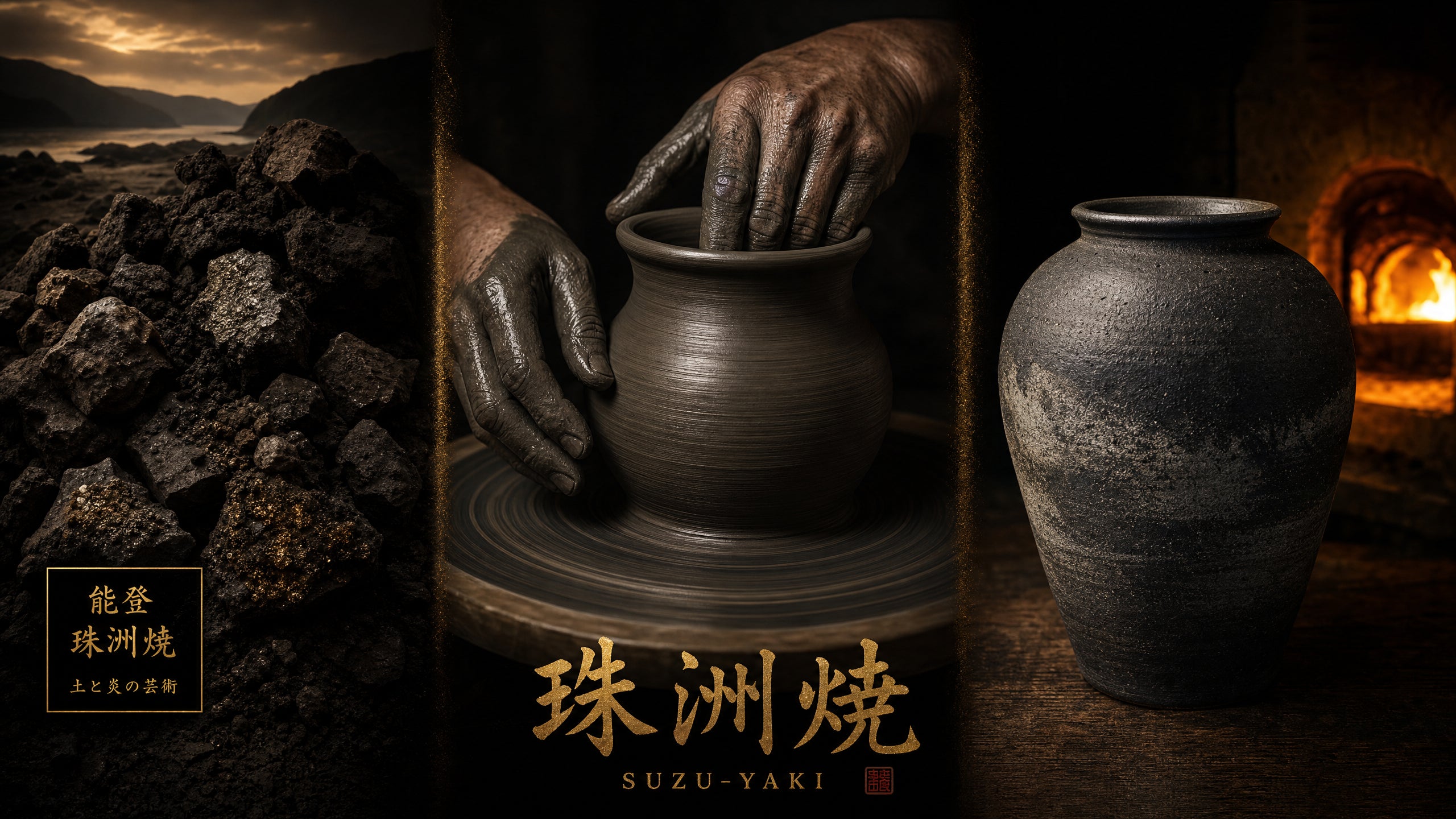
Originating from the Noto Peninsula, Suzu-yaki is a striking, unglazed black stoneware. Fired in a reduction atmosphere, the iron in the clay turns a deep, charcoal black, often accented by subtle grey or greenish natural ash glazes. Suzu-yaki disappeared for 400 years before being revived in the 1970s, making it a fascinating and deeply historic addition to any collection.
3. Arita and Imari Ware
If you prefer vibrant colors and intricate designs, look to Arita and Imari porcelain from Kyushu. These pieces often feature beautiful blue-and-white underglaze painting or elaborate overglaze enamels in red, gold, and green.
Tips for Curating Your Collection
Building a collection is not about accumulating objects; it is about curating a selection of pieces that resonate with you. Here are a few tips to guide your journey:
- Start Small and Functional: Begin with items you can use daily, such as a favorite tea cup (yunomi), a rice bowl (chawan), or a small vase. Using the pottery allows you to appreciate its weight, texture, and how it interacts with food or flowers.
- Trust Your Instincts: While it is helpful to learn about kiln marks and historical periods, the most important factor is how a piece makes you feel. Does its shape please your eye? Does its texture invite your touch?
- Mix and Match: Do not feel pressured to collect only one style. The beauty of a Japanese table setting lies in the harmonious contrast of different textures, colors, and shapes. A dark Suzu-yaki sake flask pairs beautifully with delicate porcelain cups.
- Learn the Story: Take the time to learn about the artisan or the kiln that produced your piece. Understanding the history and the process adds immeasurable value to your collection.

Mixing styles and textures creates a harmonious, wabi-sabi display.
The Journey Begins
Starting a Japanese pottery collection is an invitation to slow down and appreciate the artistry of everyday objects. It is a journey of discovery—of history, of aesthetics, and of your own personal taste. Whether you are drawn to the ancient allure of the Six Kilns or the striking, mysterious black of Suzu-yaki, each piece you acquire becomes a part of your daily life and a testament to the enduring legacy of Japanese craftsmanship.
Take your time, handle the pieces, and let the clay speak to you. Your collection will grow organically, reflecting your evolving appreciation for this timeless art form.